Adhyaya 200
Dīpadāna-vrata (The Vow of Offering Lamps)
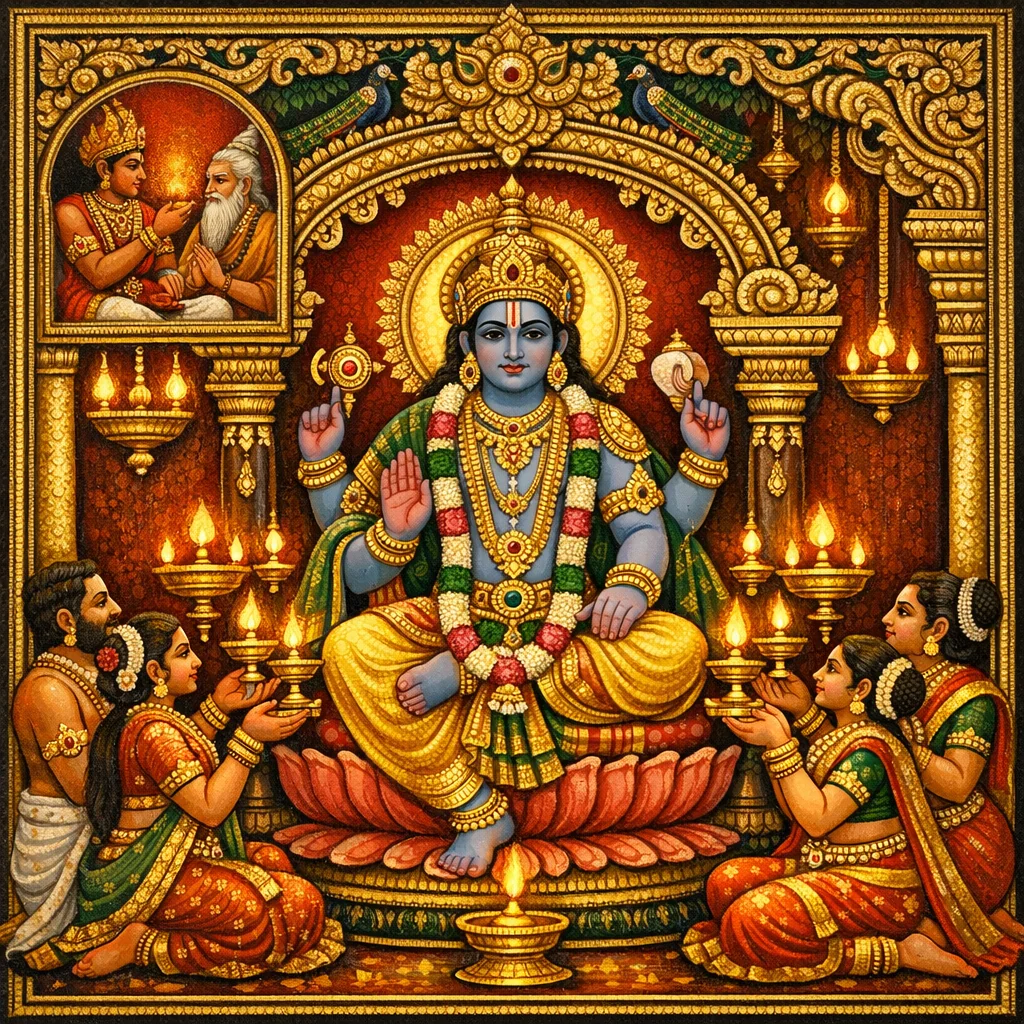
พระอัคนีทรงสอน “ทีปทานวรต” ว่าเป็นวรตที่ให้ทั้งภุกติ (ความสมบูรณ์ทางโลก) และมุกติ (ความหลุดพ้น) การถวายและจุดประทีปตลอดหนึ่งปีในเทวสถานหรือในเรือนพราหมณ์ย่อมให้ความรุ่งเรืองรอบด้าน โดยเฉพาะในช่วงจาตุรมาสยะและเดือนการ์ตติกะ บุญกุศลยิ่งใหญ่หาที่เปรียบมิได้ นำไปสู่วิษณุโลกและความสุขสวรรค์ ต่อมาทรงเล่าเรื่องลลิตาเป็นอุทาหรณ์ว่า แม้การกระทำที่มิได้ตั้งใจแต่เกี่ยวเนื่องกับประทีปในวิษณุมณฑป ก็ยังให้ผลอัศจรรย์ ทำให้นางเกิดใหม่ในราชตระกูลและมีความมั่งคั่งในชีวิตคู่ การลักประทีปถูกประณามอย่างหนัก มีผลให้เกิดเป็นใบ้/ทึบ และตกสู่นรกแห่งความมืด อีกทั้งทรงตักเตือนการหมกมุ่นในกามคุณและความใคร่ผิดธรรม โดยเฉพาะการล่วงประเวณี แล้วชี้ทางปฏิบัติที่เข้าถึงได้คือสวดนามพระหริและถวายของง่าย ๆ เช่นประทีป ท้ายบทตอกย้ำว่าทีปทานเพิ่มพูนผลของวรตทั้งปวง และผู้ฟังพร้อมน้อมนำไปปฏิบัติย่อมได้คติอันสูงขึ้น
Shlokas
No shlokas available for this adhyaya yet.
Frequently Asked Questions
Offer a lamp—ideally sustained as a yearly practice—in a deity’s shrine (especially Viṣṇu’s) or a brāhmaṇa’s home; the act is taught as a high-merit vrata granting prosperity, longevity, clarity of sight, and higher worlds, ultimately supporting liberation.
Kārttika is presented as a peak season of ritual potency: lamp-giving then is said to yield exceptional heavenly results, surpassing ordinary times and amplifying vrata-fruit.
It demonstrates that even an unpremeditated or indirect contribution to a lamp-offering in a Viṣṇu temple can generate powerful puṇya, underscoring the vow’s efficacy and the sacredness of temple-based offerings.
The chapter condemns dīpa-theft with severe karmic outcomes and uses hell imagery to caution against negligence, sense-addiction, and sexual misconduct (adultery), redirecting the practitioner toward dharmic restraint and Hari-nāma.