Adhyaya 198
Monthly Vows (Māsa-vratāni) and Cāturmāsya Disciplines; Introduction of Kaumudī-vrata
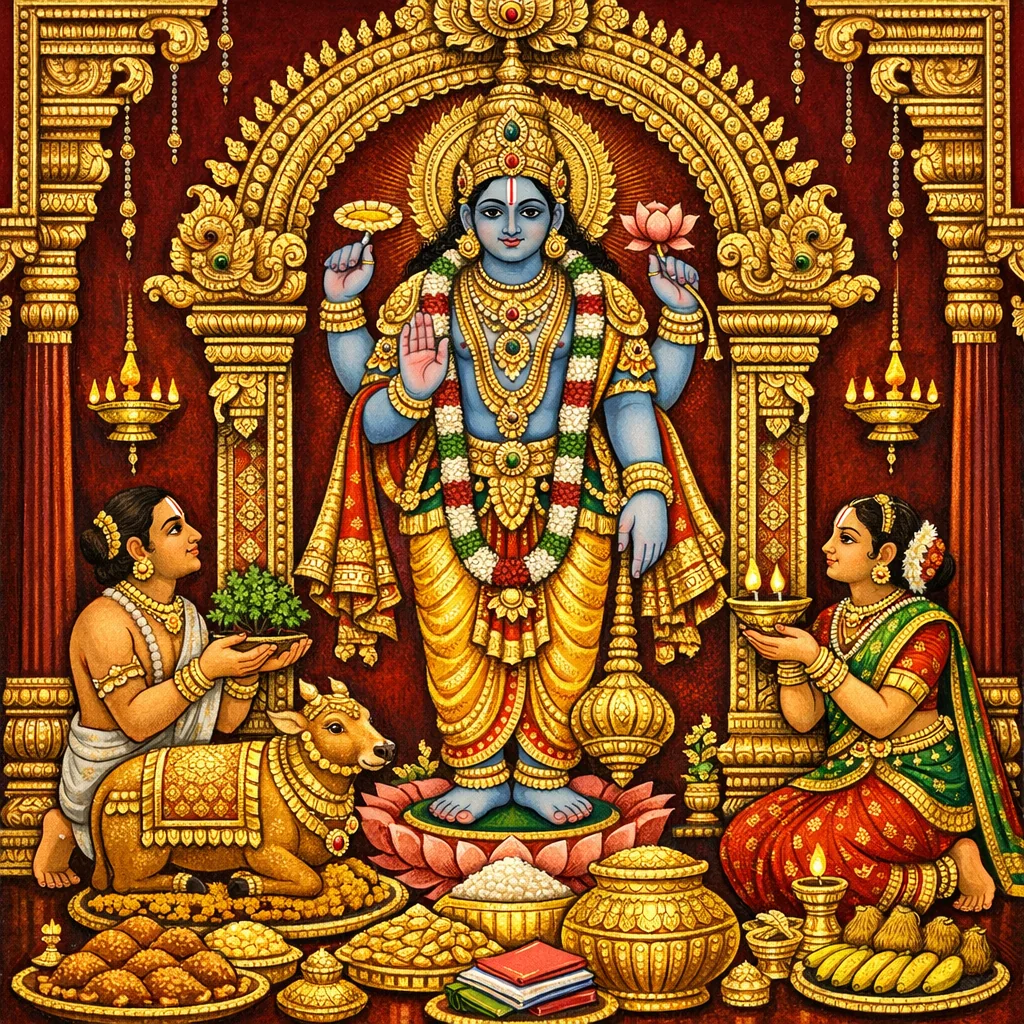
บทนี้พระอัคนีทรงอธิบาย “มาสวรตะ” ว่าเป็นการปฏิบัติอย่างมีวินัยที่ให้ทั้งภุกติและมุกติ เริ่มด้วยข้อสำรวมแบบจาตุรมาสยะ—โดยเฉพาะการงดทาน้ำมัน/อบยางคะในสี่เดือนศักดิ์สิทธิ์—แล้วแจกแจงการสละและทานตามเดือน (เช่น ไวศาขะให้ทานโค; มาฆะหรือไจตระถวาย “โคจากน้ำตาลอ้อยก้อน” เป็นต้น) กล่าวถึงตบะด้านอาหารและความประพฤติ เช่น นกตโภชนะ เอกภักตะ วรตผลไม้ อดอาหารวันเว้นวัน การถือมาวนะ จันทรายณะ และปราชาปัตยะ พร้อมผลลำดับขั้นคือสวรรค์ วิษณุโลก และบุญที่มุ่งสู่โมกษะ กรอบวรตสมบูรณ์ด้วยสังกัลปะและการยึดตามปฏิทิน: เตรียมจาตุรมาสยะ บูชาพระหริเมื่อดวงอาทิตย์ย้ายเข้าสู่ราศีกรกฎ และอธิษฐานให้วรตนับว่าสำเร็จแม้สิ้นชีวิตระหว่างทาง ตอนท้ายแนะนำ “เกามุทีวรตะ” เดือนอาศวิน: บูชาพระวิษณุในวันทวาทศีด้วยดอกไม้ ประทีป เนยใสและน้ำมันงา พร้อมมนต์ ‘โอม นะโม วาสุเทวายะ’ ให้สำเร็จจตุรปุรุษารถะทั้งสี่
Shlokas
No shlokas available for this adhyaya yet.
Frequently Asked Questions
Renunciation of oil-anointing (abhyanga/taila-tyāga) during the four months beginning with Āṣāḍha, paired with dawn-bathing and devotion to Hari.
It repeatedly couples renunciation/fasting with formal gifts—especially go-dāna and guḍa-dhenu—presenting donation as the outward completion of inner restraint and a generator of merit and higher worlds.
The Kaumudī-vrata (Āśvina) is introduced: on Dvādaśī, worship Viṣṇu with lotus-type flowers, offer lamp and naivedya using ghee and sesame-oil, and recite ‘Om namo Vāsudevāya’.
By mapping regulated conduct (niyama), calendrical worship, and charitable giving to tangible outcomes (bhukti) while explicitly promising Viṣṇuloka/Vaikuṇṭha and liberation-oriented fruits (mukti), culminating in the fourfold puruṣārtha attainment through Kaumudī-vrata.