Adhyaya 196
Chapter 196 — Nakṣatra-vratāni (Observances of the Lunar Mansions)
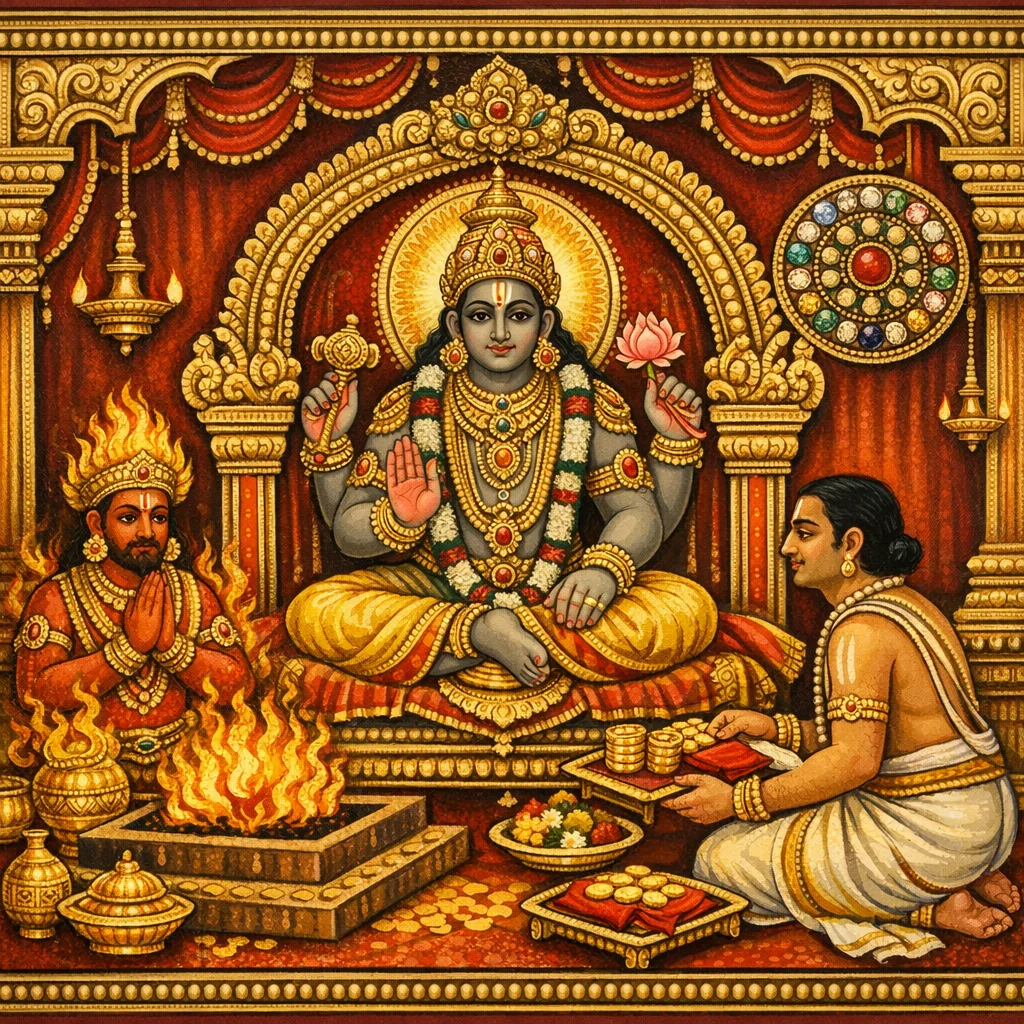
พระอัคนีทรงสอนฤๅษีวสิษฐะเรื่องระบบนักษัตรวรตะ เริ่มตั้งแต่เดือนไจตรด้วยการอัญเชิญ “นักษัตรปุรุษะ” แล้วบูชาพระหริ (วิษณุ) โดยผูกนักษัตรเข้ากับอวัยวะแห่งกายจักรวาลตามลำดับ—เท้า น่อง เข่า ต้นขา อวัยวะลับ สะโพก สีข้าง ท้อง อก หลัง แขน นิ้ว เล็บ คอ หู ปาก ฟัน จมูก ตา และหน้าผาก—ทำให้กาลแห่งฟ้ากลายเป็นระเบียบพิธีกรรมที่มีรูปกาย. ในวันจิตรา/อารทราและปลายปีมีพิธีพิเศษ ตั้งรูปพระหริทองคำในหม้อที่ใส่น้ำตาลอ้อย/กากน้ำตาล โดยของทักษิณาแตกต่างตามสำนวนคัมภีร์. ต่อมาว่าด้วยศามภวายนียะวรตะ เน้นเดือนการ์ตติกะและนักษัตรกฤตติกา ใช้นามเกศวะหรือมนต์อจยุตะ มีเครื่องนิเวทยะตามเดือน การชำระด้วยปัญจคัวยะ และนิยามแยก “นิเวทยะ” กับ “นิรมาลยะ” หลังวิสรรชนะ. บทสรุปเป็นคำอธิษฐานขอทำลายบาป เพิ่มบุญ ความมั่งคั่งไม่เสื่อม และสืบสกุล; ปฏิบัติครบเจ็ดปีได้ทั้งภุกติและมุกติ. จากนั้นทรงแนะนำอนันตวรตะ (มารคศีรษะ/มฤคศีรษะ) เน้นฉันกลางคืน งดน้ำมัน กำหนดโหมะสี่เดือน บุญไม่สิ้นสุด และยกตัวอย่างการประสูติของพระเจ้ามานธาตาจากวรตะนี้.
Shlokas
No shlokas available for this adhyaya yet.
Frequently Asked Questions
It is Viṣṇu envisioned as the cosmic person constituted by the lunar mansions; worship is performed by assigning specific nakṣatras to specific limbs, making the body a ritual map of the nakṣatra cycle.
A substance is termed naivedya only until the moment of visarjana (ritual dismissal); once Jagannātha is dismissed, it immediately becomes nirmālya (the remnant of the offering).
On the Kārttika day when Kṛttikā prevails, the practitioner invokes Acyuta (via Keśava-names or a simple Acyuta salutation), offers prescribed foods across months, maintains purity via pañcagavya, and seeks both enjoyment and liberation.
It is said to generate an endless accumulation of merit, to recur as the ‘gift Ananta’ even in another birth, and to yield imperishable (akṣaya) attainment of desired aims.