Adhyaya 190
Chapter 190: Akhaṇḍa-dvādaśī-vrata (The Unbroken Dvādaśī Vow)
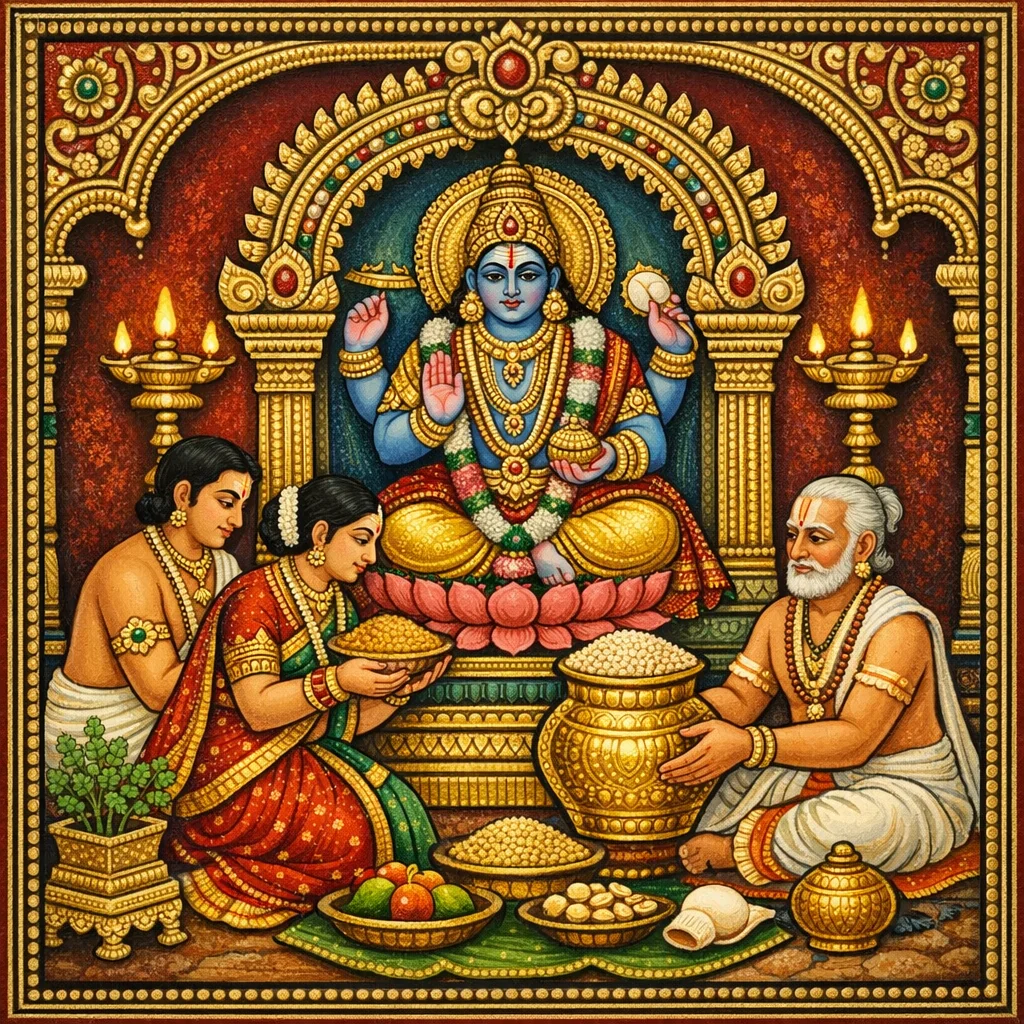
พระอัคนีทรงสอนฤๅษีวสิษฐะถึง “อขัณฑทวาทศีวรตะ” อันเป็นพิธีเพื่อทำให้วรตทั้งหลายสมบูรณ์ไม่ขาดตอน. ในวันทวาทศีข้างขึ้นเดือนมารคศีรษะ ผู้ปฏิบัติบูชาพระวิษณุ อาบน้ำด้วยน้ำปัญจคัวยะ และรับประทานสสารชำระมลทินตามพิธีแล้วถืออุโบสถ. องค์ประกอบสำคัญคือทาน—ในวันทวาทศีถวายภาชนะบรรจุข้าวบาร์เลย์และข้าวสารแก่พราหมณ์. บทนี้วางกรอบคำอธิษฐานให้ผู้ถือวรตวอนพระวิษณุทรงซ่อมแซมความไม่ครบถ้วนของวรตที่สั่งสมตลอดเจ็ดชาติ โดยตั้งอยู่บนภาพอภิปรัชญาว่าเอกภพดำรง “ไม่ขาด” ในปุรุโษตตมะ. ต่อจากนั้นอัคนีขยายเป็นวินัยตามกาล—การถือวรตรายเดือนและจาตุรมาสยะ พร้อมทานเฉพาะเดือน เช่น ถ้วยศักตุ (แป้งบาร์เลย์คั่ว). เน้นการรักษาเวลาที่ถูกต้องตั้งแต่ศราวณะจนถึงการปารณะเมื่อสิ้นการ์ตติกะ เตือนว่าความบกพร่องอาจส่งผลยาวถึงเจ็ดชาติ ส่วนการปฏิบัติถูกต้องย่อมให้ยืนยาว สุขภาพดี โชคลาภ อำนาจปกครอง และความรื่นรมย์.
Shlokas
No shlokas available for this adhyaya yet.
Frequently Asked Questions
It is explicitly framed as a rite for vrata-sampūrṇatā—making vows complete and ‘unbroken,’ including repairing deficiencies believed to persist across seven births through Viṣṇu’s grace.
Fasting on bright Mārgaśīrṣa Dvādaśī for Viṣṇu, bathing in pañcagavya-water and partaking of it, and giving a brāhmaṇa a vessel containing barley and rice on Dvādaśī.
The votary’s prayer links personal vow-completion to the cosmic ‘unbroken wholeness’ of the universe identified with Puruṣottama (Viṣṇu), making ritual integrity a mirror of ontological unity.
The course is described as beginning in Śrāvaṇa and reaching pāraṇa at the end of Kārttika, aligning with the Cāturmāsya-related discipline and its closure.
Long life, freedom from disease, good fortune, sovereignty/kingship, and enjoyments (along with similar prosperities) are stated as outcomes.