Adhyaya 186
Daśamī-vrata (Observance for the Tenth Lunar Day)
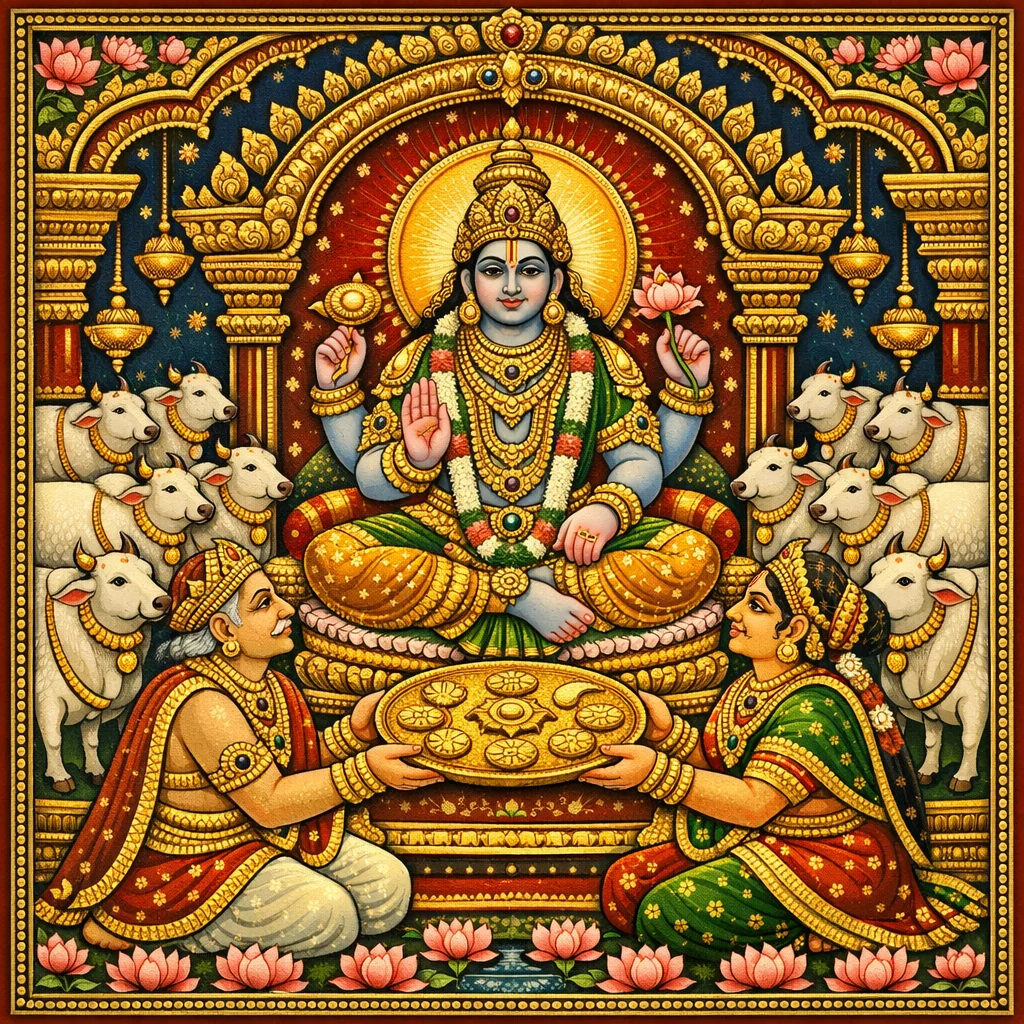
หลังจากจบวรตนวมีก่อนหน้า ในลำดับวรตตามตถีแห่งวรตขันฑะ พระอัคนีทรงแสดง “ทศมีวรต” โดยระบุผลในภาษาปุรุษารถะว่าให้ธรรมะ กามะ และเป้าหมายที่เกี่ยวเนื่อง ทำให้เห็นว่าวินัยพิธีกรรมเป็นเครื่องมือทั้งบุญคุณทางศีลธรรม-จิตวิญญาณและความเจริญทางโลกอย่างเป็นระเบียบ แก่นปฏิบัติคือความสำรวม: ในวันทศมีให้ถือเอกภักตะ (ฉันเพียงมื้อเดียว) เน้นการควบคุมการบริโภคเป็นวิธีชำระตน วรตสิ้นสุดด้วยทาน คือถวายโคสิบตัว เพื่อให้ตบะส่วนตนสมบูรณ์ด้วยประโยชน์ต่อสังคม อีกทั้งมีทานอันเป็นเกียรติ: ถวายทิศทั้งแปด (ทิก) ที่ทำด้วยทองคำ ซึ่งกล่าวว่ายกฐานะผู้ให้ให้มีความเป็นใหญ่ท่ามกลางพราหมณ์ ดังนี้จึงเชื่อมโยงนียมะ เวลาอันศักดิ์สิทธิ์ตามตถี และทานภายนอกไว้เป็นโครงการธรรมเดียวกัน
Shlokas
No shlokas available for this adhyaya yet.
Frequently Asked Questions
The practitioner observes ekabhakta on Daśamī—taking a single meal—establishing dietary restraint as the vow’s primary discipline.
Upon completion of the vow, one should gift ten cows (daśa-dhenu-dāna), making dana the culminating act that externalizes the merit of the observance.
The text states that gifting the directions (dik) fashioned in gold results in becoming a lord among Brāhmaṇas, indicating social-spiritual elevation linked to high-value symbolic dana.
By combining tithi-discipline (Daśamī), bodily restraint (ekabhakta), and compassionate redistribution (dana), the vrata trains self-control and generosity—core dharmic virtues that support both worldly order and inner purification.