Adhyaya 185
Chapter 185 — नवमीव्रतानि (The Observances for Navamī)
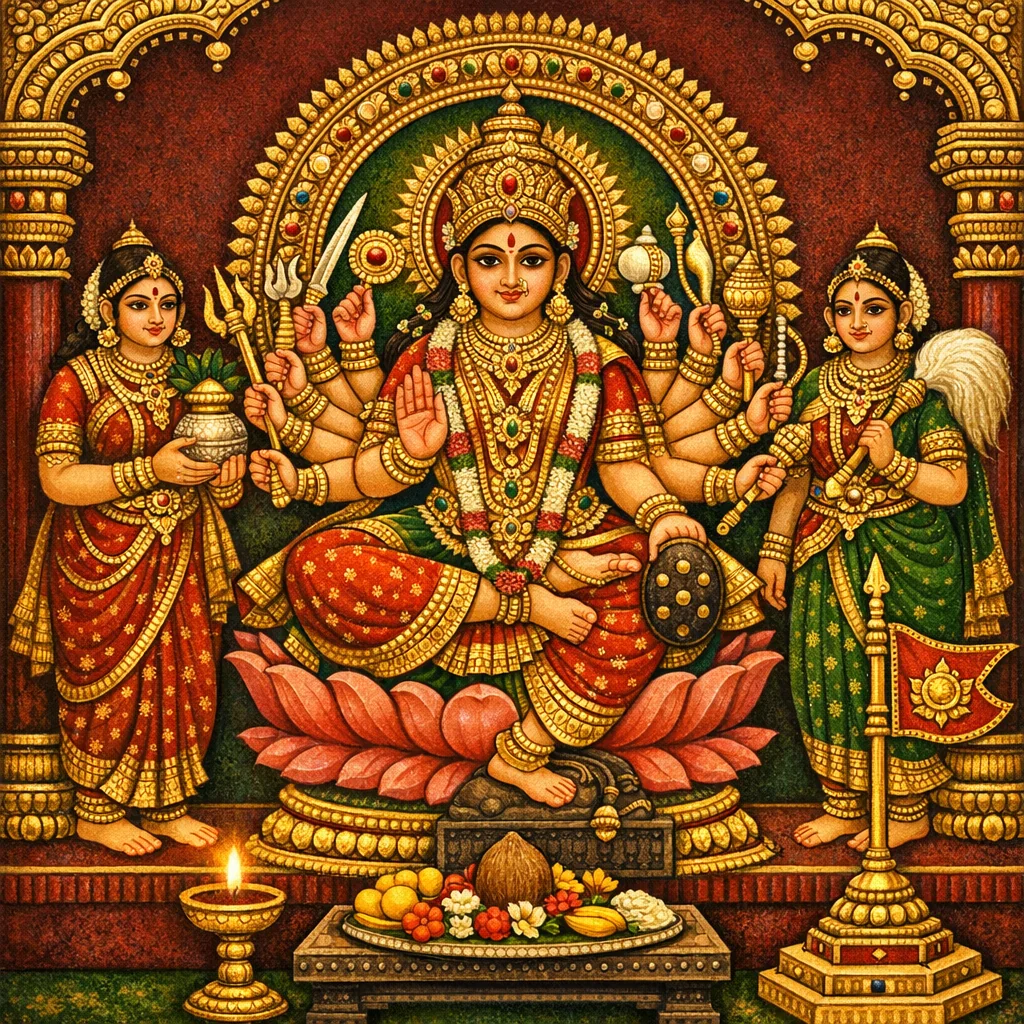
พระอัคนีทรงสอนฤษีวสิษฐะถึงนวมีวรตะที่เกี่ยวกับคาวรี/ทุรคา พร้อมรับรอง “สิทธิ” ที่ครอบคลุมทั้งภุกติ (ความสำเร็จทางโลก) และมุกติ (หลุดพ้น) นวมีถูกระบุว่าเป็น “ปิษฏกา” โดยเน้นความแม่นยำด้านปฏิทิน—ช่วงอาศวิน ศุกลนวมี เงื่อนไขนักษัตร และข้อกำหนดให้รับประทานของที่ทำจากแป้ง/ปิษฏะหลังบูชาเทพี ต่อจากนั้นกล่าวถึงพิธีกรรมคุ้มครองราชอาณาจักรที่มีทุรคาในฐานะมหิษมรรทินีเป็นศูนย์กลาง—ประดิษฐานในเก้าสถานีหรือศาลเดียว และทำสมาธิภาพเทพีหลายกรพร้อมอาวุธและเครื่องประกอบเฉพาะ บทนี้แจกแจงการภาวนามนต์ ได้แก่ มนต์คุ้มครองทุรคาแบบสิบพยางค์ มนต์เสริม และนยาสะตามนิ้วจากหัวแม่มือถึงก้อย โดยย้ำความลับและการปฏิบัติไม่ให้มีอุปสรรค พิธียังรวมถึงบูชาอาวุธ นามเทพีดุร้าย เครื่องบูชาตามทิศ (บางสำนวนกล่าวถึงเลือด/เนื้อ) การทำให้หุ่นศัตรูจากแป้งหมดฤทธิ์ การบูชากลางคืนแด่มาตฤกาและรูปดุร้าย อาบปัญจามฤต บลี และสัญลักษณ์งานมหรสพเช่นธวัชะกับรถยาตรา—ผสานศรัทธา ไอคอนกราฟี และการคุ้มครองตามราชธรรมไว้ด้วยกัน
Shlokas
No shlokas available for this adhyaya yet.
Frequently Asked Questions
It is presented as siddhi-giving—supporting worldly accomplishment and protection (bhukti) while also generating merit conducive to liberation (mukti) through disciplined Durgā worship.
The chapter gives a ten-syllabled protective mantra: “Oṃ, O Durgā, O Durgā, protect (me)! Svāhā,” used as a rakṣā (protection) formula within the Navamī observance.
It includes a royal-protective procedure: in front of the invoked fire, the king bathes and ritually removes/neutralizes an enemy represented by a dough effigy, aligning goddess worship with victory and protection of the realm.
Durgā is visualized in multi-armed forms (notably eighteen-armed and sixteen-handed variants) and associated with a defined set of implements and weapons, which are themselves to be worshipped as part of the observance.