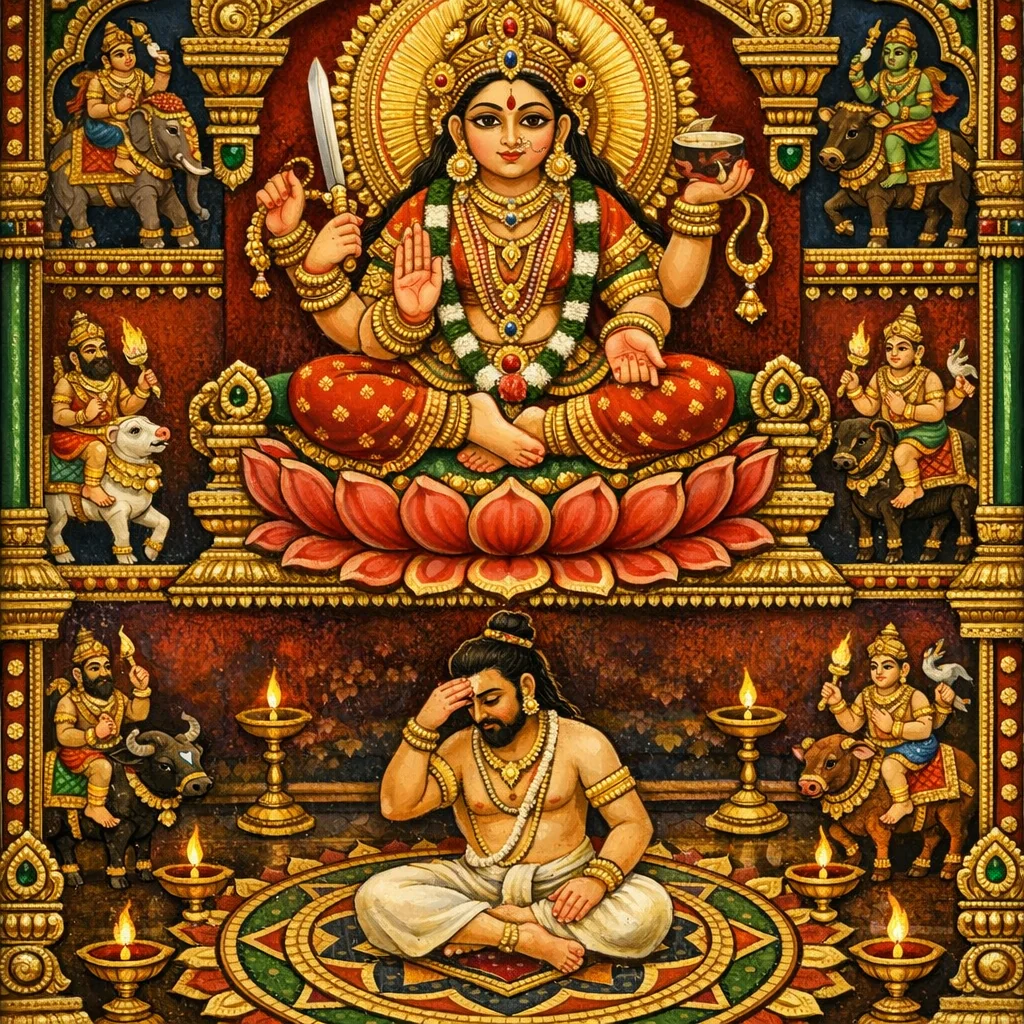
Adhyaya 147
Adhyāya 147 — Guhyakubjikā-Tvaritā Mantra: Upadrava-Śānti, Stambhana–Kṣobhaṇa, and Nyāsa for Jaya (Victory)
ในอัธยายะนี้ พระอีศวรทรงสอนวิธีมนตรกรรมเพื่อการคุ้มครองและชัยชนะอย่างเข้มขลัง โดยมีคุหยะกุบชิกาและตวริตาเป็นศูนย์กลาง พิธีมุ่งระงับ ‘อุปัทระวะ’ (เคราะห์ร้าย/การรบกวน) ที่เกิดจากการกระทำพิธีของศัตรู เช่น ยันตระ มันตระ ตันตระ และการใช้ผงยา ครอบคลุมผู้กระทำในอดีต ปัจจุบัน อนาคต (ทำแล้ว สั่งให้ทำ กำลังทำ จะทำ) ต่อจากนั้นแจกแจงหน้าที่มนตร์เฉพาะ เช่น กษโภณะ อากรรษณะ วัศยะ โมหณะ สตัมภนะ พร้อมหลักเสียงพีชะและสัญญาณวรรณะสำหรับการปฏิบัติ ให้สูตรมนตร์ตวริตาเพื่อ ‘ชยะ’ (ชัยชนะ) และกรอบนยาสครบถ้วน—อาสนะ หฤทยะ ศิระ ศิขา กวจะ เนตร อัสตระ—พร้อมการปิดผนึกคุ้มครองด้วยคำลงท้าย ‘ผัฏ’ ระบุศักติ ๙ ประการเป็นพลังปฏิบัติ และอัญเชิญ ‘ดูรี’ ผู้พิทักษ์ทิศทั้งหลาย ผสานการคุ้มครองเชิงทิศทางกับการประดิษฐานในอวัยวะภายใน ตอนท้ายเชื่อมพีชะกับเทวะ เช่น พรหมา และอาทิตยะ และย้ำคำกำลังอย่าง ‘ดารุณ’ กับ ‘ผัฏ’ ว่าเป็นเครื่องคุ้มครองที่ทำงานสม่ำเสมอในศึก ภัยพิบัติ และการป้องกันพิธีกรรม
Shlokas
No shlokas available for this adhyaya yet.
Frequently Asked Questions
A protection-and-victory (rakṣā/jaya) mantra system: countering afflictions attributed to hostile yantra–mantra–tantra acts, and operationalizing efficacy through bīja specification, ṣaṭkarman-like functions, and a complete nyāsa/kavaca/astra installation sequence.
It frames applied mantra-technology as dharma-governed defense and stabilization—removing obstacles (upadrava), establishing inner steadiness via nyāsa, and enabling righteous action; the ritual is presented as disciplined, rule-bound vidyā rather than uncontrolled coercion.
Guhyakubjikā and Tvaritā are central; the chapter also integrates directional protectors (Dūrīs aligned with quarters beginning with Indra) and assigns bījas to Brahmā and Āditya to anchor the rite in a wider deity-bīja cosmology.