Adhyaya 143
Chapter 143 — Worship of Kubjikā (कुब्जिकापूजा)
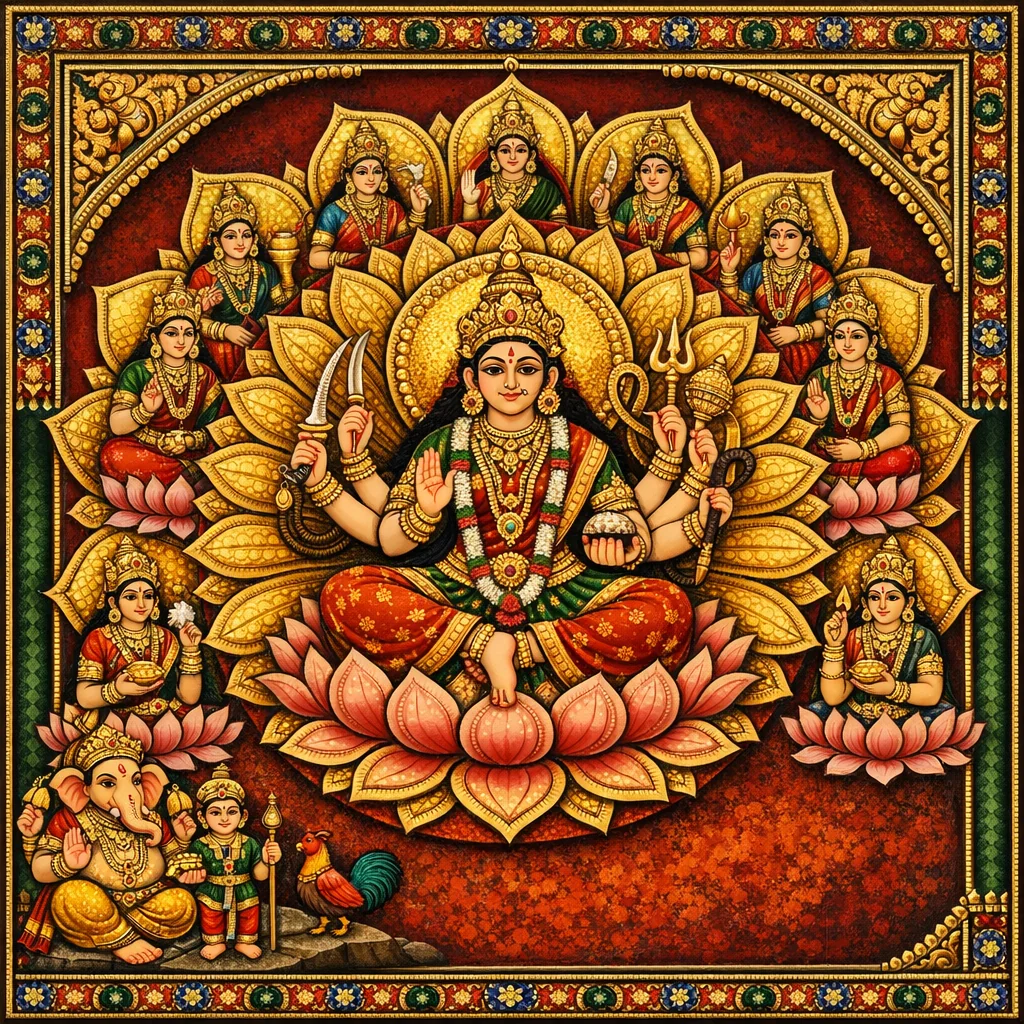
บทนี้เปลี่ยนจากเรื่องมนตร์และโอสถไปสู่พิธีชัยชนะสายศากตะ‑ตันตระในกรอบ “ยุทธชยารณวะ” พระผู้เป็นเจ้าทรงสอนการบูชากุพชิกาแบบเป็นลำดับ (กรมา) ว่าเป็น “สรรวารถ‑สาธนี” ทำให้สำเร็จได้ทุกประการ รวมถึงชัยชนะในศึกเมื่อประกอบด้วยวัตถุที่ปลุกเสก โดยเฉพาะอาชยะ (เนยใส) และการอธิวาสนาปลุกพลังอาวุธ โครงพิธีมีความละเอียด: ระบุเครื่องหมายจักรบูชา พยางค์บีชะ และนยาสะลงสู่จุดกาย (อวัยวะลับ มือ หทัย ศีรษะ) เพื่อทำผู้ปฏิบัติให้เป็นสนามพลังศักดิ์สิทธิ์ จากนั้นขยายสู่มณฑล: ตั้งมนตร์อัสตระ กวจะ เนตร ศิขา เป็นต้นไว้ตามทิศ และประดิษฐานบีชะสาระหลายพยางค์ในแกนกลางดอกบัว ๓๒ กลีบ กล่าวถึงหมู่มาตฤกาอันแผ่ออกจากความเป็นใหญ่ของจัณฑิกา การอัญเชิญปีฐะและการวางตามทิศ รวมทั้งการแจกจ่ายวิมลปัญจกะตามทิศและยอด สุดท้ายจัดประชากรมณฑลด้วยคเณศ/วฏุกะ คุรุ นาถะ และเทวะรายรอบ โดยมีคุพชิกา (และกุลฏา) เป็นศูนย์กลางแห่งการบูชาตามลำดับเพื่อคุ้มครอง อำนาจ และชัยชนะอันตั้งอยู่ในธรรมะ
Shlokas
No shlokas available for this adhyaya yet.
Frequently Asked Questions
A krama (sequential) Kubjikā worship that combines chakra-pūjā, nyāsa (body-installation of mantras), and maṇḍala-based directional placements of protective and weapon mantras (kavaca, netra, astra, śikhā, etc.).
The Māyā-bīja is placed on the secret organ; the ṣaṭkarma-astra is assigned to the hand; “Kālī, Kālī” is placed on the heart; and “Duṣṭa-cāṇḍālikā” is placed on the head.
It frames Kubjikā worship as sarvārtha-sādhanī and explicitly links success over adversaries to consecrated empowerment—weaponization through mantra (astra), protection through kavaca, and correct directional/mandala deployment.
Mantras are stationed by quarters (dik): kavaca and netra are centralized, astra is distributed to directions, and a specific essential bīja-string is installed in a 32-petalled core (karṇikā), establishing a layered protective grid.
The chapter invokes the Mātṛkās arising from Caṇḍikā, the Vimalapañcaka distributed across quarters/peaks, and a populated mandala including Gaṇapati/Vaṭuka, gurus, nāthas, and surrounding deities with Kubjikā at the center.