Adhyaya 126
Chapter 126 — Nakṣatra-nirṇaya (Determination of the Lunar Mansions) and Rāhu-Based Victory/Defeat Omens
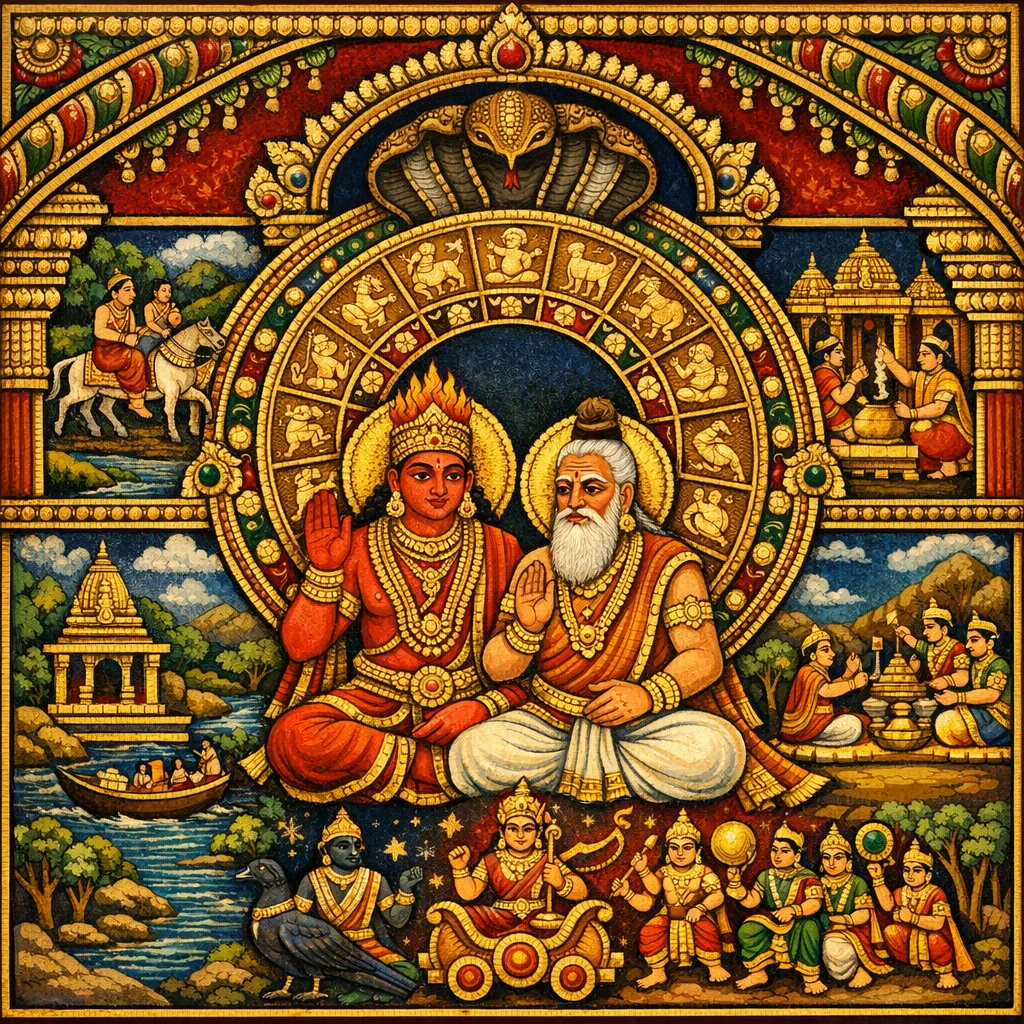
อีศวรทรงแสดงผัง “ทรงกลมนักษัตรเป็นกาย” เพื่อพิจารณาผลมงคล–อวมงคล โดยเทียบนักษัตรที่ดวงอาทิตย์สถิตอยู่กับส่วนต่าง ๆ ของกาย (ศีรษะ ใบหน้า ดวงตา หทัย อวัยวะ เอว หาง) ต่อจากนั้นกล่าวพยากรณ์แบบคัมภีร์ยุดธชัยารณวะด้วยแผนผัง “พังพานงู” ของราหู—จารึกจุด 28 จุด แล้วจัดเรียงนักษัตร 27 จากนักษัตรที่ราหูครอบครอง; ตำแหน่งบางอย่างโดยเฉพาะที่เกี่ยวกับลำดับที่เจ็ดเป็นลางมรณะหรือความบกพร่องในศึก ส่วนตำแหน่งอื่นให้เกียรติยศ ชัยชนะ และชื่อเสียง ต่อมาระบุผู้เป็นใหญ่ของดาวเคราะห์ประจำครึ่งยาม และให้กฎยุทธวิธีว่าให้มีเสาร์ อาทิตย์ และราหู “อยู่เบื้องหลัง” จะสำเร็จทั้งในสงคราม การเดินทาง แม้กระทั่งการเสี่ยงโชค แล้วจำแนกนักษัตรตามหน้าที่ (คงที่ เร็ว อ่อนโยน ดุร้าย; สังกัดปิตฤ/ไนฤต) เพื่อเลือกมุหูรตะสำหรับเดินทาง พิธีสถาปนา การก่อสร้าง การขุด และราชพิธี ท้ายบทให้กฎ “เผา” ติถี อธิบายตรีปุษกร (ชุด ติถี–วัน–นักษัตร) ที่เพิ่มพูนผล บอกนิมิตการกลับจากการเดินทาง และเตือนเรื่องคัณฑานตะกับรอยต่ออันตรายอื่น ๆ ที่แม้พิธีมงคลหรือการคลอดบุตรก็เสี่ยงร้ายแรง
Shlokas
No shlokas available for this adhyaya yet.
Frequently Asked Questions
It maps the Sun’s current nakṣatra onto a schematic body (head/face/eyes/heart/limbs/waist/tail) and interprets outcomes—e.g., head indicates sovereignty, heart indicates wealth, certain placements indicate theft or death.
A serpent-hood (phani) diagram is formed by dots and lines; the nakṣatra occupied by Rāhu is placed on the hood and the remaining nakṣatras are arranged in order, after which specific positional relations (notably seventh-related) are read as victory, defect, or fatality indicators.
Tripuṣkara is defined through specific sets of tithis, weekdays, and nakṣatras; when present, results—gain, loss, victory, increase, or outcomes regarding birth—are said to become amplified (notably threefold).
The text cautions against the Revatī–Aśvinī and Āśleṣā–Maghā junction zones with specified avoidance measures (nāḍī/ghaṭikā/yāma), and names the Jyeṣṭhā–Mūla junction as a fierce ‘yāmaka’.