Adhyaya 123
युद्धजयार्णवीयनानायोगाः (Various Yogas from the Yuddha-jayārṇava)
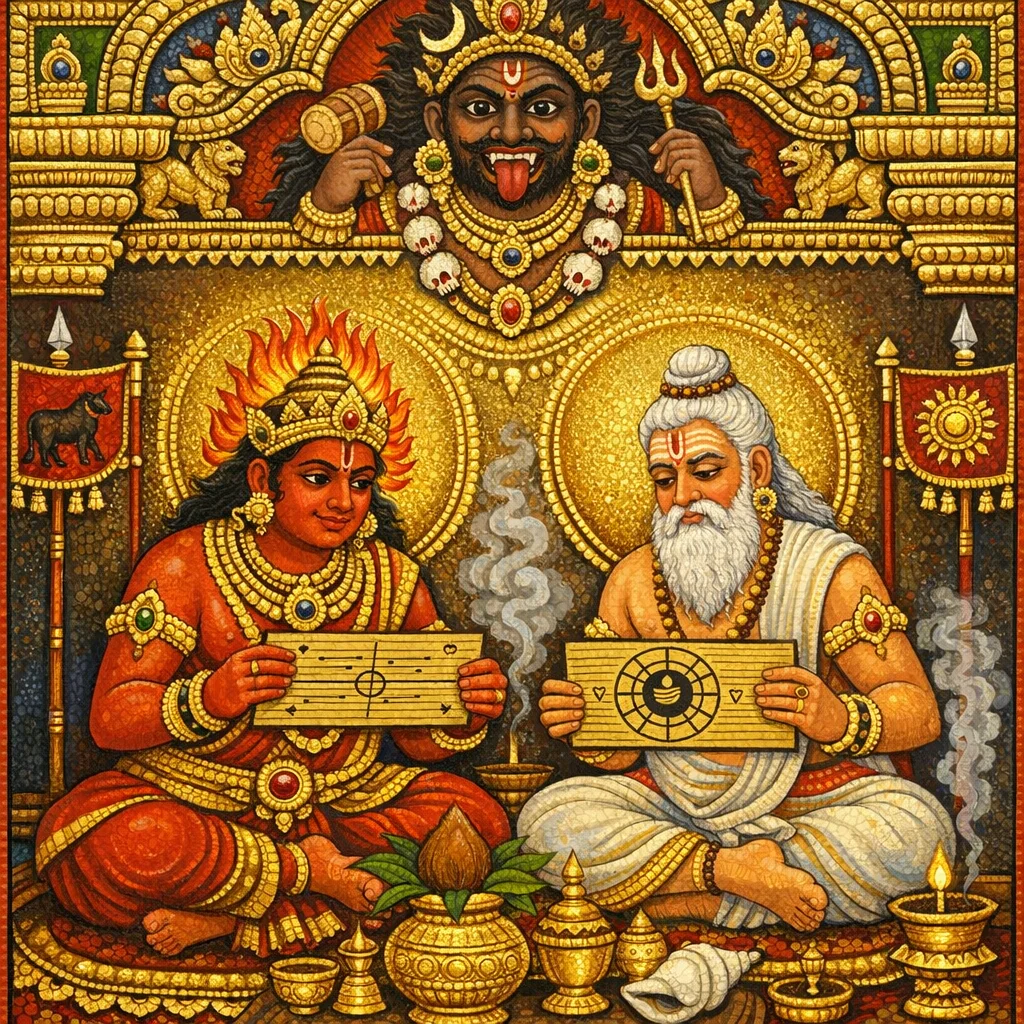
เมื่อปิดหัวข้อก่อนหน้าว่าด้วยกาลคณนา (การคำนวณเวลา) แล้ว พระอัคนีทรงเริ่มสรุปวิชาชัยชนะในสงครามที่คัดย่อจากคัมภีร์ยุทธชัยารณวะ บทนี้จัดจำแนกเสียงอักษรและตถิเป็นหมวดปฏิบัติการ (เริ่มด้วยนัณฑา) แล้วกำหนดช่วงอักษรให้ขึ้นกับเจ้าแห่งดาวเคราะห์ ทำให้การทำนายฝังอยู่ในตารางรหัสเชิงภาษา-ดาราศาสตร์ นอกจากนี้ยังกล่าวถึงเครื่องหมายการวินิจฉัย/การวัด เช่น นาฑีสปันทนะ อุจฉวาสะ และปละ ที่เชื่อมชีพจรและหน่วยเวลาเข้ากับการอ่านลาง ต่อมาพัฒนาโหราศาสตร์สงครามแบบจักระ ได้แก่ สวโรทยะจักระ ศนิจักระ กูรมจักระ และราหูจักระ ระบุการแบ่งส่วน การวางทิศ และส่วนที่ให้ความตาย พร้อมการเรียกนามนักษัตร/มุหูรตเพื่อกำหนดว่าเวลาใดควรทำกิจใด สุดท้ายกล่าวถึงปฏิบัติการคุ้มครองและชัยชนะ: การใช้มนต์ไภรวะ (ศิขาบันธะ ติลกะ อัญชนะ ธูปเลปนะ) และสมุนไพรสวมใส่กับสูตรวศีกรณะ เช่น ติลกะ เลป และน้ำมัน แสดงวิทยาอัคนียะเป็นการผสานโหราศาสตร์ พิธีกรรม และเภสัชกรรมเพื่อชัยชนะตามธรรมะ।
Shlokas
No shlokas available for this adhyaya yet.
Frequently Asked Questions
A war-oriented Jyotiṣa toolkit: tithi and letter-to-graha mappings, multiple prognostic cakras (Svarodaya, Śani, Kūrma, Rāhu), and muhūrta-based prescriptions for what actions to perform or avoid.
They act as diagrammatic decision systems: divisions, directional placements, and specific ‘death-giving’ portions (notably linked with Śani) guide timing and risk assessment for actions related to conflict and protection.
The chapter treats victory as a synthesis of right timing (Jyotiṣa), protective rite (mantra and ritual acts like tilaka/añjana), and supportive materia medica—typical of the Agni Purana’s encyclopedic Agneya-vidyā approach.
Action-appropriateness: Raudra is prescribed for fierce acts, while Śveta is aligned with purification activities like bathing—demonstrating karmic regulation through time-quality.
Yes. Shloka 25 explicitly notes differences between manuscripts (e.g., a line absent in the Gha manuscript and alternate readings in the Kha manuscript), which is valuable for critical study.