Adhyaya 216
Gāyatrī-nirvāṇa (The Liberative/Concluding Doctrine of Gāyatrī)
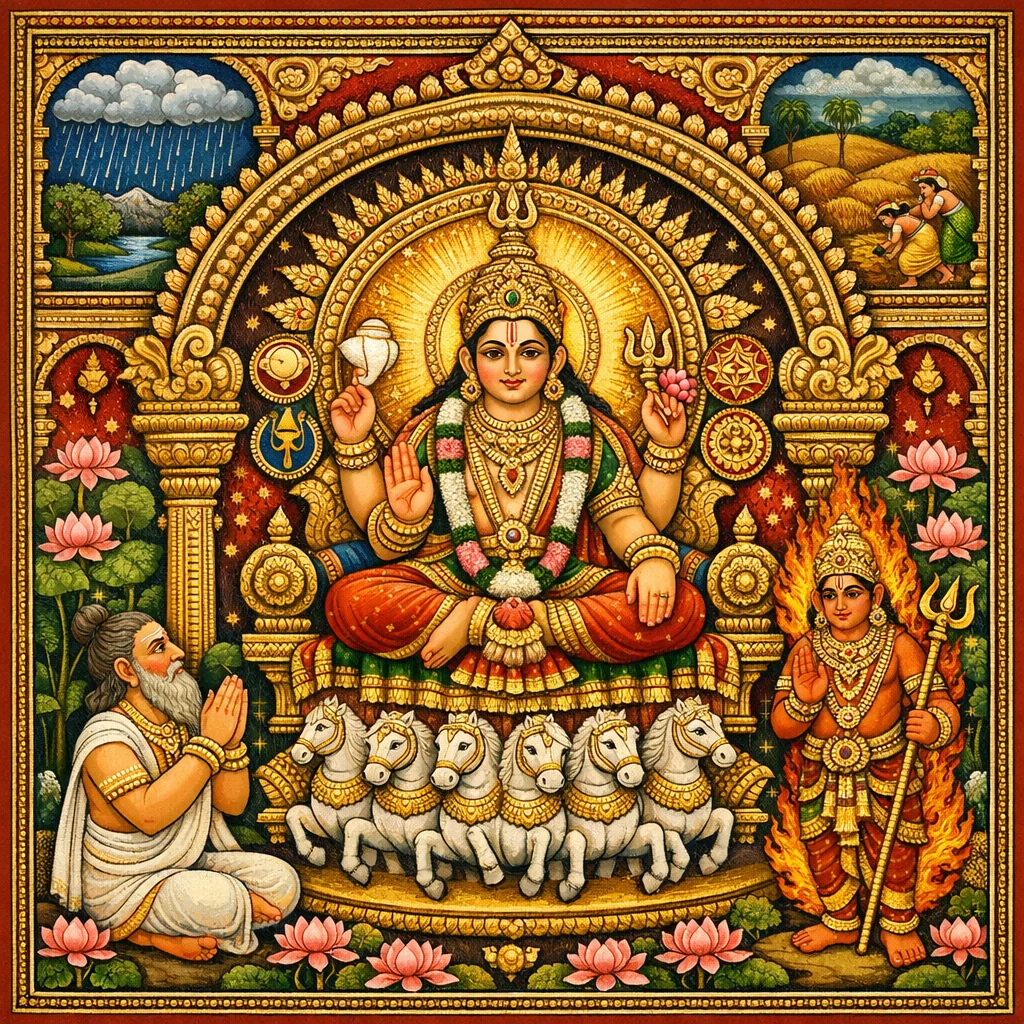
หลังจบสันธยา-วิธี อัคนีทรงสอนให้ผู้ปฏิบัติทำพิธีให้สมบูรณ์ด้วยคายตรี-ชปะและการระลึก (สมรณะ) โดยย้ำว่ามนตร์เป็นทั้งการคุ้มครอง (รักษา) และวินัยภายใน จากนั้นอธิบายเชิงศัพท์และเทววิทยา: คายตรีเรียกว่า สาวิตรี เพราะทำให้สว่าง และเรียกว่า สรัสวตี เพราะเป็นรูปแห่งวาจาของสวิตฤ คำว่า ภรคะ อธิบายจากรากความหมาย “ส่องประกาย” และ “ชำระให้บริสุทธิ์ด้วยการเผา/การปรุง” เชื่อมรัศมีกับการขัดเกลาที่เปลี่ยนแปลงตน วเรณฺยม คือภาวะสูงสุดอันควรเลือก เป็นที่ปรารถนาของผู้แสวงสวรรค์และโมกษะ; ธีมหิ คือการทรงไว้ในใจและการภาวนาอย่างต่อเนื่อง ข้ออ่านต่างนิกายถูกคลี่คลายด้วยการกล่าวว่าแสงแห่งมนตร์เป็นสัจจะเดียว ถูกสวดเป็นวิษณุ ศิวะ ศักติ สุริยะ หรืออัคนีได้ แต่ต้นพระเวทประกาศพรหมันหนึ่งเดียว ต่อมาว่าด้วยจักรวาลพิธีกรรม: อาหุติแก่อัคนีเกื้อหนุนสุริยะ ก่อให้เกิดฝน อาหาร และสรรพชีวิต แสดงว่ามนตร์-กรรมธำรงโลก จุดสุดยอดเป็นอทไวตะ: แสงสูงสุดในสุริยมณฑลคือความจริงตุรียะและวิษณุ-ปรมปท; ด้วยสมาธิย่อมทำลายเกิด-ตายและทุกข์สามประการ จนถึงถ้อยคำเอกภาพว่า “เราคือพรหมัน… เราคือบุรุษแห่งสุริยะนั้น ผู้อนันต์ (โอม)”。
Shlokas
No shlokas available for this adhyaya yet.
Frequently Asked Questions
Completion through Gāyatrī-japa and mental recollection (smaraṇa), framed as both spiritual discipline and protective power for disciples, spouse, and vital breaths (prāṇa).
Bharga is interpreted as tejas (radiance) and purifying brilliance, supported by etymological links to roots meaning ‘to shine’ and ‘to burn/cook’ (purificatory transformation).
It acknowledges multiple recitations (Śiva, Śakti, Sūrya, Agni) while asserting their unity in the one supreme light/Brahman, explicitly identifying that light with Viṣṇu as the world-cause.
It presents a causal chain: oblation to Agni supports Āditya; from the Sun comes rain; from rain food; from food living beings—linking ritual action to world-order.
By meditating on the supreme light as turīya within the solar orb, one destroys birth-death and threefold suffering, culminating in the non-dual recognition ‘I am Brahman’ and identity with the Āditya-Puruṣa.