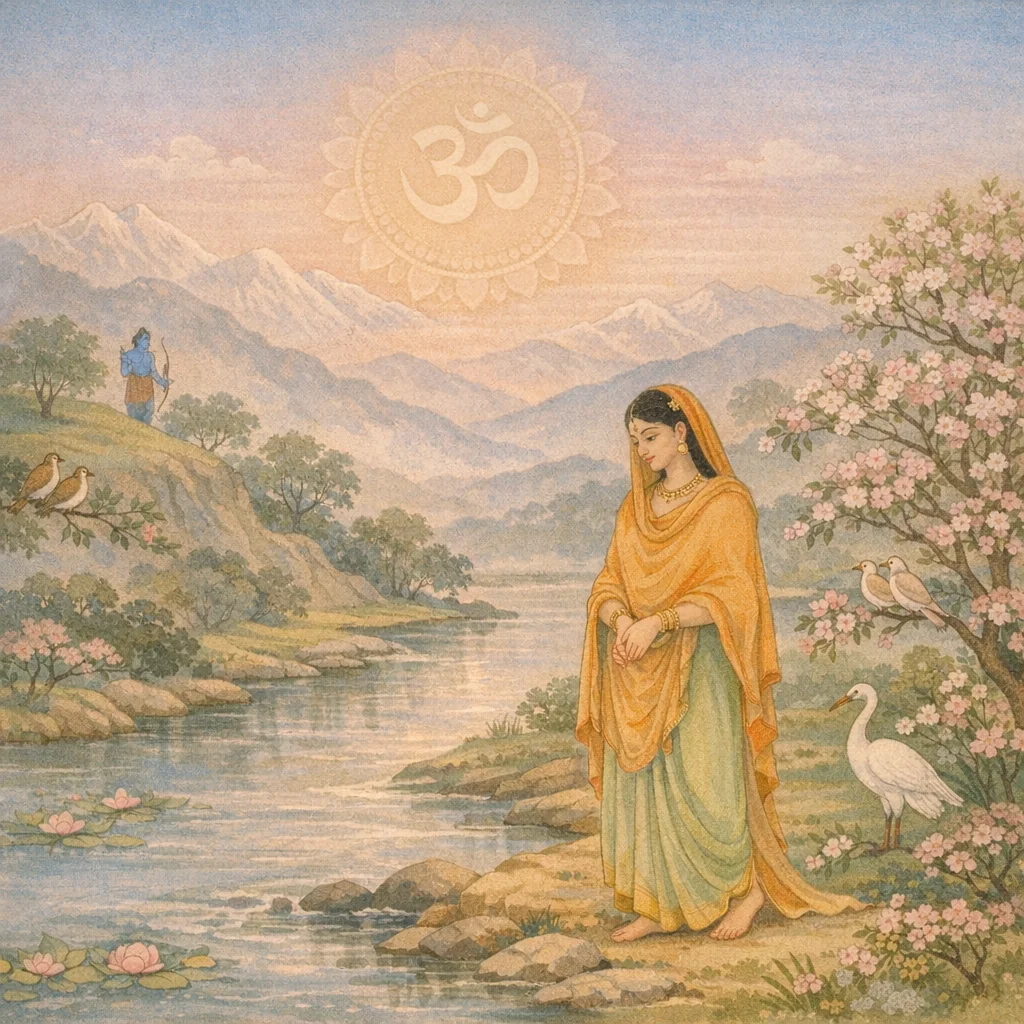
Sita
సీతా ఉపనిషత్ (అథర్వవేద-సంబంధిత, శాక్త ఉపనిషత్తుల పరంపరలో) రామాయణంలోని సీతను కేవలం ఆదర్శ పతివ్రతగా కాక పరాశక్తి, బ్రహ్మస్వరూపిణిగా ప్రతిపాదిస్తుంది. స్తుతి-భాషలోనే వేదాంత తత్త్వవిచారం—ఆత్మ, బ్రహ్మ, మోక్షం—దేవీ కేంద్రంగా వ్యక్తమవుతుంది. చారిత్రకంగా పురాణ/ఇతిహాస దేవతలను ఉపనిషదీయ వేదాంత దృష్టితో పునర్వ్యాఖ్యానించే ప్రవణతలో ఈ గ్రంథం నిలుస్తుంది. ఇక్కడ శాక్త–వైష్ణవ సమన్వయం స్పష్టం: సీత రామునితో అవిభాజ్యమైనా, జగత్తు సృష్టి-స్థితి-లయ శక్తి కూడా ఆమెనే. తత్త్వపరంగా సీతను సర్వవ్యాపి సాక్షి-చైతన్యంగా, అంతరాత్మగా, బ్రహ్మశక్తిగా దర్శింపజేస్తుంది. సీతా-బ్రహ్మ జ్ఞానం భయం, శోకం, బంధనాన్ని తొలగిస్తుంది; భక్తి (స్మరణ, స్తోత్రం) జ్ఞానంగా పరిపక్వమై మోక్షసాధనమవుతుంది. అందువల్ల సీతా ఉపనిషత్ స్త్రీదైవత్వానికి ఉపనిషదీయ ప్రతిష్ఠనిచ్చి, భక్తి-జ్ఞాన ఏకత్వం ద్వారా అద్వైత అనుభూతికి దారి చూపుతుంది.
Key Teachings
- Sītā as Devī: identification of Sītā with the supreme Goddess (Īśvarī/Śakti) and with Brahman
- Śākta–Vaiṣṇava synthesis: Sītā’s inseparability from Rāma
yet her status as the cosmic power underlying all forms
- Ātman–Brahman recognition: the inner self is not other than the Goddess; liberation arises from direct knowledge (jñāna)
- Śakti as cosmological principle: creation
maintenance
and dissolution occur through the Goddess’s power
- Bhakti as contemplative discipline: devotion
praise
and remembrance mature into non-dual realization
- Immanence and transcendence: the Goddess pervades the world while remaining beyond limiting attributes
- Mokṣa as freedom from fear and sorrow: knowledge of Sītā-Brahman removes bondage and grants abiding peace
Verses of the Sita
Explore the verses of this Upanishad.
No verses available for this Upanishad yet.