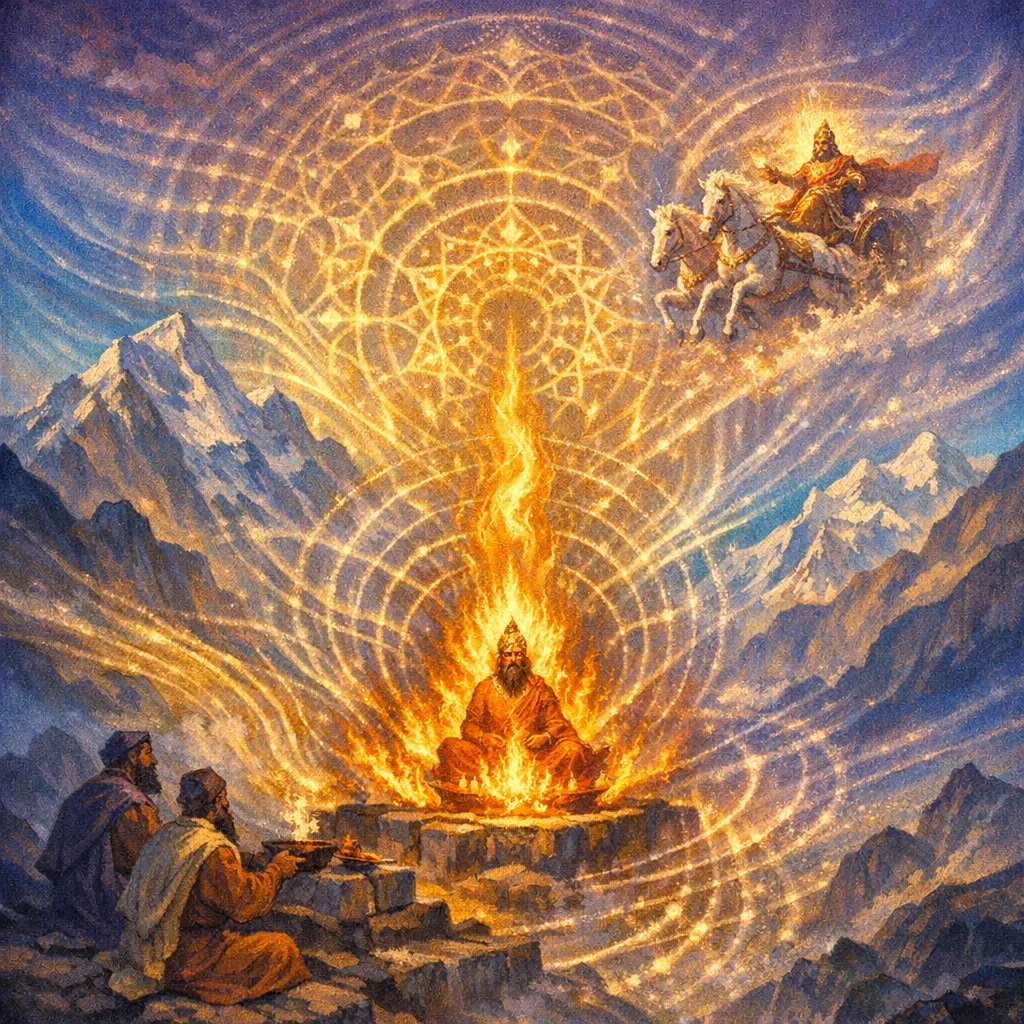
Dashati 1
Agni as the ritual nexus and Indra’s arrival/empowerment through Soma and praise
Agni
Invocatory and energizing—questioning/solemn at the start then increasingly triumphant and expansive
Ṛṣi attribution is not supplied here; identification normally follows the underlying Ṛgvedic sources for each mantra which are not fully provided in the input.
ఈ దశతిలో అగ్ని యజ్ఞానికి నాభి/ఆసనం—కర్మకు ముఖమై, యజమాని పోషణపై ‘నిలిచే’ దేవుడిగా ఆహ్వానించబడతాడు. మొదట అగ్నితో బంధుత్వాన్ని ప్రశ్నించే రహస్యోక్తి స్వరంతో ప్రారంభమై, తరువాత బర్హిస్ వైపు వేగించే అశ్వాల రూపకంతో ‘ఇక్కడికి రా’ అనే స్పష్టమైన ఆహ్వానంగా మారుతుంది. ఇంద్రుడు (విష్ణుతో కలిసి) బర్హిస్కు వచ్చి సోమాన్ని పానంచేసి, స్తోత్రానికి ప్రతిస్పందనగా తన వృష్ణ్య-శవస్సు—పౌరుషబలాన్ని—ప్రకటించునట్లు కోరబడతాడు. సోమం మరియు స్తుతి యజ్ఞంలో దేవతలను ప్రత్యక్షం చేసే క్రియగా నిలుస్తాయి; పాత సంప్రదాయ ఛందస్సుతో ఇంద్ర మహిమ విస్తరించి, యజ్ఞసిద్ధి–విజయాన్ని ఇంద్ర–విష్ణు సంయుక్తంగా నిలుపుతారని బోధిస్తుంది.
Mantras
Mantra 1
अभि प्र गोपतिं गिरेन्द्रमर्च यथा विदे मूनुं सत्यस्य सत्पतिम्
గోపతి—గోవుల అధిపతి, గిరేంద్ర—పవిత్ర గీతాధిపతి—అతనిని మేము స్తుతిద్దాం; అప్పుడు సత్యస్య సత్యపతి, ఆ ముని (జ్ఞాని) సత్పతిని మేము పొందుదాం.
Mantra 2
त्वं जामिर्जनानामग्ने मित्रो असि प्रियः सखा सखिभ्य ईड्यः
అగ్నీ! నీవు మనుష్యుల స్వజనుడు (జామి); నీవు మిత్రుడు, ప్రియుడు, సఖుడు; నీ సఖులకు నీవు స్తుత్యుడు (ఈడ్య)వు.
Mantra 3
इन्द्राय गाव आशिरं दुदुह्रे वज्रिणे मधु यत्सीमुपह्वरे विदत्
ఇంద్రునికై గోవులు ఆశిర్—మధుర మధువును—దోహించాయి; వజ్రధారికి ఆ మధుర పానం, ఆయన యజ్ఞ-ఆహ్వానంలో (ఉపహ్వర) దానిని పొందినప్పుడు.
Frequently Asked Questions
It frames a ritual teaching: Agni ‘belongs’ to the one who tends him with fuel and offerings, so the sacrificer becomes Agni’s closest human relation in the rite.
They are a standard image for Indra’s swift approach; the verse functions as an invitation for Indra to come to the prepared barhis and accept the offering.
Indra–Viṣṇu appear as cooperative powers in Vedic praise; here their joint mention reinforces Indra’s greatness and the traditional support they give to the sacrifice.