Dashati 20
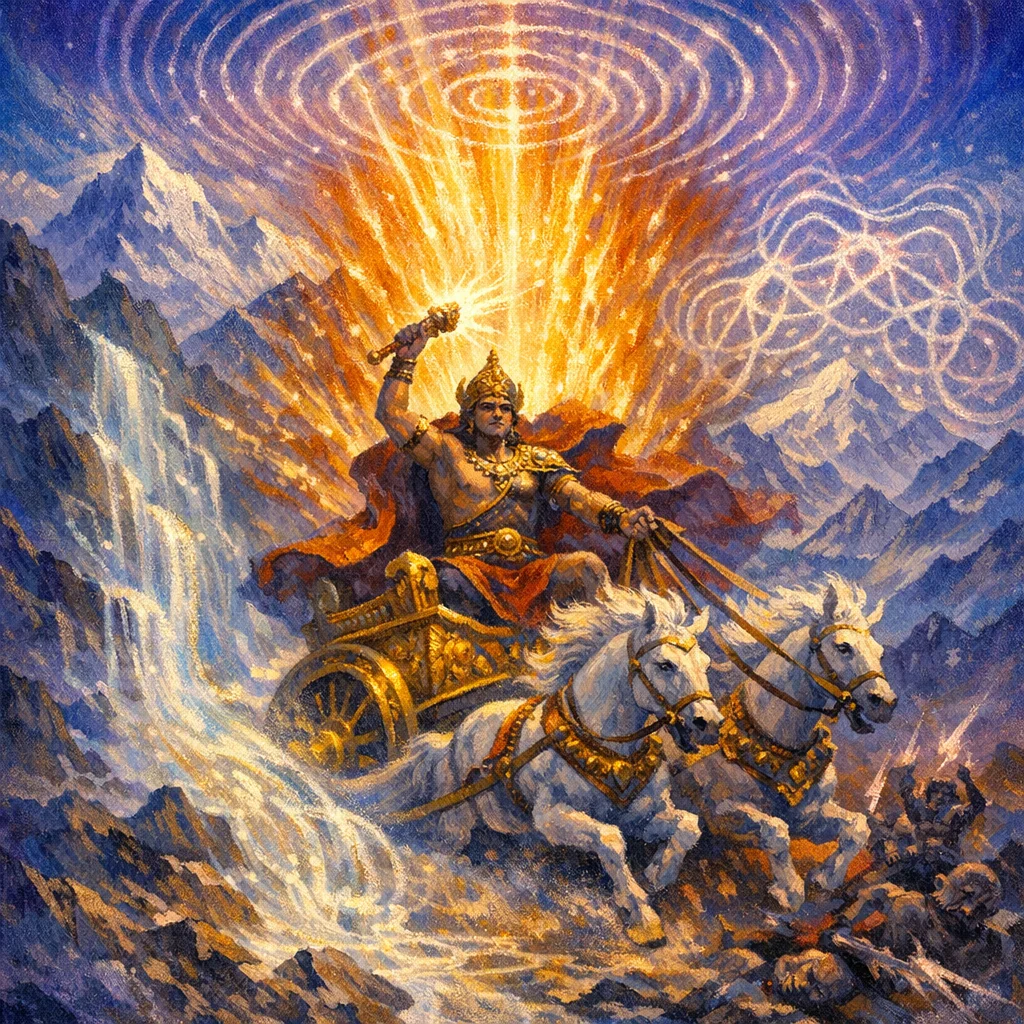
Indra empowered by Soma-exhilaration (mada/matsara) to grant victory and wealth
Indra
Exultant martial and triumphant—built on the imagery of surging Soma-power and battle-victory
Ṛṣi attribution and chandas are not supplied here; they require Rigvedic concordance for the underlying RV originals used by this Sāmavedic selection.
సోమరసపు పవిత్ర మదశక్తితో బలపడిన ఇంద్రుని ఆహ్వానించి, ఆ సోమోత్తేజం మా యజ్ఞంలోకి ప్రవేశించి ఫలించునట్లు ప్రార్థించుట. ఇంద్రుడు రథాన్ని వీరంగా నడిపి శత్రుసేనలను చెదరగొట్టి యుద్ధవిజయం, రక్షణ, మరియు యజమానునకు అపార ధనసంపద—‘వేల విజయాలు’—ప్రదానం చేయునట్లు కోరుట. అవ్రతులు, దస్యువుల వంటి ధర్మవిరోధ శక్తులపై నైతిక-యాజ్ఞిక జయం స్థాపించుట.
Mantras
Mantra 1
मत्स्यपायि ते महः पात्रस्येव हरिवो मत्सरो मदः वृषा ते वृष्ण इन्दुर्वाजी सहस्रसातमः
హరివన్! పాత్ర నుండి పొంగినట్లుగా, నీకై ఈ మహత్ ‘మత్సర’ (సోమ-ఉన్మత్త ప్రేరణ) మరియు ఉగ్ర ‘మద’ం. వృషభుడైన ఇంద్రునికై వృషభసమానమైన ఈ ‘ఇందు’ (సోమబిందువు) ‘వాజ’ (బలం/విజయం) ప్రసాదించేది; సహస్రలాభంలో అత్యంత విజయవంతమైనది.
Mantra 2
आ नस्ते गन्तु मत्सरो वृषा मदो वरेण्यः सहावां इन्द्र सानसिः पृतनषाडमर्त्यः
మాకు నీ ‘మత్సర’-ప్రేరణ రానివ్వు—వృషభసమానమైన, ‘వరేణ్య’ (శ్రేష్ఠ) ‘మద’ం. ఇంద్రా! ‘సహావాన్’ (బలవంతుడు), ‘సానసి’ (లాభదాత), ‘పృతనాషాడ్’ (యుద్ధజేత), ‘అమర్త్య’ (అమరుడు)—మా వైపు రా.
Mantra 3
त्वं हि शूरः सनिता चोदयो मनुषो रथम् सहावान्दस्युमव्रतमोषः पात्रं न शोचिषा
నీవే ‘శూర’ుడు, ‘సనితా’ (విజేత/ప్రాప్తికర్త); మనుష్యుని రథాన్ని నీవు ప్రేరేపిస్తావు. ‘సహావాన్’, దస్యువును నశింపజేసేవాడు, ‘అవ్రత’ (వ్రతరహిత)వారిని హరించేవాడు—తేజస్సుతో పాత్ర వలె నీవు ప్రకాశిస్తావు.
Frequently Asked Questions
It celebrates Soma’s ritual exhilaration (mada/matsara) as the power that makes Indra victorious—bringing battle-success, protection, and abundant gains to the sacrificer.
The ‘pātra’ points to the Soma-cup used in the rite; the imagery stresses that Indra’s strength and the sacrificer’s benefits arise from a concrete sacrificial act, not from emotion alone.
They represent opponents of Vedic order—those without observance (a-vrata) and hostile forces (Dasyu). The hymn frames Indra’s victory as both martial and moral-ritual protection for the yajamāna.