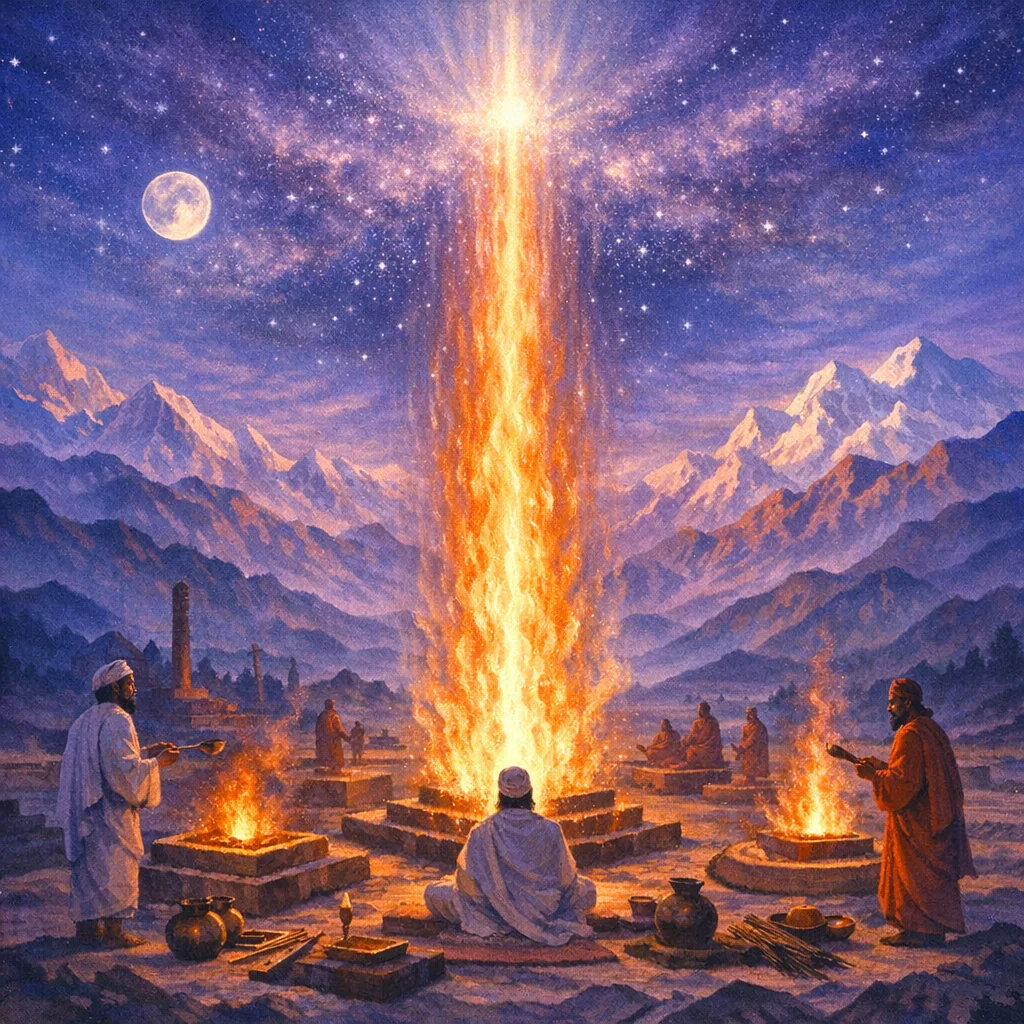
Prapathaka 1
Darśa–Pūrṇamāsa (New- and Full-Moon sacrifices) within the Śrauta iṣṭi-cycle; opening of the third kāṇḍa with preparatory and consecratory (dīkṣā/saṃskāra) elements leading into the monthly iṣṭis and their core offerings.
Kṛṣṇa Yajurveda (Taittirīya Saṃhitā) 3.1 functions as a programmatic entry into the monthly iṣṭi complex, especially the Darśa–Pūrṇamāsa cycle, by supplying the adhvaryu with tightly sequenced yajus-formulae that operationalize altar-side actions: taking and placing implements, delimiting ritual space, preparing oblations, and aligning the sacrificer with the rite’s cosmic correspondences. The chapter’s logic is characteristically Brāhmaṇa-like in its embedded exegesis: actions are not merely procedural but are construed as re-enactments of creation and social order—Agni as mouth of the gods, offerings as breath/food, and the sacrificer as a node where domestic economy is transmuted into cosmic reciprocity. The mantras emphasize correctness of measure, directionality, and purity, thereby stabilizing the transition from ordinary time to ritual time. In doing so, 3.1 establishes the semantic and performative grammar that later prapāṭhakas elaborate into specific offerings and expiations.
Anuvakas
Anuvakas for this prapathaka are loading. Please check back soon.