Prapathaka 4
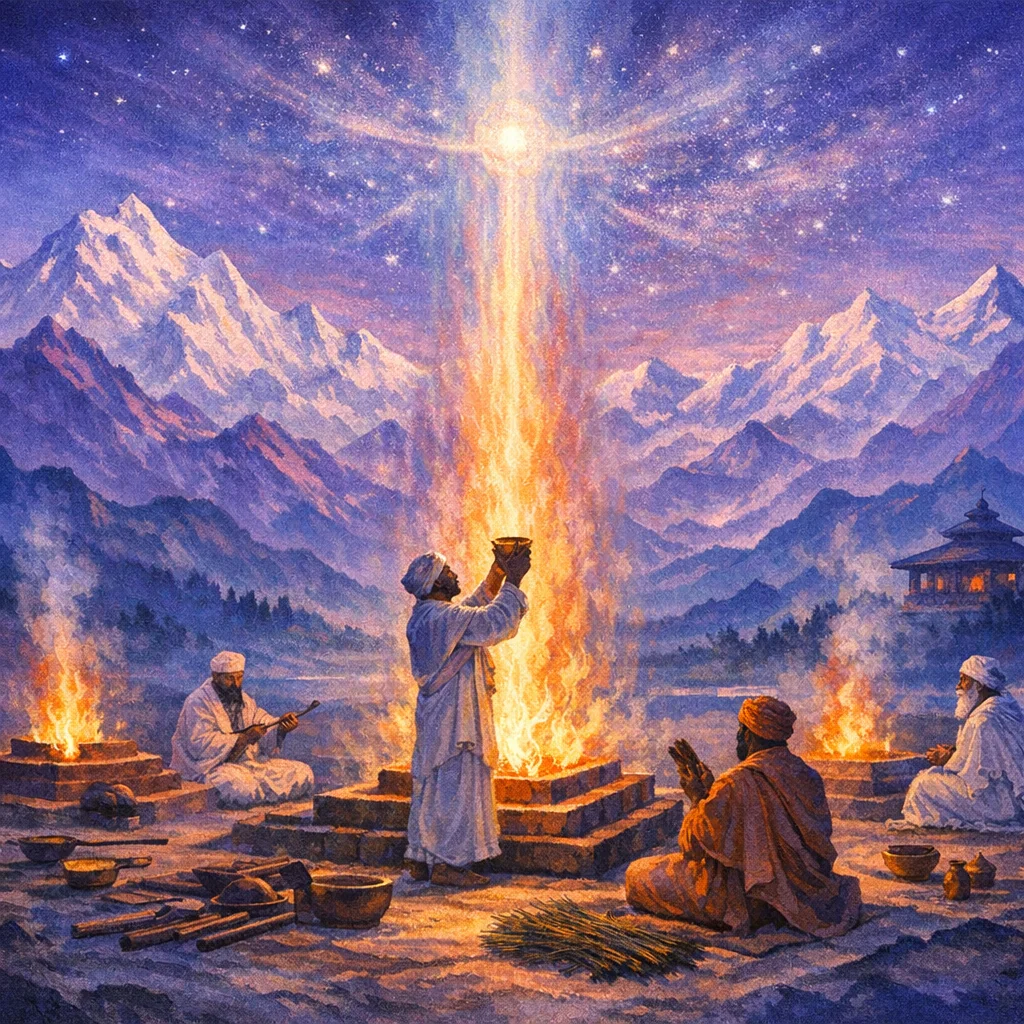
Darśa–Pūrṇamāsa (new- and full-moon iṣṭi) within the Śrauta agnihotra/adhvaryu cycle; specifically the preparatory and offering-sequence materials that standardize the Adhvaryu’s actions (saṃskāras of implements, arrangement of fires/altars, and the core oblation-formulas) leading into the monthly iṣṭi performance.
Kṛṣṇa Yajurveda 1.4 continues the programmatic construction of the Adhvaryu’s liturgy for the Darśa–Pūrṇamāsa iṣṭi, integrating action-instructions with mantraic speech in the characteristic “prose-yajus” idiom. The chapter consolidates the logic by which ritual efficacy is generated: (i) consecration and functional differentiation of implements and spaces, (ii) controlled transitions between mundane handling and sacral deployment, and (iii) the verbal sealing of each act through yajus-formulas that map cosmic correspondences onto the rite. The prapāṭhaka’s texture is pedagogical—repeating key syntagms and procedural cues—yet also theological, presenting sacrifice as a regulated exchange in which Agni mediates, the offerings are “made fit” (saṃskṛta), and the sacrificer’s prosperity is ritually manufactured. In doing so, it exemplifies the Black Yajurvedic fusion of brāhmaṇa-style rationale with operational liturgy, foregrounding the Adhvaryu’s role as the ritual’s technical and semantic controller.
Anuvakas
Anuvakas for this prapathaka are loading. Please check back soon.