
Shloka 44
Vishwarupa Darshana Yoga — Vishwarupa Darshana Yoga
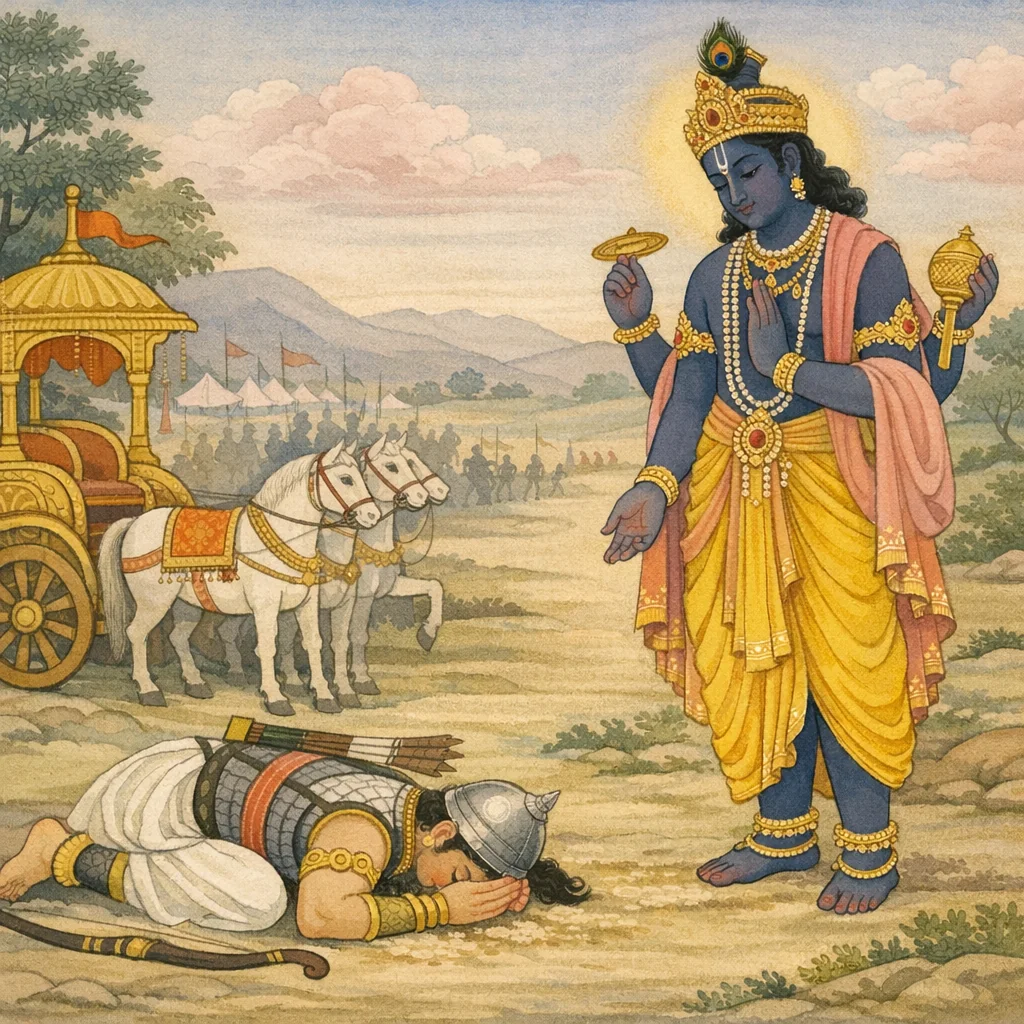
तस्मात्प्रणम्य प्रणिधाय कायं प्रसादये त्वामहमीशमीड्यम् ।
पितेव पुत्रस्य सखेव सख्युः प्रियः प्रियायार्हसि देव सोढुम् ॥
tasmāt praṇamya praṇidhāya kāyaṃ prasādaye tvām aham īśam īḍyam |
pitevā putrasya sakh eva sakhyuḥ priyaḥ priyāyārhasi deva soḍhum ||

అందువల్ల నేను నమస్కరించి, దేహాన్ని భూమిపై ఉంచి (సాష్టాంగంగా) స్తుత్యుడైన ఈశ్వరుడైన నిన్ను ప్రసన్నం చేసుకొనుచున్నాను. ఓ దేవా! తండ్రి కుమారుని, మిత్రుడు మిత్రుని, ప్రియుడు ప్రియురాలిని ఎలా సహించునో, అట్లే నీవు కూడా (నా అపరాధాన్ని) సహించవలసినవాడవు.
अतः मैं प्रणाम करके और शरीर को भूमि पर रखकर (दण्डवत् होकर) स्तुति के योग्य ईश्वर आपको प्रसन्न करता हूँ। हे देव! जैसे पिता पुत्र के, मित्र मित्र के और प्रिय प्रिय के अपराध को सहन करता है, वैसे ही आप भी (मेरे अपराध को) सहने योग्य हैं।
Therefore, bowing down and prostrating my body, I seek to appease you—the Lord worthy of praise. O god, you ought to bear with (me), as a father (bears with) a son, as a friend with a friend, as a beloved with a beloved.
अर्थ-परंपरा में ‘प्रसादये’ को ‘कृपा/प्रसन्नता प्राप्त करने का निवेदन’ तथा ‘सोढुम्’ को ‘अपराध/अविवेक का क्षमा-धैर्यपूर्वक सहन’ के रूप में समझा जाता है। श्लोक में उपमान (पिता–पुत्र, मित्र–मित्र, प्रिय–प्रिया) संबंध-आधारित करुणा को रेखांकित करते हैं; पाठ-भेद सामान्यतः अर्थ को नहीं बदलता। दिए गए इनपुट में अंतिम पद ‘प्रियः प्रिया...’ अधूरा था; यहाँ प्रचलित पूर्ण पाठ प्रस्तुत है।
FAQs
The verse depicts a shift from overwhelming awe to self-regulation through humility: Arjuna grounds himself physically (prostration) and cognitively reframes the encounter as a relationship where compassion is possible.
Īśvara is presented as both transcendent (worthy of praise) and immanently relational (father, friend, beloved). The metaphysics implied is that the ultimate can be approached through personal devotion and grace, not only through abstract contemplation.
After the revelation of the universal form (viśvarūpa), Arjuna fears he has spoken too casually to Krishna earlier. This verse is part of his request for pardon and restoration of a familiar, compassionate mode of address.
It can be read as a model for repairing relationships after misjudgment: acknowledge limits, adopt a posture of humility, and appeal to the other party’s capacity for patience and understanding.