
Shloka 34
Vishwarupa Darshana Yoga — Vishwarupa Darshana Yoga
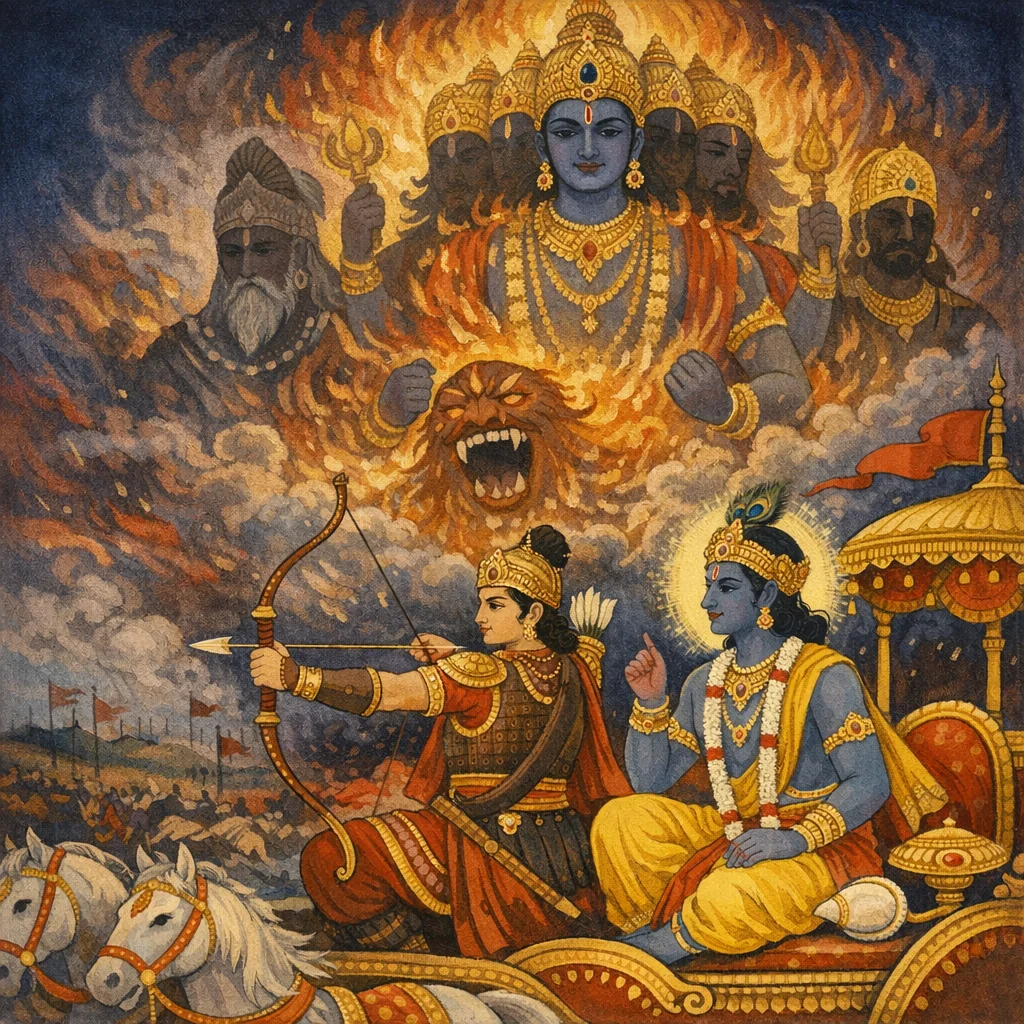
द्रोणं च भीष्मं च जयद्रथं च कर्णं तथान्यानपि योधवीरान् । मया हतांस्त्वं जहि मा व्यथिष्ठा युध्यस्व जेतासि रणे सपत्नान् ॥
droṇaṁ ca bhīṣmaṁ ca jayadrathaṁ ca karṇaṁ tathānyān api yodhavīrān | mayā hatāṁs tvaṁ jahi mā vyathiṣṭhā yudhyasva jetāsi raṇe sapatnān ||

ద్రోణుడిని, భీష్ముడిని, జయద్రథుడిని, కర్ణుడిని, అలాగే ఇతర యోధవీరులనూ నీవు సంహరించుము. వారు నాచేత ముందే హతులయ్యారు; నీవు వ్యథపడకుము. యుద్ధం చేయుము—రణంలో శత్రువులను నీవే జయించెదవు.
द्रोण, भीष्म, जयद्रथ, कर्ण तथा अन्य भी योद्धा-वीर—ये मेरे द्वारा पहले ही परास्त हैं; तुम उन्हें (युद्ध में) पराजित करो; व्यथा मत करो; युद्ध करो, तुम विरोधियों पर विजय पाओगे।
Droṇa and Bhīṣma and Jayadratha and Karṇa, and other heroic fighters as well—those brought to their end by me—do you strike down; do not be distressed. Fight; you will overcome your rivals in battle.
Although the verse names specific figures, a non-literal philosophical reading treats them as embodiments of formidable obstacles (fear, attachment, inherited loyalties). Historically, it remains situated in a royal-warrior (kṣatriya) milieu.
FAQs
The instruction addresses hesitation in the face of revered authorities and social bonds, encouraging steadiness when duty and emotion conflict.
Read philosophically, it can symbolize confronting entrenched inner patterns—habit, fear, and attachment—once insight clarifies what must be done.
It concretizes Krishna’s earlier claims by naming key opponents, tying cosmic inevitability to Arjuna’s immediate decision.
It can be applied to difficult ethical choices: act with clarity and courage, while avoiding collapse into anxiety or avoidance.