
Shloka 27
Vishwarupa Darshana Yoga — Vishwarupa Darshana Yoga
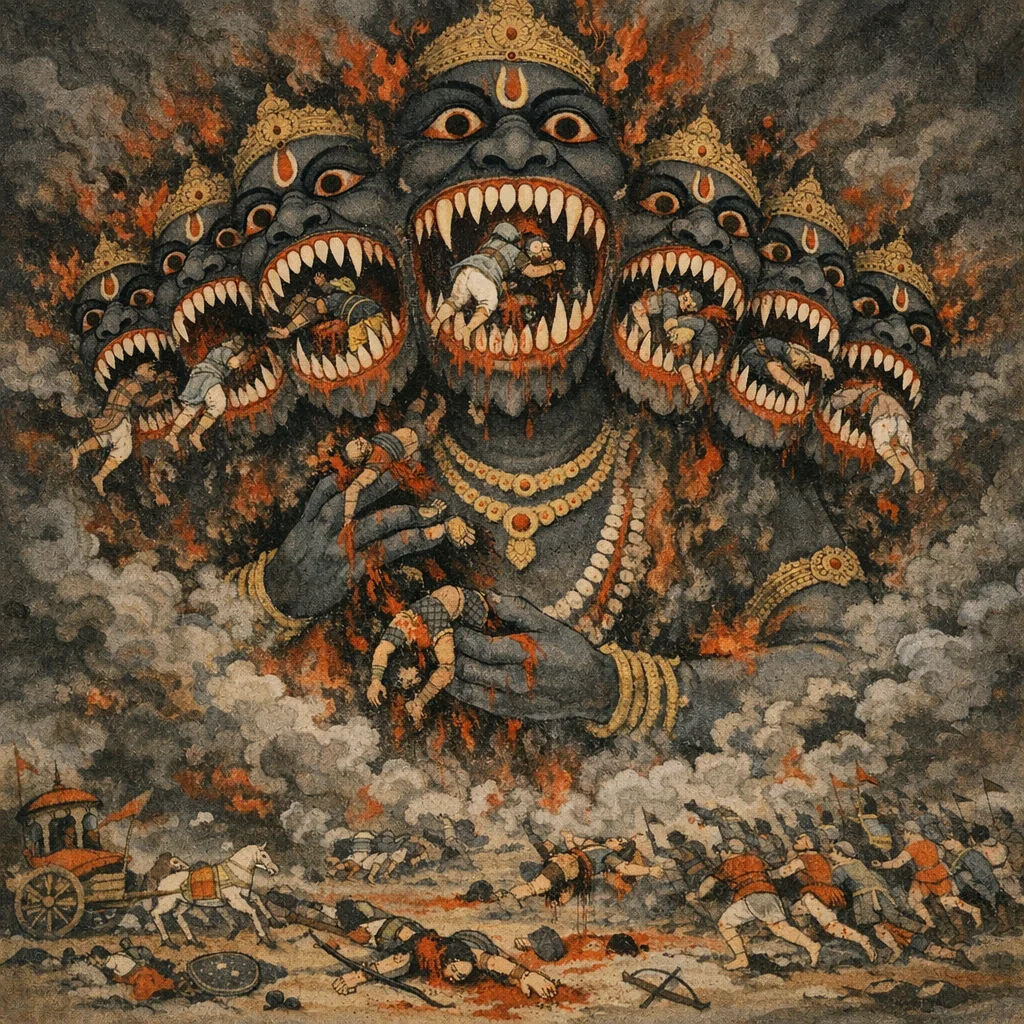
वक्त्राणि ते त्वरमाणा विशन्ति दंष्ट्राकरालानि भयानकानि । केचिद्विलग्ना दशनान्तरेषु संदृश्यन्ते चूर्णितैरुत्तमाङ्गैः ॥
vaktrāṇi te tvaramāṇā viśanti daṁṣṭrākarālāni bhayānakāni | kecid vilagnā daśanāntareṣu saṁdṛśyante cūrṇitair uttamāṅgaiḥ ||

వారు తొందరగా నీ భయంకరమైన, వికరాళ దంతాలు కలిగిన ముఖాలలో ప్రవేశిస్తున్నారు; కొందరు దంతాల మధ్య చిక్కుకొని, నలిగిన శిరస్సులతో కనిపిస్తున్నారు.
वे शीघ्रता से आपके भयानक, दाँतों से विकराल मुखों में प्रवेश कर रहे हैं; कुछ दाँतों के बीच फँसे हुए दिखाई देते हैं।
They enter, hurriedly, into your fearful mouths made dreadful by tusks; some are seen caught between the teeth, with their heads shattered (i.e., overcome).
All mainstream recensions convey the same image of beings being drawn into the cosmic form; interpretive traditions often read this as the irresistible pull of time and consequence rather than a literal depiction to be dwelt on.
FAQs
The verse can be read as a portrayal of Arjuna’s cognitive overload: the mind confronts an all-encompassing reality where individual control feels minimal, producing awe and fear.
It expresses the idea that finite beings are absorbed into a larger cosmic process—often identified with time and causality—within which individual life-cycles unfold.
It continues Arjuna’s description of the viśvarūpa, intensifying the sense that the cosmic form includes processes of arising and passing away that exceed ordinary moral and sensory categories.
As a reflective metaphor, it can support acceptance of impermanence and motivate responsible action without denial of life’s uncontrollable dimensions.