
Shloka 26
Vibhuti Yoga — Vibhuti Yoga
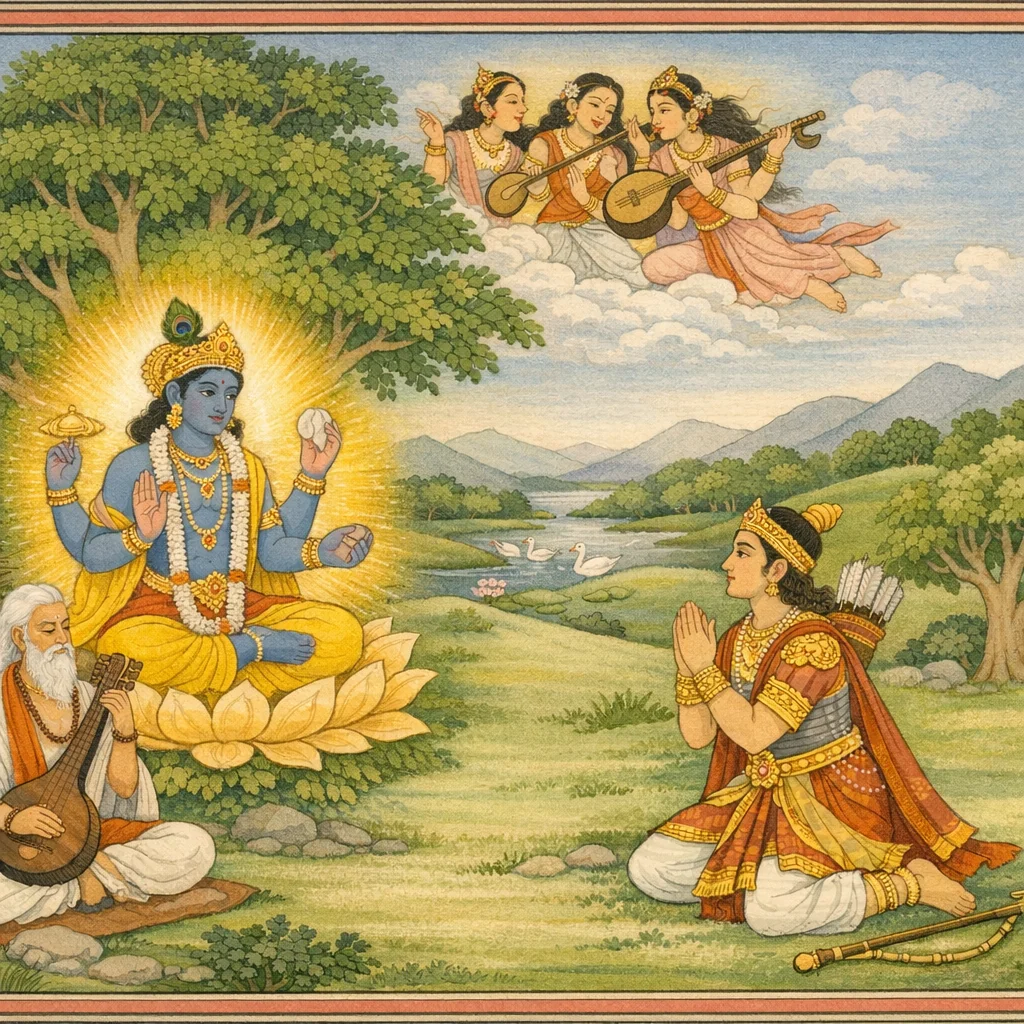
अश्वत्थः सर्ववृक्षाणां देवर्षीणां च नारदः । गन्धर्वाणां चित्ररथः सिद्धानां कपिलो मुनिः ॥ १०.२६ ॥
aśvatthaḥ sarva-vṛkṣāṇāṃ devarṣīṇāṃ ca nāradaḥ | gandharvāṇāṃ citrarathaḥ siddhānāṃ kapilo muniḥ || 10.26 ||

అన్ని వృక్షాలలో నేను అశ్వత్థం (పీపల్); దేవర్షులలో నేను నారదుడు. గంధర్వులలో నేను చిత్రరథుడు; సిద్ధులలో నేను కపిల ముని.
Among all trees I am the Ashvattha (sacred fig); among divine sages I am Narada; among Gandharvas I am Chitraratha; among perfected beings I am the sage Kapila.
Of all trees I am the aśvattha; of divine seers I am Nārada; of Gandharvas I am Citraratha; of Siddhas I am the sage Kapila.
Kapila is traditionally associated with Sāṅkhya; interpreters sometimes read this as acknowledging philosophical lineages within the Gītā’s synthesis. The aśvattha is culturally prominent as a sacred tree; later in 15.1 it gains additional symbolic elaboration.
FAQs
Archetypal exemplars (sage, celestial musician, sacred tree) can function as mnemonic anchors for values like wisdom, devotion, and refinement.
The divine is indicated through paradigmatic beings and symbols that represent life, knowledge transmission, and accomplished discipline.
The verse situates the teaching within a shared mythic-cosmological world, making philosophical claims intelligible through familiar figures.
Encourages learning through exemplars—studying ‘best instances’ of creativity, wisdom, and discipline as mirrors for self-cultivation.