
Shloka 14
Vibhuti Yoga — Vibhuti Yoga
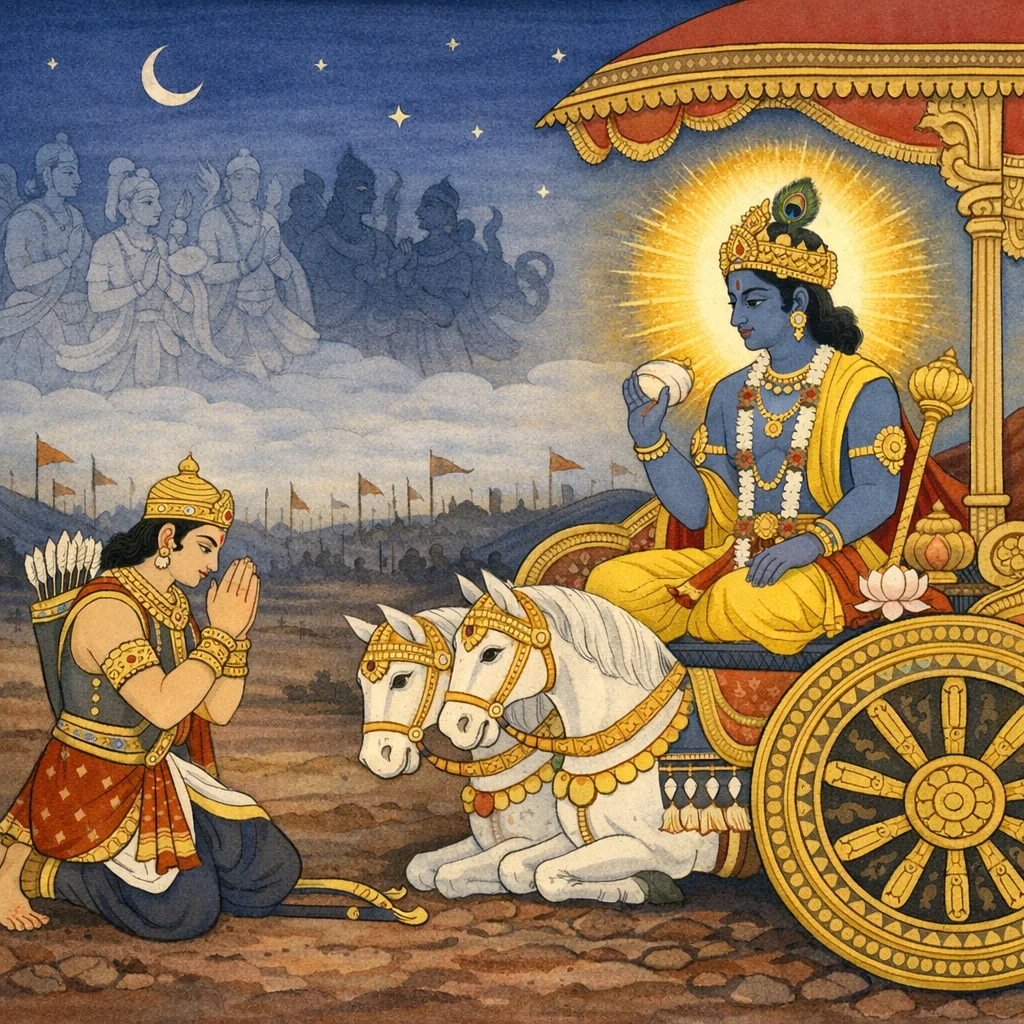
सर्वमेतदृतं मन्ये यन्मां वदसि केशव । न हि ते भगवन्व्यक्तिं विदुर्देवा न दानवाः ॥ १०.१४ ॥
sarvam etad ṛtaṁ manye yan māṁ vadasi keśava | na hi te bhagavan vyaktiṁ vidur devā na dānavāḥ || 10.14 ||

కేశవా! మీరు నాకు చెప్పినదంతా సత్యమేనని నేను భావిస్తున్నాను; ఎందుకంటే, భగవన్, దేవతలుగానీ దానవులుగానీ మీ వ్యక్తరూపాన్ని (ప్రకటనను) యథార్థంగా తెలియరు.
I deem all this to be true that You tell me, O Keśava; indeed, O Lord, neither gods nor demonic beings know Your manifestation fully.
I consider all this true that you speak to me, Keśava; for, Lord, neither the gods nor the dānavas know your (full) disclosure/manifestation.
Dānavas can be translated neutrally as a class of mythic beings often portrayed as rivals of the gods; many modern renderings avoid moral absolutism by treating the contrast as limits of even celestial knowledge.
FAQs
The verse models epistemic humility: acknowledging limits of understanding can reduce overconfidence and open the way for learning and transformation.
It implies the divine exceeds even exalted beings’ comprehension; ultimate reality cannot be fully captured by finite perspectives, whether human or celestial.
Arjuna’s assent provides narrative momentum for requesting further detail about Krishna’s vibhūtis, since ordinary categories of knowledge are presented as insufficient.
It can be read as a caution against claiming total certainty about ultimate matters, encouraging respectful inquiry and openness to multiple levels of understanding.