
Shloka 43
Sankhya Yoga — Sankhya Yoga
कामात्मानः स्वर्गपरा जन्मकर्मफलप्रदाम् । क्रियाविशेषबहुलां भोगैश्वर्यगतिं प्रति ॥ २.४३ ॥
kāmātmānaḥ svarga-parā janma-karma-phala-pradām | kriyā-viśeṣa-bahulāṁ bhogaiśvarya-gatiṁ prati || 2.43 ||

కామమే ఆత్మగా భావించి, స్వర్గాన్నే పరమ లక్ష్యంగా పెట్టుకొని, కర్మఫలంగా జన్మను ప్రసాదిస్తాయని చెప్పే మాటలను వారు పలుకుతారు; అనేక ప్రత్యేక క్రియలతో నిండిన అవి భోగం, ఐశ్వర్యం వైపు నడిపిస్తాయి.
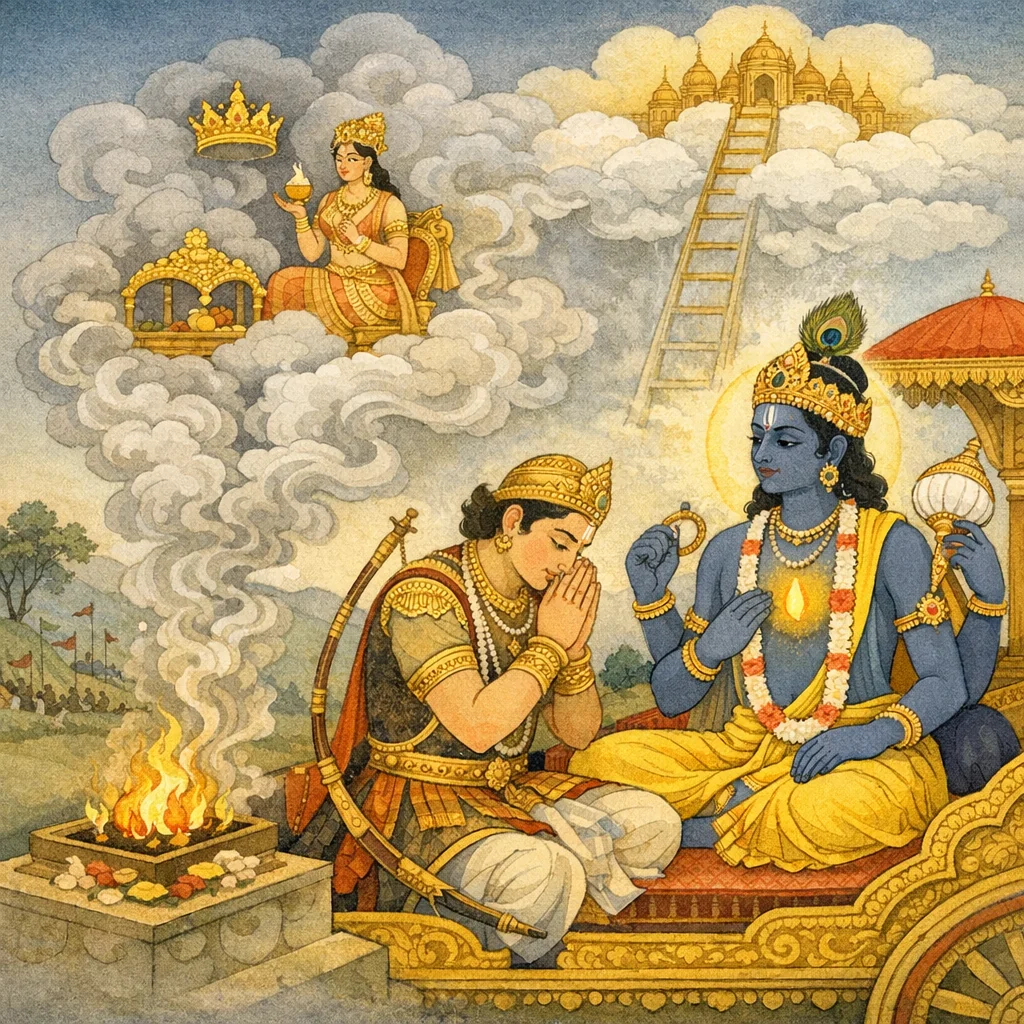
With desire as their motive, having heaven as their highest goal, they speak words that promise rebirth as the fruit of actions, abounding in specific rites, leading to enjoyment and power.
Desire-centered, heaven-oriented, they (proclaim speech) that yields the fruits of birth and action, rich in ritual particulars, aimed at the course toward enjoyment and lordship.
The verse continues the prior critique by specifying kāma (desire) and svarga (heaven) as dominant aims. janma-karma-phala-pradām is difficult: it can be read as “granting results of karma and (continued) birth,” i.e., sustaining saṃsāric continuity through reward-seeking.
FAQs
It describes a motivation structure where desire and reward dominate, which can reinforce craving and keep attention fixed on external gains.
By linking reward-seeking action to continued “birth and action-fruits,” the verse implies that such aims remain within saṃsāra rather than leading to liberation.
Krishna is differentiating karma-yoga from ritual action pursued primarily for pleasurable or status-based outcomes.
It invites reflection on whether one’s ethical or spiritual practices are primarily transactional (for benefits) or oriented toward inner transformation.