
Shloka 39
Sankhya Yoga — The Yoga of Knowledge
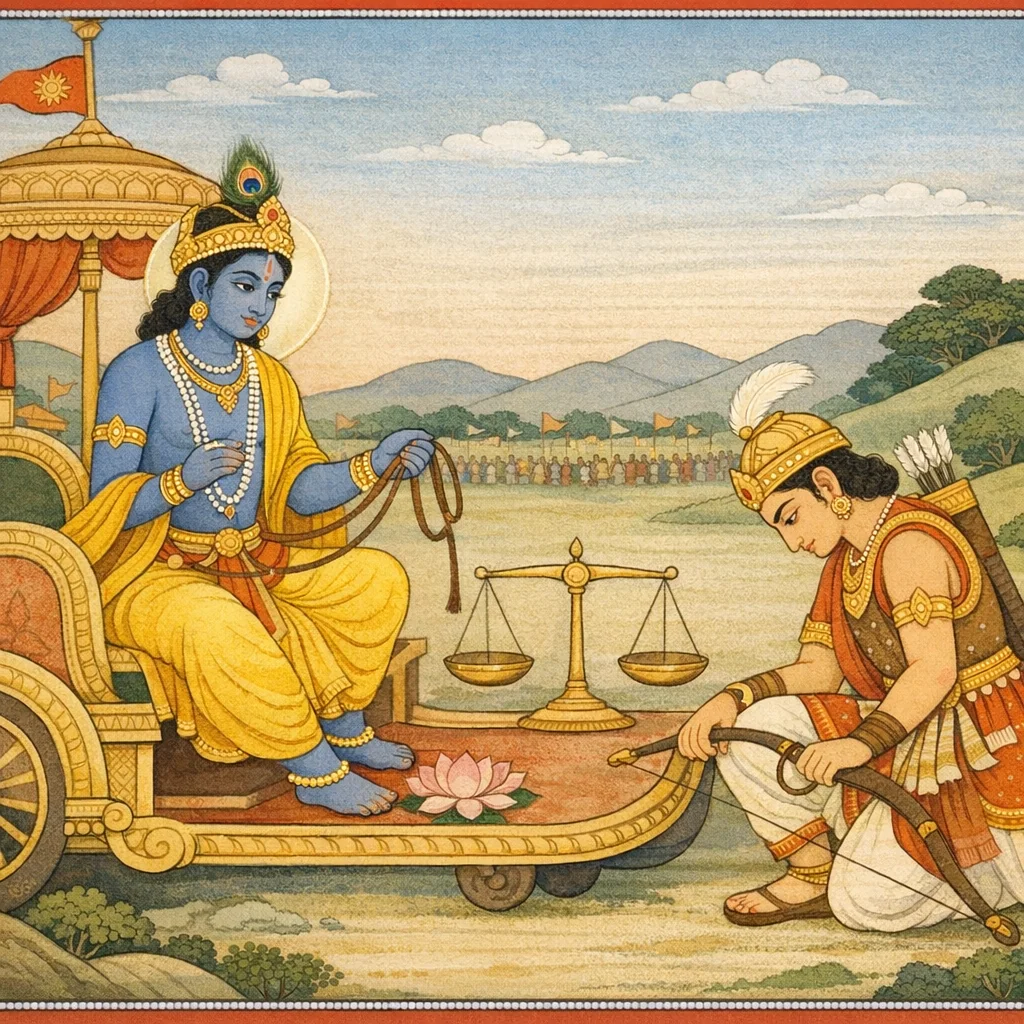
एषा तेऽभिहिता सांख्ये बुद्धिर्योगे त्विमां शृणु । बुद्ध्या युक्तो यया पार्थ कर्मबन्धं प्रहास्यसि ॥
eṣā te 'bhihitā sāṅkhye buddhir yoge tv imāṁ śṛṇu | buddhyā yukto yayā pārtha karma-bandhaṁ prahāsyasi || 2.39 ||

సాంఖ్య దృష్టితో ఈ బుద్ధి నీకు చెప్పబడింది; ఇప్పుడు యోగంగా దీనిని విను. ఓ పార్థా, ఈ బుద్ధితో యుక్తుడై నీవు కర్మబంధాన్ని విడిచిపెడతావు.
This wisdom has been declared to you from the standpoint of Sāṅkhya; now hear it as Yoga. Endowed with this understanding, O Pārtha, you will cast off the bondage of action.
This understanding has been stated to you in Sāṅkhya; now hear it in Yoga. Joined with this understanding, Pārtha, you will abandon the bondage of karma.
sāṅkhya here signals analytic discernment (often read as knowledge of self vs. body), while yoga introduces disciplined practice in action (karma-yoga). The verse is programmatic: it links insight (buddhi) with a method to reduce karmic binding.
FAQs
It emphasizes that insight must become a stable capacity (buddhi) guiding behavior; otherwise knowledge remains theoretical and does not transform habitual patterns.
Bondage is attributed to karma insofar as it is tied to identification and attachment; yoga is presented as a means to act without generating binding consequences.
This marks a pivot: after teaching discernment about the self, Krishna introduces the practical discipline of acting with a transformed intention.
It supports the idea that ethical clarity and reflective understanding should translate into practice—work done with steadiness and reduced ego-involvement.