
Shloka 34
Sankhya Yoga — Sankhya Yoga
अकीर्तिं चापि भूतानि कथयिष्यन्ति तेऽव्ययाम् । सम्भावितस्य चाकीर्तिर्मरणादतिरिच्यते ॥ २.३४ ॥
akīrtiṁ cāpi bhūtāni kathayiṣyanti te ’vyayām | sambhāvitasya cākīrtir maraṇād atiricyate || 2.34 ||

ప్రజలు నీ అవ్యయమైన అపకీర్తిని కూడా చెప్పుకొంటారు; గౌరవింపబడినవానికి అపకీర్తి మరణం కన్నా అధికంగా బాధాకరం.
People will also speak of your imperishable disgrace; and for one who has been honored, disgrace is worse than death.
Beings (people) will also recount your enduring dishonor; and for one held in esteem, dishonor exceeds death (as a social-ethical loss).
Academic renderings often clarify that “death” here functions as a comparative measure within an honor culture; it need not be read as glorifying harm but as stressing the weight of public shame in the epic milieu.
FAQs
It recognizes the powerful role of social evaluation in motivation and distress; fear of shame can shape decision-making, for better or worse.
The verse is primarily socio-ethical, not metaphysical: it evaluates action through the lens of honor and communal judgment in its historical context.
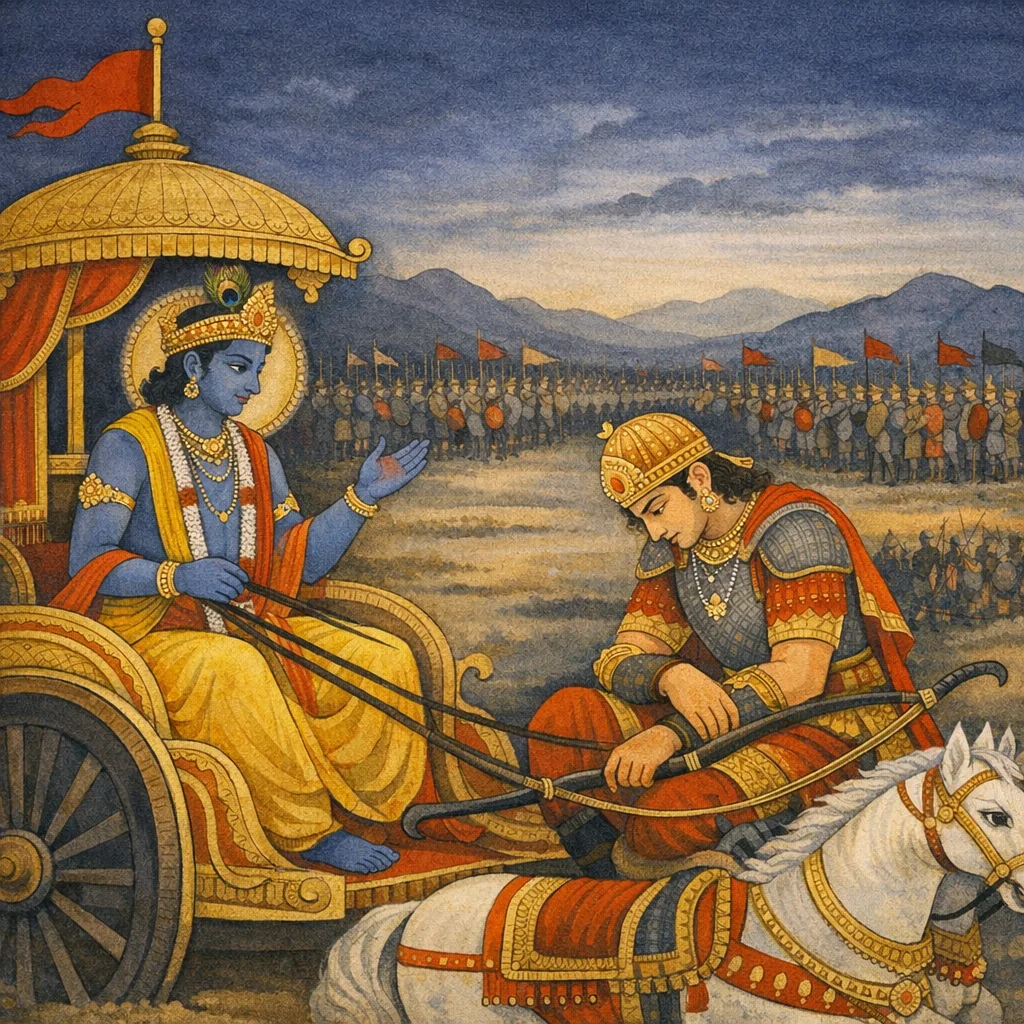
Krishna continues persuading Arjuna using values salient to a kṣatriya audience—public reputation and the expectations of peers.
Read cautiously, it can be applied as a reminder to act with integrity; however, modern ethics may also critique overreliance on public opinion and emphasize conscience over social pressure.