
Bhagavad Gita — Raja Vidya Raja Guhya Yoga, Shloka 12
Raja Vidya Raja Guhya Yoga
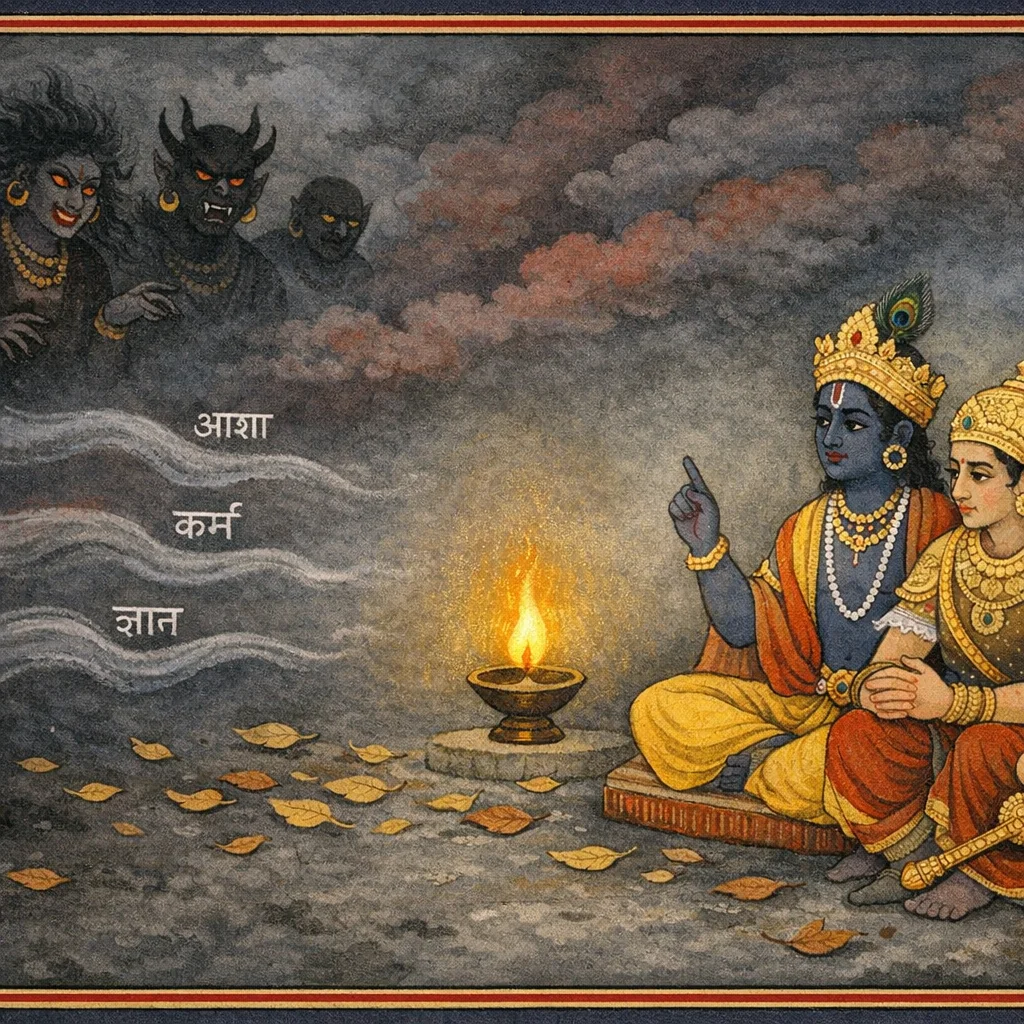
मोघाशा मोघकर्माणो मोघज्ञाना विचेतसः । राक्षसीमासुरीं चैव प्रकृतिं मोहिनीं श्रिताः ॥ ९.१२ ॥
moghāśā mogha-karmāṇo mogha-jñānā vicetasaḥ | rākṣasīm āsurīṁ caiva prakṛtiṁ mohinīṁ śritāḥ || 9.12 ||

వివేకహీనులు వ్యర్థ ఆశలతో, వ్యర్థ కర్మలతో, వ్యర్థ జ్ఞానంతో ఉంటారు; మోహింపజేసే రాక్షసీ, ఆసురీ ప్రకృతిని ఆశ్రయిస్తారు.
वे विवेकहीन लोग व्यर्थ आशा वाले, व्यर्थ कर्म वाले और व्यर्थ ज्ञान वाले होते हैं तथा मोहिनी राक्षसी और आसुरी प्रकृति को धारण किए रहते हैं।
Their hopes are futile, their actions futile, their knowledge futile; confused in mind, they resort to a deluding disposition termed ‘rākṣasa’ and ‘āsura’.
‘Rākṣasī/āsurī prakṛti’ functions as a typology of dispositions rather than an ethnic label. Many modern readings interpret these as psychological-moral patterns (deception, arrogance, destructiveness) rather than literal beings.
FAQs
The verse outlines a syndrome: distorted expectations (moghāśā), misdirected effort (mogha-karmāṇaḥ), and confused understanding (mogha-jñānāḥ), rooted in a deluding mindset that undermines clarity and self-regulation.
Within the text’s worldview, certain dispositions obscure recognition of the divine and the liberative path, producing actions and cognitions that do not culminate in the intended spiritual goal.
It continues 9.11 by describing the consequences of misrecognition: when one dismisses the divine teaching, one’s aims and practices become ‘futile’ relative to liberation.
It can be used to analyze value-misalignment: when goals, methods, and beliefs conflict with well-being and ethical clarity, effort may intensify confusion rather than resolve it.