
Bhagavad Gita — Moksha Sannyasa Yoga, Shloka 66
Moksha Sannyasa Yoga
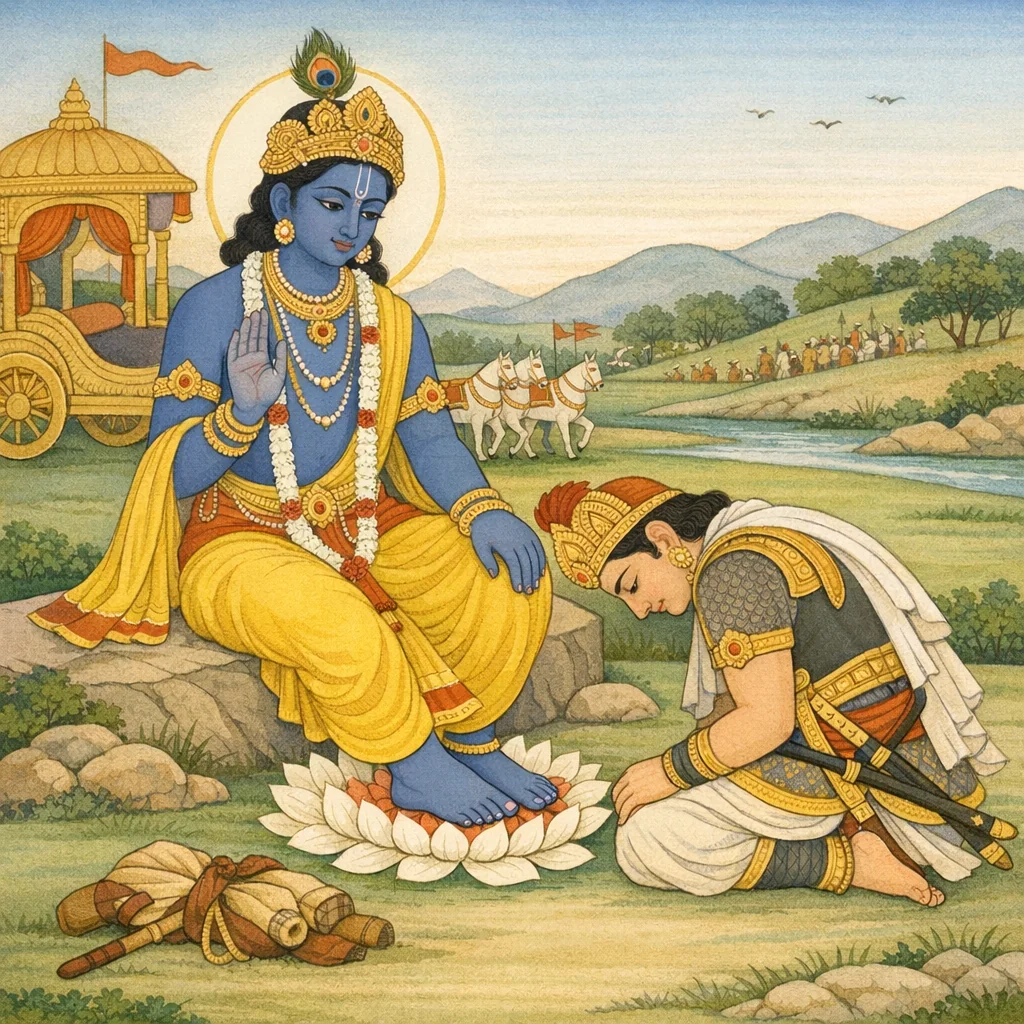
सर्वधर्मान्परित्यज्य मामेकं शरणं व्रज । अहं त्वां सर्वपापेभ्यो मोक्षयिष्यामि मा शुचः ॥ १८.६६ ॥
sarvadharmān parityajya mām ekaṁ śaraṇaṁ vraja | ahaṁ tvāṁ sarvapāpebhyo mokṣayiṣyāmi mā śucaḥ || 18.66 ||

సర్వ ధర్మాలను పరిత్యజించి, నన్నే ఏకైక శరణంగా చేరుము; నేను నిన్ను సమస్త పాపాల నుండి విముక్తి చేస్తాను—శోకించకు.
समस्त धर्मों को त्यागकर केवल मेरी शरण में आ जा; मैं तुझे सम्पूर्ण पापों से मुक्त कर दूँगा—शोक मत कर।
Abandoning all dharmas, come to me alone as refuge; I will liberate you from all wrongdoing/evil consequences—do not grieve.
A major interpretive issue is ‘सर्वधर्मान्’: (a) renounce all other duties/ritual obligations in favor of exclusive refuge (bhakti-śaraṇāgati), or (b) relinquish attachment to all duty-constructs as self-justifying identities, while acting without possessiveness. ‘पापेभ्यः’ may denote moral faults or the binding consequences of actions; traditions vary on whether the promise is immediate absolution or liberation through transformative commitment.
FAQs
It addresses moral anxiety and burden: ‘do not grieve’ functions as reassurance, while ‘refuge’ can be read as letting go of perfectionism and self-condemnation through commitment to a higher ethical-spiritual orientation.
The verse is a culminating claim of salvific grace: liberation is secured through exclusive reliance on the divine, who removes the binding force of wrongdoing and karmic consequence.
As the Gita’s climactic counsel, it resolves the tension between complex duty-discourses and the promise of liberation by offering a final integrating principle: surrender to the divine source of the teaching.
It can be approached as prioritizing core ethical commitments over conflicting secondary obligations, and adopting practices of accountability plus self-compassion to move forward constructively.
Ask anything about this verse
Curious about the meaning, context, or a word? Ask, and continue the conversation in the Vedapath app.
A free Google sign-in keeps your chat saved across web and the app.
Read Bhagavad Gita in the Vedapath app
Scan the QR code to open this directly in the app, with audio, word-by-word meanings, and more.