
Bhagavad Gita — Moksha Sannyasa Yoga, Shloka 12
Moksha Sannyasa Yoga
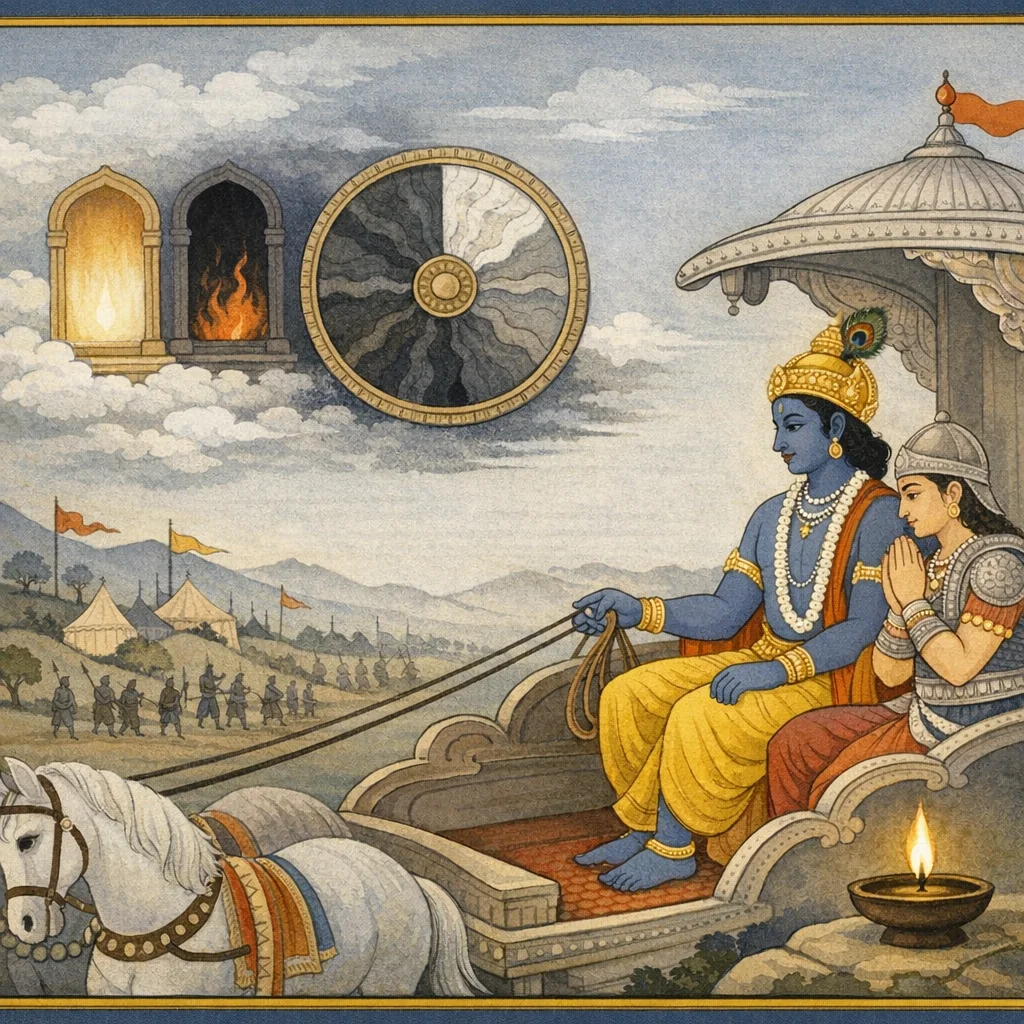
अनिष्टमिष्टं मिश्रं च त्रिविधं कर्मणः फलम् । भवत्यत्यागिनां प्रेत्य न तु संन्यासिनां क्वचित् ॥ १८.१२ ॥
aniṣṭam iṣṭaṃ miśraṃ ca tri-vidhaṃ karmaṇaḥ phalam | bhavaty atyāgināṃ pretya na tu saṃnyāsināṃ kvacit || 18.12 ||

కర్మఫలం అనిష్టం, ఇష్టము, మిశ్రమము—అని మూడు విధాలు; త్యాగం చేయని వారికి మరణానంతరం అది కలుగుతుంది; కానీ సన్న్యాసులకు ఎప్పుడూ కాదు.
कर्म का फल अनिष्ट, इष्ट और मिश्र—इस प्रकार तीन प्रकार का होता है; यह फल त्याग न करने वालों को मरने के बाद मिलता है, परंतु संन्यासियों को कभी नहीं।
The fruit of action is threefold—undesired, desired, and mixed; it accrues after death for those who do not relinquish, but not for renouncers at any time.
Traditional interpretations may align ‘saṃnyāsin’ here with one who has renounced fruits/ego (not necessarily a formal monastic). Academic readings note the after-death (‘pretya’) karmic accounting typical of dharma discourse.
FAQs
Attachment tends to keep the mind invested in reward/punishment narratives; the verse suggests that relinquishment reduces the sense of being personally ‘owed’ outcomes.
Within karmic theory, clinging to fruits sustains the chain of moral causality across time; renunciation interrupts appropriation of results and thus limits further binding consequences.
It extends 18.11 by describing what happens to those who do not practice fruit-renunciation: they remain subject to the threefold spectrum of karmic results.
Interpreted secularly, outcomes of actions can be pleasant, unpleasant, or mixed; reducing possessiveness about results helps one stay balanced amid all three.