
Shloka 23
Karma Yoga — Karma Yoga
यदि ह्यहं न वर्तेयं जातु कर्मण्यतन्द्रितः । मम वर्त्मानुवर्तन्ते मनुष्याः पार्थ सर्वशः ॥ ३.२३ ॥
yadi hy ahaṁ na varteyaṁ jātu karmaṇy atandritaḥ | mama vartmānuvartante manuṣyāḥ pārtha sarvaśaḥ || 3.23 ||

ఎందుకంటే, నేను ఎప్పుడైనా అలసట లేకుండా (అతంద్రితుడై) కర్మలో ప్రవృత్తి చెందకపోతే, ఓ పార్థా, మనుష్యులు అన్ని విధాలా నా మార్గాన్నే అనుసరిస్తారు.
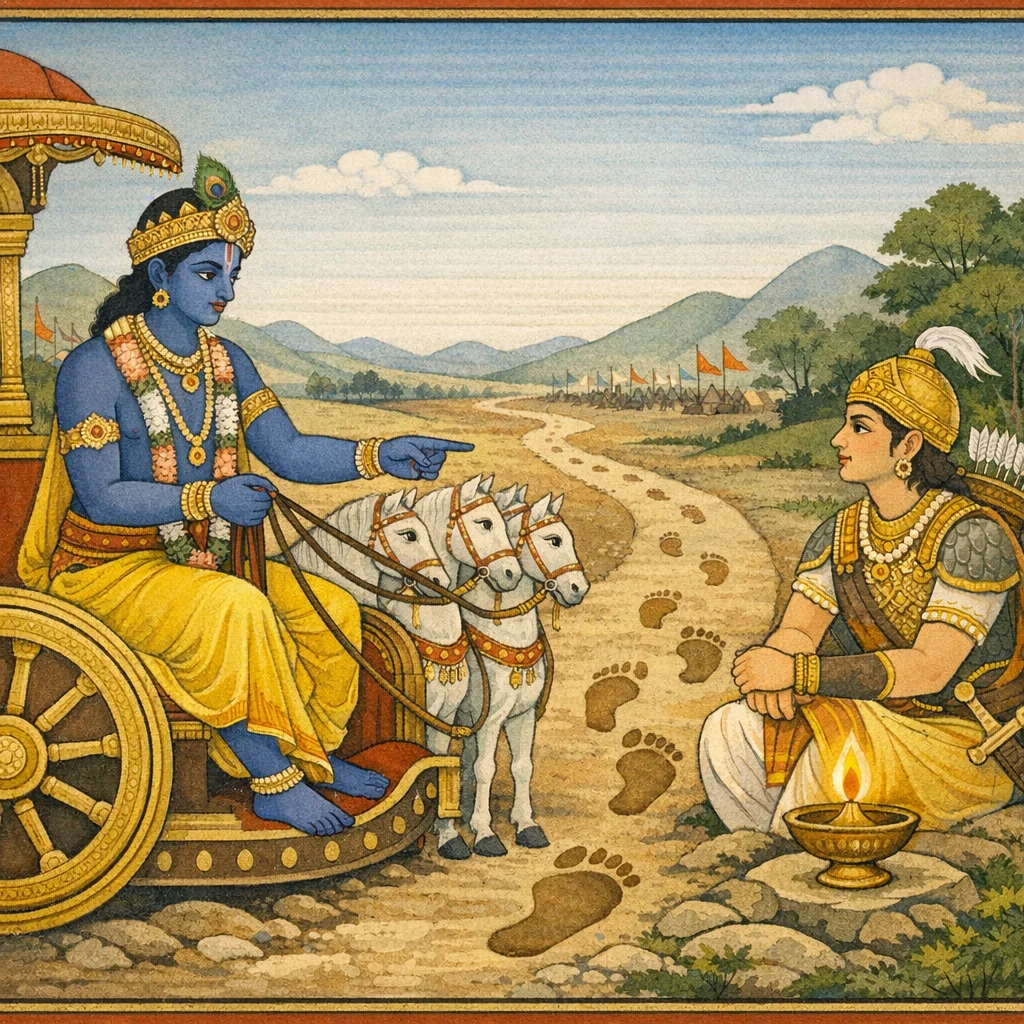
For, if I did not ever engage tirelessly in action, O Pārtha, people would in every way follow my path.
If I were never to remain engaged in action, without negligence, O Pārtha, human beings would follow my course in every respect.
Both readings emphasize exemplary leadership: the “traditional” phrasing stresses divine exemplariness; the more literal rendering highlights social imitation (others model themselves on the agent’s conduct). No major variant is implied by the given text.
FAQs
The verse frames motivation as partly relational: one’s sustained effort can stabilize others’ confidence and norms, reducing collective hesitation or apathy.
It supports the idea that liberated or authoritative agents may still act, not from personal lack, but to sustain the pedagogical and ethical order.
In the argument for karma-yoga, Krishna explains why action remains appropriate even for the highest exemplar: society imitates prominent figures.
In institutions, visible adherence to responsibilities by leaders can prevent disengagement and normalize conscientious work.