
Shloka 21
Karma Yoga — Karma Yoga
यद्यदाचरति श्रेष्ठस्तत्तदेवेतरो जनः । स यत्प्रमाणं कुरुते लोकस्तदनुवर्तते ॥ ३.२१ ॥
yad yad ācarati śreṣṭhas tat tad evetaro janaḥ | sa yat pramāṇaṁ kurute lokas tad anuvartate || 3.21 ||

శ్రేష్ఠుడు ఏది ఏది ఆచరిస్తాడో, ఇతరులు కూడా అదే ఆచరిస్తారు; అతడు ఏ ప్రమాణాన్ని స్థాపిస్తాడో, లోకం దానినే అనుసరిస్తుంది.
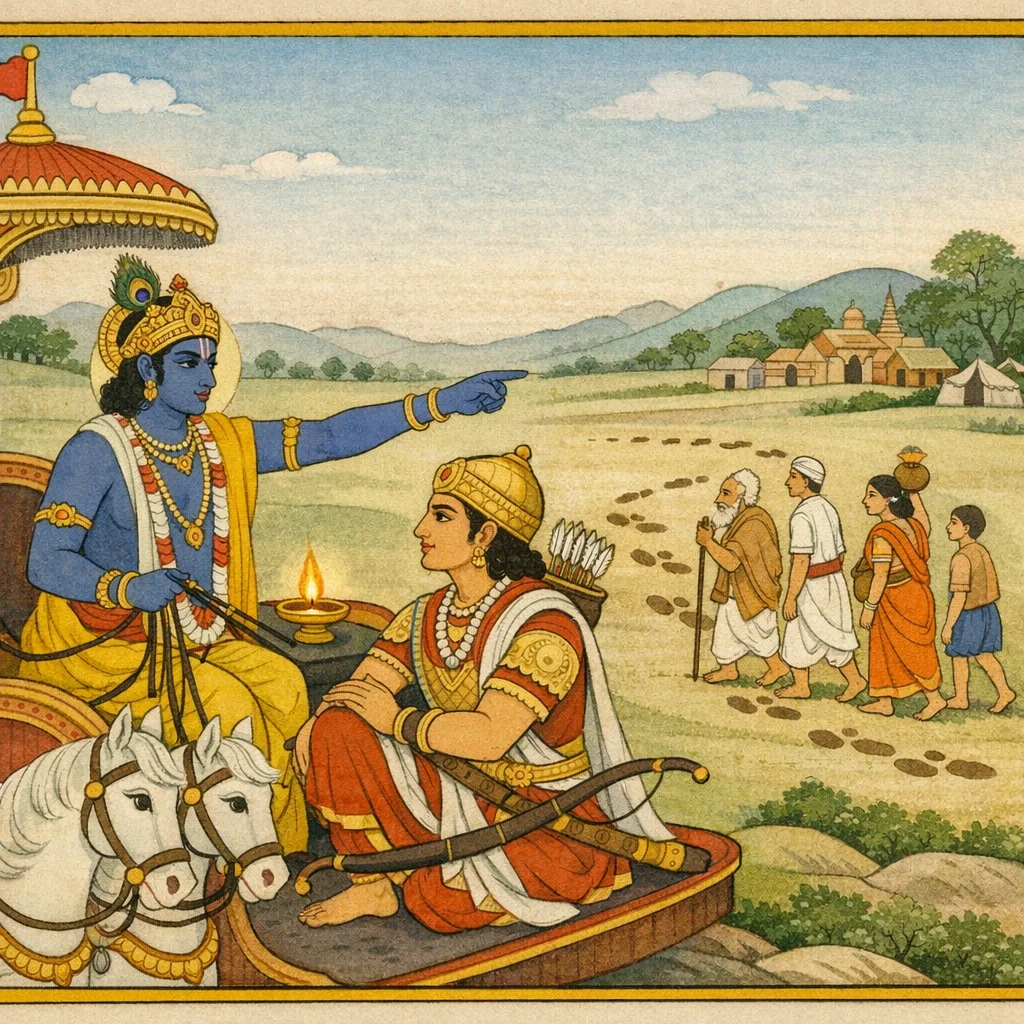
Whatever the श्रेष्ठ (leading person) does, that alone others do; whatever standard he sets, the world follows.
Whatever a leading person practices, that the other people practice; whatever standard he establishes, the world follows that.
Interpretations are largely stable. ‘Śreṣṭha’ can mean socially eminent, ethically exemplary, or spiritually advanced; ‘pramāṇa’ is ‘authoritative standard’—often read as the normative power of exemplars in shaping collective conduct.
FAQs
It recognizes social imitation: people adopt behaviors modeled by admired figures, so personal discipline in leaders has broad psychological impact.
Rather than a metaphysical claim, it is primarily an ethical-sociological principle within the Gītā’s framework of sustaining order.
It strengthens the argument for Arjuna’s engagement: his conduct sets precedents, so withdrawal would communicate a norm of avoidance.
Applies to public figures, managers, teachers, and parents: institutional culture often mirrors the behavior that leaders normalize.