
Shloka 1
Karma Yoga — Karma Yoga
अर्जुन उवाच । ज्यायसी चेत्कर्मणस्ते मता बुद्धिर्जनार्दन तत्किं कर्मणि घोरे मां नियोजयसि केशव ॥ ३.१ ॥
arjuna uvāca | jyāyasī cet karmaṇas te matā buddhir janārdana tat kiṁ karmaṇi ghore māṁ niyojayasi keśava || 3.1 ||

అర్జునుడు అన్నాడు: జనార్దనా! కర్మకన్నా బుద్ధి (జ్ఞానం) శ్రేష్ఠమని నీవు భావిస్తే, కేశవా! మరి ఈ ఘోరమైన కర్మలో నన్నెందుకు నియోగిస్తున్నావు?
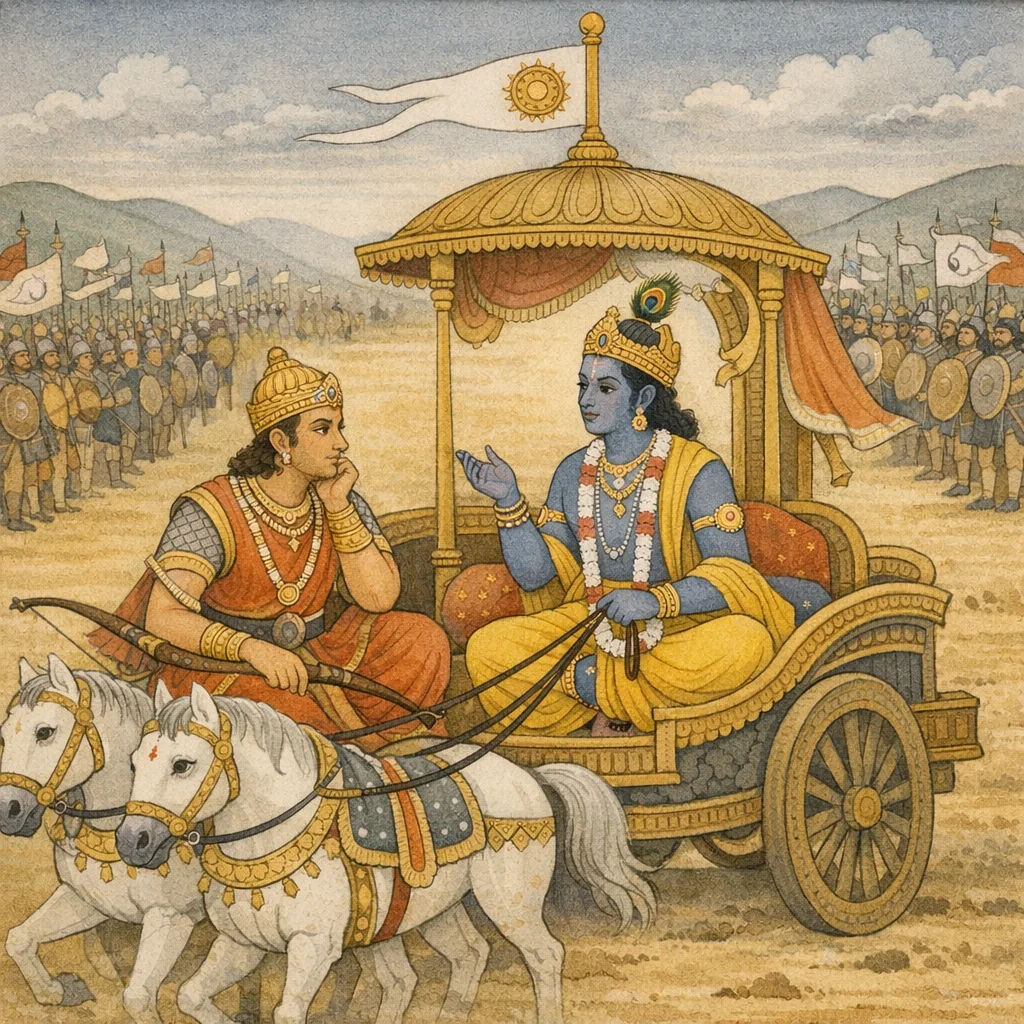
Arjuna said: If You consider knowledge (buddhi) superior to action, O Janārdana, then why do You urge me to engage in this difficult action, O Keśava?
Arjuna said: If, in your view, understanding is better than action, O Janārdana, then why do you enjoin me upon such arduous action, O Keśava?
Karmaṇi ghore is commonly rendered ‘terrible’ or ‘dreadful’; in context it can be read as ‘formidable/arduous duty’ within a martial-social setting, or more broadly as demanding ethical action under pressure.
FAQs
Arjuna articulates cognitive dissonance: he hears praise of inner wisdom yet faces a demanding obligation, prompting a need for an integrated framework.
The question sets up the Gītā’s synthesis: insight is not necessarily opposed to action; later verses argue for action informed by non-attachment and right understanding.
This opens Chapter 3 by challenging the apparent hierarchy implied in Chapter 2, pressing Krishna to reconcile jñāna-oriented teaching with prescribed duty.
It parallels dilemmas where reflective ideals seem to conflict with practical responsibilities—e.g., whether to withdraw or to act in complex social situations.