Adhyaya 206
Agastyārghyadāna-kathana (On the Giving of the Agastya Honor-Offering)
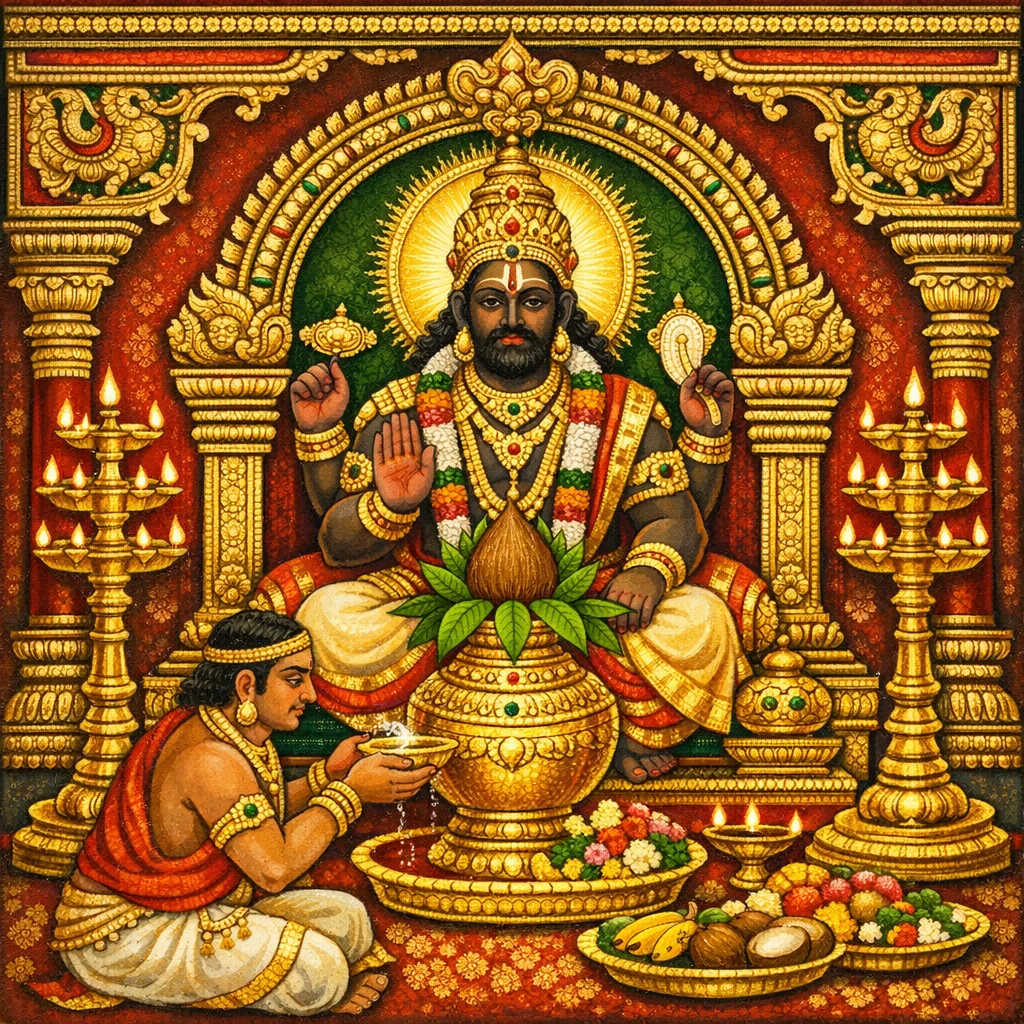
ఈ అధ్యాయంలో భగవాన్ అగ్ని, అగస్త్యుడిని విష్ణుస్వరూపుడిగా స్పష్టంగా పేర్కొని, అగస్త్యకేంద్రిత వ్రతపూజను విధిస్తాడు; దీనివల్ల హరి-ప్రాప్తి సిద్ధిస్తుందని చెబుతాడు. మూడు రోజులు సూర్యోదయానికి ముందే ఉపవాసం చేసి, పూజ చేసి, అగస్త్యునికి అర్ఘ్యం సమర్పించాలి. ప్రదోష సమయంలో కాశపువ్వులతో చేసిన ప్రతిమను నీటికుండ/ఘటంలో ప్రతిష్ఠించి రాత్రి జాగరణ (ప్రజాగరం) చేయాలి. మరుసటి ఉదయం జలాశయం దగ్గర అర్ఘ్యం ఇచ్చి, సముద్రాన్ని ఎండబెట్టడం, ఆతాపి–వాతాపి సంహారం వంటి కీర్తులను స్తోత్రాలతో స్మరించి వరాలు, శుభ పరలోకగతిని ప్రార్థించాలి. చందనం, మాలలు, ధూపం, వస్త్రం, బియ్యం/ధాన్యం, ఫలాలు, బంగారం మొదలైన ద్రవ్యాలు, బ్రాహ్మణునికి ఘటదానం, భోజనం మరియు దక్షిణ (గోవు, వస్త్రాలు, బంగారం) వివరించబడింది. మంత్రపాఠ భేదాలు చెప్పి, స్త్రీలు మరియు శూద్రులు వేదమంత్రాలు లేకుండా చేయాలని నియమం ఉంది. ఏడు సంవత్సరాలు అర్ఘ్యవ్రతం చేస్తే సర్వసంపద, సంతానం లేనివారికి కుమారలాభం, కన్యకు రాజభర్త లభిస్తాడని ఫలశ్రుతి।
Shlokas
No shlokas available for this adhyaya yet.
Frequently Asked Questions
Fasting and worship precede the arghya; at pradoṣa a kāśa-flower image is placed in a ghaṭa/kumbha, followed by night vigil; in the morning the arghya is offered near water, then tyāga (grain, fruit, libation) and charitable gifts/feeding of brāhmaṇas conclude the rite.
Sandalwood, garlands, incense, cloth, rice/grains, fruits, gold (and in an expanded description: five gems, gold and silver, seven grains, curd, sandalwood), plus a pot-gift to a brāhmaṇa and dakṣiṇā including cow, garments, and gold.
The rite explicitly aims at attaining Hari through Agastya-worship (mukti-oriented devotion) while also promising dharma-anchored prosperity—health, fortune, desired boons, lineage, and marital success—thus integrating dharma, artha, kāma, and mokṣa.
It states that for women and Śūdras the rite is ‘non-Vedic,’ i.e., performed without Vedic mantras, indicating an inclusive procedural adaptation while preserving the devotional and charitable structure.
By giving the arghya for seven years, ‘all obtain everything’: a childless woman gains sons and good fortune, and a maiden gains a husband of royal birth; the arghya is also described in some readings as imperishable and mind-fulfilling.