Adhyaya 187
Ekādaśī-vrata (Observance of Ekādaśī)
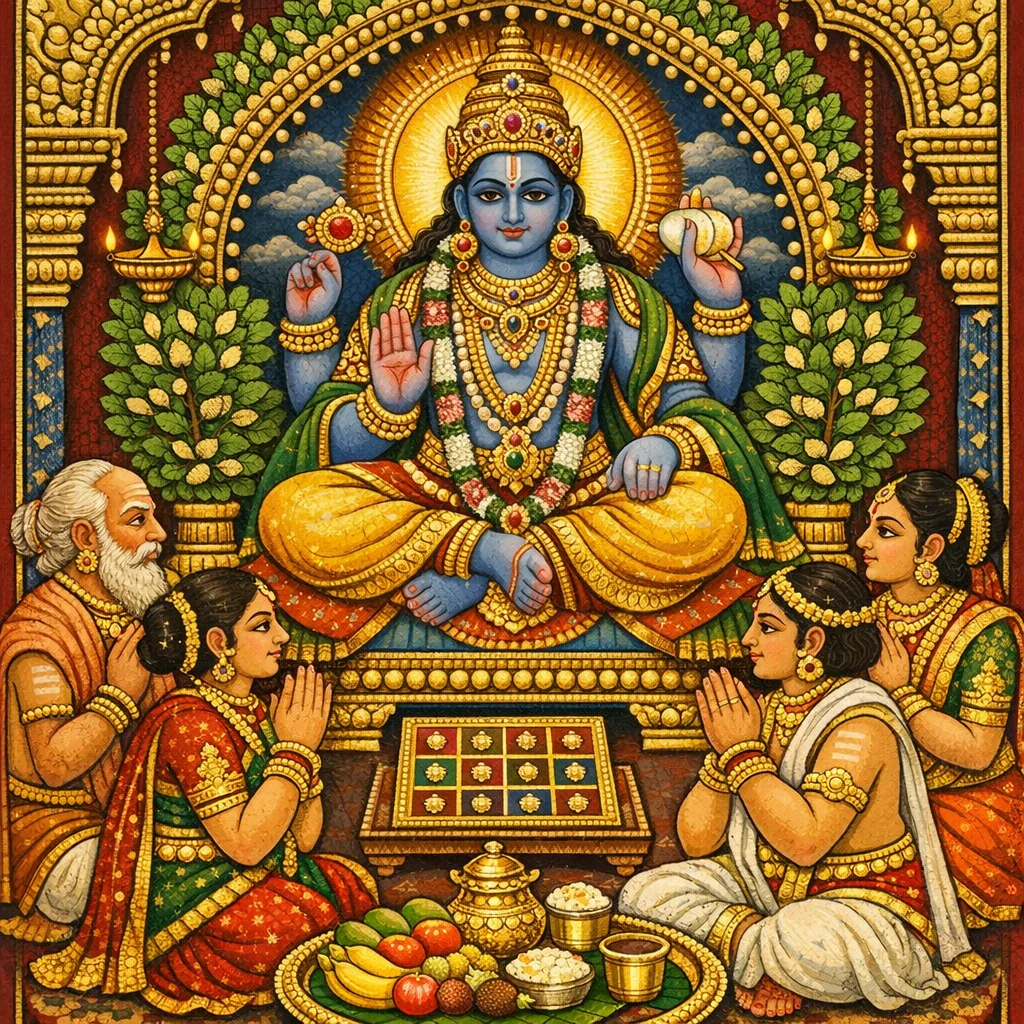
దశమీ వ్రత భాగం వెంటనే అగ్నిదేవుడు ఏకాదశీ వ్రతాన్ని ఉపదేశించి, ఉపవాసం భుక్తి–ముక్తి రెండింటినీ ప్రసాదించే నియమిత ఆధ్యాత్మిక సాధనమని వివరిస్తాడు. వ్రతం దశమీ నుంచే ప్రారంభమై నియతాహారం, మాంసత్యాగం, బ్రహ్మచర్యంతో శరీర–మనస్సును సిద్ధం చేస్తుంది. శుక్ల, కృష్ణ పక్షాల ఏకాదశీనాడు భోజనం నిషిద్ధం; ఏకాదశీ ద్వాదశితో కలిసినప్పుడు హరి సన్నిధి పెరుగుతుందని, పారణం (ఉపవాస విరమణ) సమయం నిర్ణాయకమని చెబుతుంది. కొన్ని తిథి-భాగ నియమాల ప్రకారం త్రయోదశీనాడు కూడా పారణం చేయవచ్చు; దాని పుణ్యం వంద వైదిక యజ్ఞాలకు సమమని పేర్కొంటుంది. అయితే దశమీ మిశ్రిత ఏకాదశీని ఆచరించరాదు, అది ప్రతికూల ఫలితమని హెచ్చరిస్తుంది. కమలనయన అచ్యుతుని శరణు కోరుతూ భక్తితో సంకల్పం చేయాలి. శుక్ల ఏకాదశీనాడు పుష్య నక్షత్రం, అలాగే శ్రవణ నక్షత్రంతో కూడిన ఏకాదశీ/ద్వాదశీ (విజయా తిథి) విశేష శుభం; ఫాల్గుణ–పుష్య–విజయాలో తేనె, మాంసం వర్జిస్తే కోటి గుణ పుణ్యమని చెబుతుంది. చివరికి విష్ణుపూజ సమగ్ర ఉపకారంగా సంపద, సంతానం, గౌరవం మరియు విష్ణులోక ప్రాప్తిని ఇస్తుంది.
Shlokas
No shlokas available for this adhyaya yet.
Frequently Asked Questions
One should eat in a regulated manner and abstain from meat and sexual intercourse, establishing bodily restraint as the precondition for a valid Ekādaśī fast.
By combining ethical restraint, precise calendrical discipline (tithi/nakṣatra rules), and Viṣṇu-bhakti through pūjā and śaraṇāgati, the vrata is taught as karma-purification that yields prosperity and social stability while directing the devotee toward liberation and Viṣṇu-loka.