Dashati 15
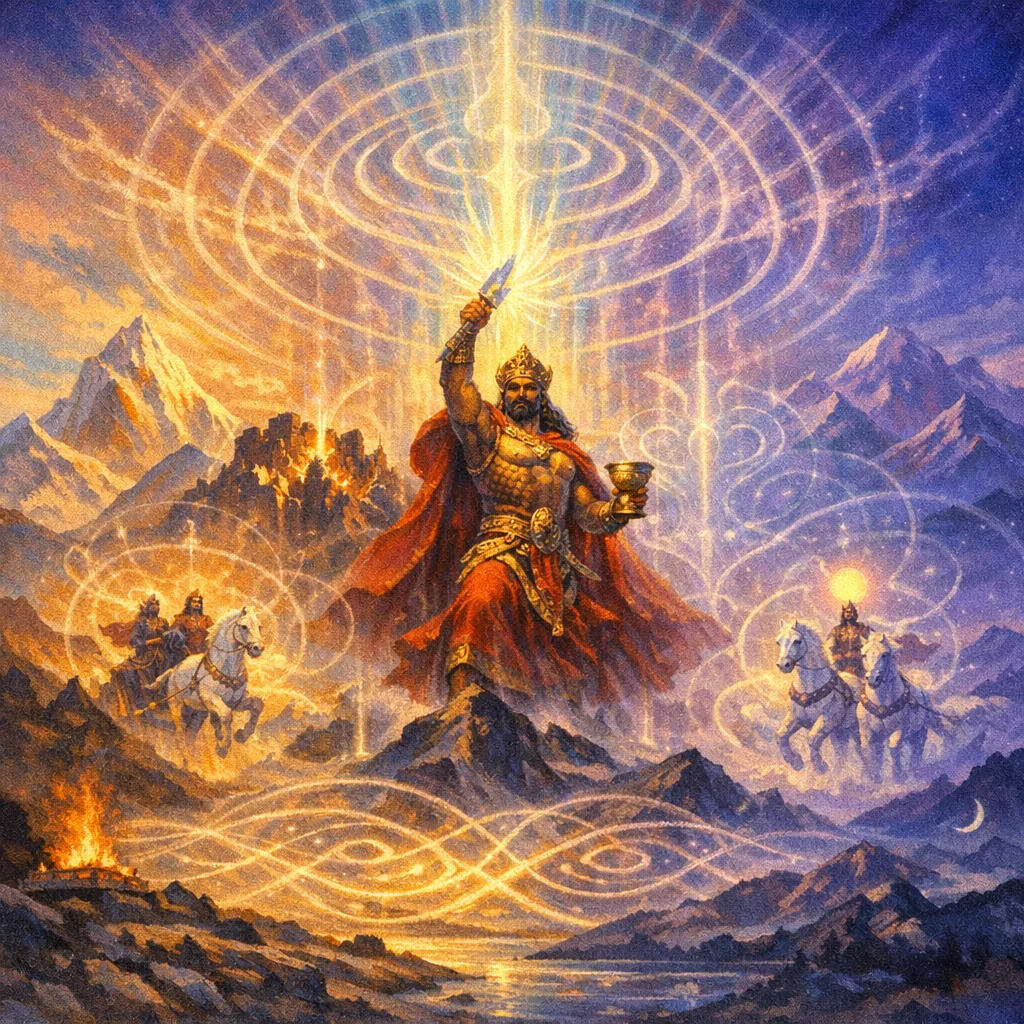
Aindra vīrya-stuti: Indra’s Soma-born exhilaration and fortress-breaking power, with allied invitations to the Aśvins for timely draughts
Indra
Vīra (heroic) with a bright dawn-opening lift transitioning into invitational sweetness
R̥ṣi attributions are not provided in the input; this dashati appears to combine Aindra material with Aśvin-invitation verses traceable to Ṛgvedic sources but precise family assignment requires the RV hymn mapping for each mantra.
இந்த தசகம் ஐந்திர வீர்ய-ஸ்துதியாய் இந்திரனை சோமபானத்திற்குக் கூவி அழைக்கிறது; சோமத்தால் எழும் மத்தளிப்பு/உற்சாகத்தில் அவர் பகைவரின் கோட்டைகள்—அல்லது யஜமானனுக்குள் உள்ள தடைகள்—அழிந்து வெற்றி வெளிப்பட வேண்டும். மேலும் அஶ்வினர்கள் தயாரிக்கப்பட்ட பானத்திற்கும் (ப்ரவார்க்ய/கர்ம ‘ர்ம’ சூழல் உடன்) விரைவான ரத வருகையுடன் அழைக்கப்படுகின்றனர்; யாக நாளின் காலை–மதிய–பகல்/இரவு வரிசையில் தக்க நேரப் பாதுகாப்பும் உதவியும் அளிக்க. அக்னி–உஷஸ் விடியற்கால ஒளி யாகத்தை விழிப்பித்து விரிவாக்குகிறது; ‘தேவயா வாக்’ எனும் ஆசாரிய வாக்கே ஸ்தோத்திரத்தை உயர்த்தி, தடையழிப்பு, காவல், செழிப்பு ஆகியவற்றை யஜமானனுக்குப் பெற்றுத் தரும் சக்தியாக நிற்கிறது.
Mantras
Mantra 1
क ईं वेद सुते सचा पिबन्तं कद्वयो दधे अयं यः पुरो विभिनत्त्योजसा मन्दानः शिप्रयन्धसः
நிச்சோடப்பட்ட சோமத்துடன் சேர்ந்து அருந்துபவனாகிய அவனை யார் உண்மையில் அறிவார்? அவனுடைய இருவகை வலிமையை யார் உணர்ந்தார்?—சோமரசால் மத்தனமடைந்து, தன் ஓஜஸால் கோட்டைகளைப் பிளந்து வீழ்த்துபவன்; ஶிப்ரா-யுக்தன், அன்ன-சமృద్ధன்.
Mantra 2
दाना मृगो न वारणः पुरुत्रा चरथं दधे न किष्ट्वा नि यमदा सुते गमो महांश्चरस्योजसा
தானமிகு இந்திரா, மிருகம்போல், யானைபோல், நீ பல வழிகளில் உலாவுகிறாய்; சோம-நிஷ்பேஷணத்தில் உன்னை யாரும் கட்டுப்படுத்த இயலாது; நீ மகான், உன் ஓஜஸால் முன்னே செல்கிறாய்.
Mantra 3
य उग्रः सन्ननिष्टृतः स्थिरो रणाय संस्कृतः यदि स्तोतुर्मघवा शृणवद्धवं नेन्द्रो योषत्या गमत्
உக்கிரனாய் இருந்தும் தடுக்கப்படாதவன், நிலைத்தவன், போருக்குச் சீரமைக்கப்பட்டவன்—ஸ்தோதாவின் ஹவி-யுக்த அழைப்பை மகவா (இந்திரன்) கேட்டால், இந்திரன் மனமுவந்து அருளோடு வருக.
Frequently Asked Questions
Because these verses emphasize Indra as the chief Soma-drinker whose exhilaration (manda) becomes victorious power, described as breaking ‘forts’—i.e., defeating enemies and removing obstacles to the sacrificer.
The dashati blends allied invitations: the Aśvins are called to come swiftly on their chariot to drink the prepared offering (pīti), linked by commentators to the Gharma/Pravargya context and to protective help throughout the day.
They align the invitation and protection with the Soma-day schedule—especially the morning and midday services/pressings—while also expressing continuous guardianship, so the offering and its benefits are secured in every time-period.