Dashati 20
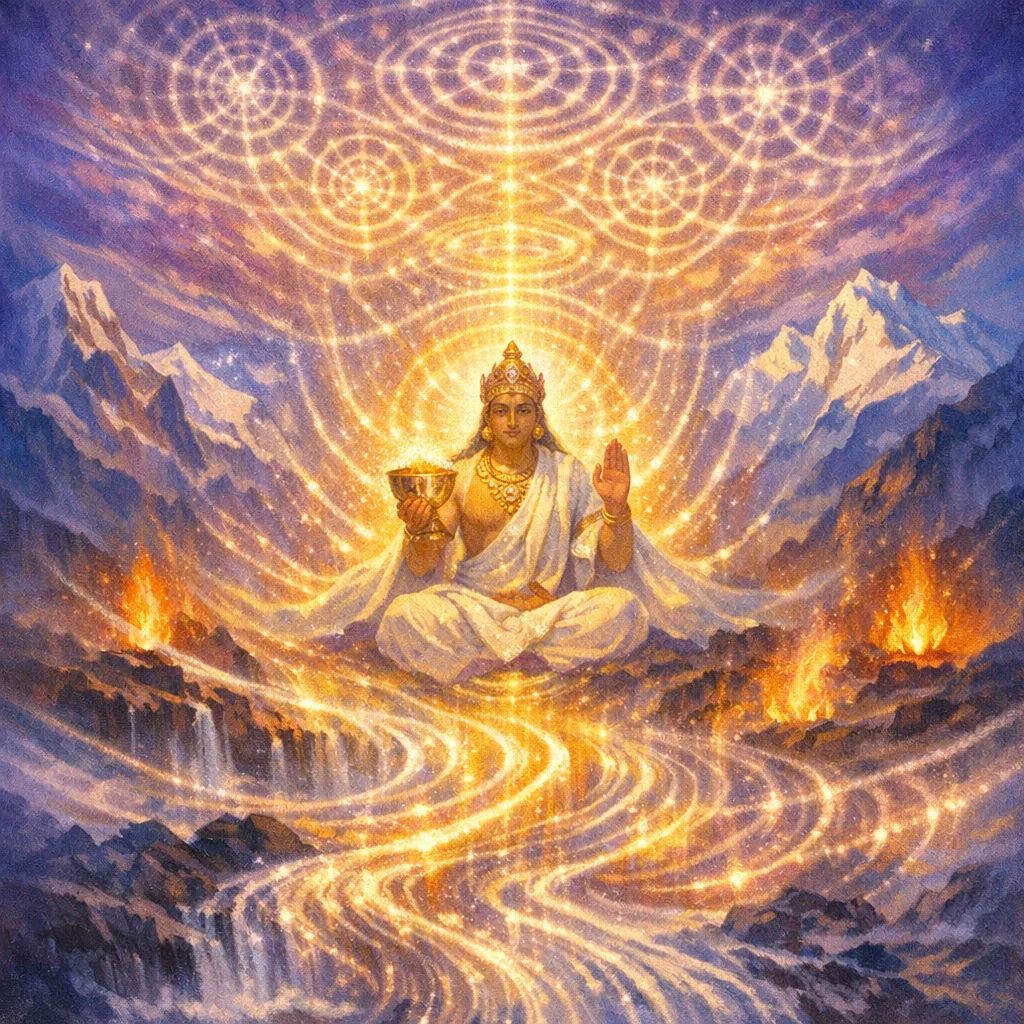
Pavamāna Soma as purifier and protector who grants prosperity and radiance
Soma (Pavamāna/Indu)
Bright forceful and auspicious—moving from enrichment to protection
Ṛṣi attribution is not provided here; identification requires Rigvedic concordance for the RV parallel of these Pavamāna verses and their family assignment.
பவமான சோமன் (இந்துஃ) கோ-ஓடைகள்/வடிகட்டும் ஓடைகளில் சுத்தமடைந்து, தூய ஒளிவண்ணம் (சுசி வர்ணம்) ஏற்று பிரகாசிக்க அழைக்கப்படுகிறான்; யஜமானனின் நண்பனாக சখ্যத்தில் உறுதியான துணையாக இருக்க; மாடுகள், குதிரைகள், சந்ததி, செல்வம் மற்றும் யாக-வலிமை அளிக்க. மேலும் தேவமற்ற/அதர்மத் தடையூட்டுவோர் மற்றும் விழுங்கும் பகைவர்களை விரட்டவும், இருவகைத் தீமையும் யாகத் தடைகளையும் அகற்றி உயிரையும் யாகத்தையும் காக்கவும் வேண்டப்படுகிறது.
Mantras
Mantra 1
गोमन्न इन्दो अश्ववत्सुतः सुदक्ष धनिव शुचिं च वर्णमधि गोषु धार्य
ஓ இந்து, பசுக்களால் செழிப்பானவனே, குதிரைகளும் சுத (சந்ததி)யும் அளிப்பவனே; சு-தக்ஷ, செல்வமிகு—‘கோஷு’ (வடிகட்டிகள்/பவித்ரங்கள்) மீது நிலைபெறும்படி உன் தூய ஒளிவண்ணத்தை அணிந்து கொள்.
Mantra 2
स नो हरीणां पत इन्दो देवप्सरस्तमः सखेव सख्ये नर्यो रुचे भव
ஓ இந்து (ஸோமா), எங்கள் நலனுக்காக ஹரி (செம்மஞ்சள்) குதிரைகளின் அதிபதியாக இரு; தேவர்களில் மிகச் சிறந்தவனாய், மிகத் தெய்வீகனாய் இரு. மேலும் நட்பில் நண்பனைப் போல, ஆண்மையுடன் எங்கள் ஒளிக்காகப் பிரகாசிப்பாயாக.
Mantra 3
सनेमि त्वमस्मदा अदेवं कं चिदत्रिणम् साह्वां इन्दो परि बाधो अप द्वयुम्
தன் பாதையில் நிலைத்தவனே, ஓ இந்து, வெல்லும் வலிமையுடன் எங்களிடமிருந்து ஒவ்வொரு அதேவ (தேவர்க்கு விரோதமான) விழுங்குபவனையும் தூரத் துரத்து; மேலும் இருவகைத் தீமையையும் அப்புறப்படுத்து.
Frequently Asked Questions
It praises Soma as he becomes purified and radiant, asking him to bring prosperity (cattle, horses, offspring) and to protect the sacrificer by driving away hostile, godless forces.
In this context, “goṣu” is commonly read (as in Sāyaṇa) as the ritual ‘cows’: the strainers/streams or filtering media on which Soma is placed and through which he becomes bright and pure.
The verses mention the “adeva” (one opposed to the gods/ritual) and an “atriṇa” (a devourer or harmful aggressor), and they ask Soma to repel “dvayum,” a twofold harm—often understood as combined worldly and ritual obstruction.