Dashati 1
Agni as the ritual nexus and Indra’s arrival/empowerment through Soma and praise
Agni
Invocatory and energizing—questioning/solemn at the start then increasingly triumphant and expansive
Ṛṣi attribution is not supplied here; identification normally follows the underlying Ṛgvedic sources for each mantra which are not fully provided in the input.
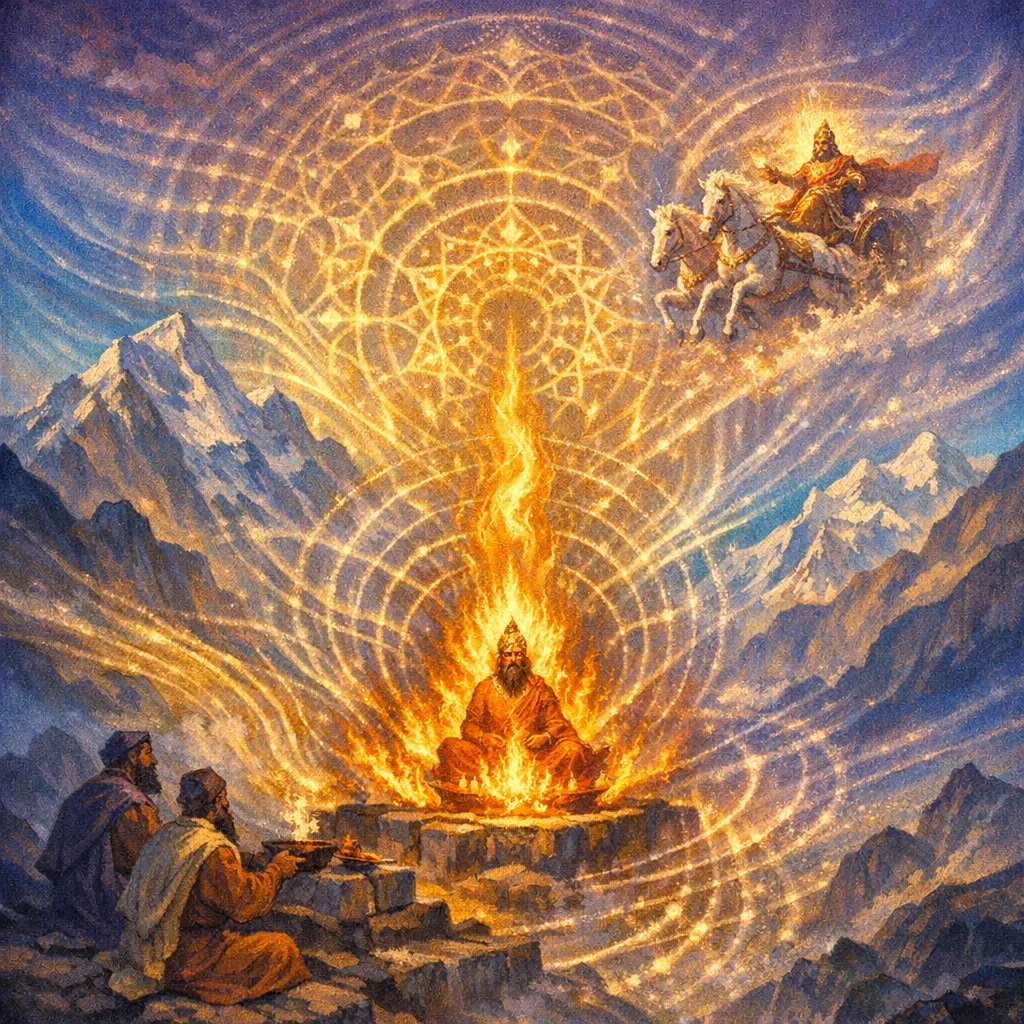
இந்த தசதியின் மையக் கருத்து: யாகத்தின் மையமாகிய அக்னி, மேலும் சோமமும் ஸ்தோத்ரமும் மூலம் வலிமை பெறும் இந்திரன் (விஷ்ணுவுடன்) வருகையை அழைப்பது. தொடக்கத்தில் அக்னியிடம் புதிர் போலக் கேள்வி எழுகிறது—அவனுடைய ‘உறவினர்’ என்பது யாகத்தைப் பேணிப் பாதுகாக்கும் யஜமானன்; அவன் ஆதாரத்திலேயே அக்னி அமர்ந்து நிலைகொள்கிறான். பின்னர் பார்ஹிஸுக்கு தெளிவான அழைப்பு வருகிறது—குதிரைகள் விரைந்து வருதல், சோமபானம், மற்றும் ஸ்தோத்ரத்திற்குப் பதிலாக வலிமை வெளிப்படுதல். இறுதியில் ‘பழைய மரபின்படி’ இந்திரனின் மகிமை விரிவடைகிறது: சோமம் அவனுடைய வ்ருஷ்ண்ய-ஶவஸ் (ஆண்மைமிகு வீர-வலிமை) எழச் செய்கிறது; இந்திர–விஷ்ணு இணைந்து யாகத்தைத் தாங்கி வெற்றியை நிலைநிறுத்துகின்றனர். போதனை: முறையாகப் பேணப்படும் அக்னி, தயார் செய்யப்பட்ட பார்ஹிஸ், மற்றும் சோம-ஸ்தோத்ரம் ஆகியவற்றால் தேவர்கள் யாகத்தில் ‘உடனிருப்பாக்கப்படுகிறார்கள்’; அவர்களின் சக்தி யாகத்திற்கான பதிலாகவே விரிகிறது.
Mantras
Mantra 1
अभि प्र गोपतिं गिरेन्द्रमर्च यथा विदे मूनुं सत्यस्य सत्पतिम्
கோபதி—பசுக்களின் அதிபதி, கிரேந்திர—புனிதப் பாடலின் தலைவன்—அவரை நாம் புகழ்வோம்; அப்பொழுது சத்தியத்தின் சத்தியபதி, அந்த முனி (ஞானி) ஸத்பதியை நாம் அடைவோம்.
Mantra 2
त्वं जामिर्जनानामग्ने मित्रो असि प्रियः सखा सखिभ्य ईड्यः
அக்னியே! நீ மனிதர்களின் உறவினர் (ஜாமி); நீ நண்பன், பிரியன், தோழன்; உன் தோழர்களுக்குப் போற்றத்தக்கவன் (ஈட்ய) நீயே.
Mantra 3
इन्द्राय गाव आशिरं दुदुह्रे वज्रिणे मधु यत्सीमुपह्वरे विदत्
இந்திரனுக்காகப் பசுக்கள் ஆஶிர்—இனிய மதுவை—கறந்தன; வஜ்ரதாரிக்காக அந்த இனிய பானம், அவர் யாக-அழைப்பில் (உபஹ்வர) அதை அடைந்தபோது.
Frequently Asked Questions
It frames a ritual teaching: Agni ‘belongs’ to the one who tends him with fuel and offerings, so the sacrificer becomes Agni’s closest human relation in the rite.
They are a standard image for Indra’s swift approach; the verse functions as an invitation for Indra to come to the prepared barhis and accept the offering.
Indra–Viṣṇu appear as cooperative powers in Vedic praise; here their joint mention reinforces Indra’s greatness and the traditional support they give to the sacrifice.