Dashati 12
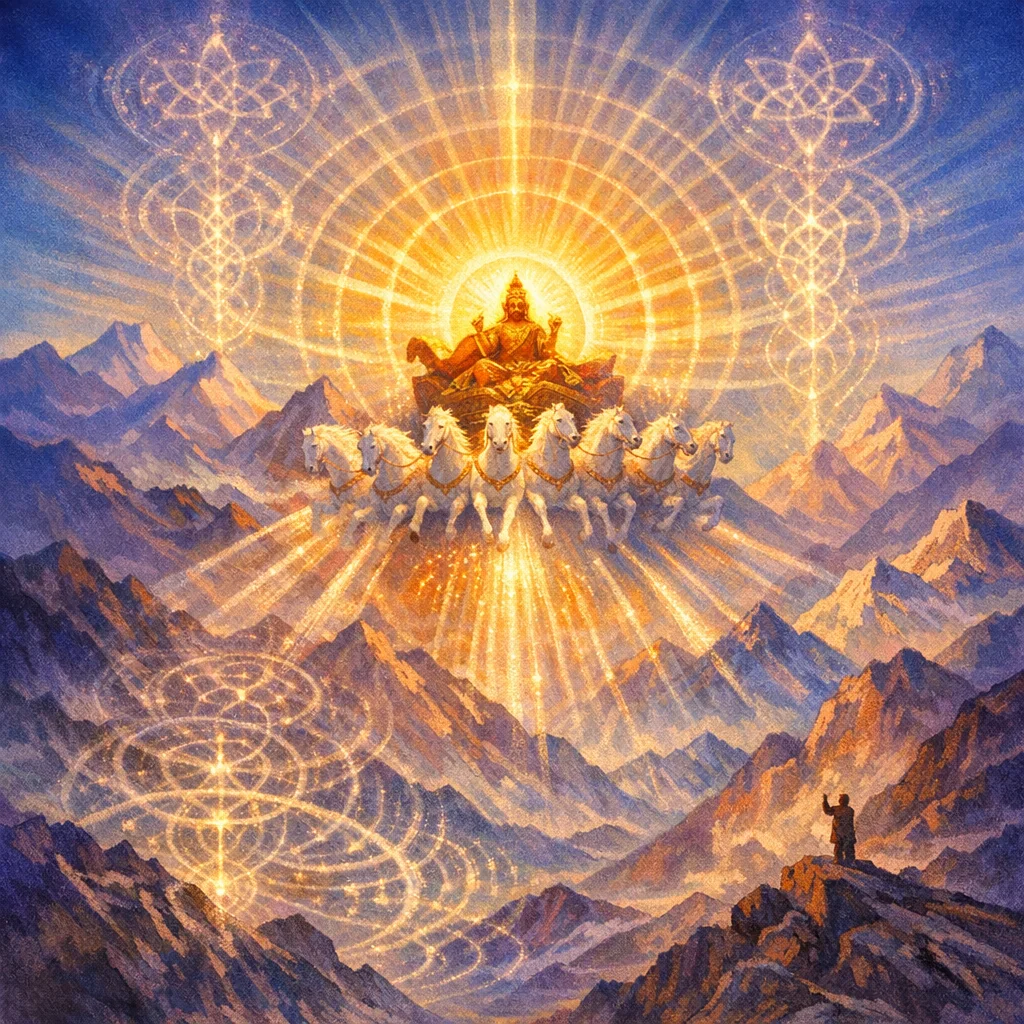
Sūrya as Bradhna/Aruṇa—solar yoking, radiant order, and epiphany
Sūrya/Āditya (Bradhna/Aruṇa)
Radiant forward-moving and proclamatory (epiphany/illumination tone)
Attribution is uncertain in the provided material; the diction aligns with common RV solar-hymn and praise-petition styles with an Indra-stuti insertion suggesting compilation by thematic (Sūrya/ketu) and ritual utility rather than a single fixed family.
இந்த தசதி-குழு சூர்யன்/ஆதித்யனை பிரध்ன/அருண வடிவில் அறிவிக்கிறது—அவன் ரதத்தை ‘யோகம்’ (இணைத்தல்/கட்டுதல்), அவன் நிலையான பயணம், மேலும் ரோசனாஃ (ஒளிமிகு விண்ணுலகப் பகுதிகள்/நிலைகள்) முழுதும் ஒளிரும் ṛத ஒழுங்கை நிறுவுதல். கேது (கொடி/அடையாளம்) மற்றும் பேஷஸ் (காணத்தக்க வடிவம்) மூலம் மறைந்ததை வெளிப்படுத்தி, மங்களமான காட்சித்தன்மையையும் உலக ஒழுங்கையும் உறுதிப்படுத்துகிறான். இறுதியில் இந்திரனை பாதுகாப்பு-அடைக்கலமாக (ஶரணா) அழைத்து, யஜமானனுக்காக பகா (பங்கு) மற்றும் ராதஸ் (செல்வம்/வளமை) வேண்டப்படுகிறது—ஸ்துதியின் பிரதிபலனாக.
Mantras
Mantra 1
त्वमिन्द्र यशा अस्यृजीषी शवसस्पतिः त्वं वृत्राणि हंस्यप्रतीन्येक इत्पुर्वनुत्तश्चर्षणीधृतिः
ஓ இந்திரா, நீ யசஸ்வி; வஜ்ரத்தை ஏந்துபவன், வலிமையின் அதிபதி. நீ ஒருவனே, எதிர்க்க முடியாதவன், வ்ருத்ரர்களை வதைக்கிறாய்; ஆதிகாலத்திலிருந்தே தூண்டப்பட்டு (உதவிக்கு) முன்னேறும், மனிதக் குலங்களைத் தாங்குபவன்.
Mantra 2
तमु त्वा नूनमसुर प्रचेतसं राधो भागमिवेमहे महीव कृत्तिः शरणा त इन्द्र प्र ते सुम्ना नो अश्नवन्
அந்த உன்னையே—இப்போது, ஓ அசுர (பராக்கிரமன்) ப்ரசேதஸ் இந்திரா—செல்வத்திற்காக, ஒதுக்கப்பட்ட பங்குபோல், நாம் வேண்டுகிறோம். நீ மகத்தான போர்வைபோல் ஒரு சரணம்; உன் சும்னம் (அனுகிரகம்) எங்களிடம் வந்து, நாம் அதை அடையட்டும்.
Mantra 3
केतुं कृण्वन्नकेतवे पेशो मर्या अपेशसे समुषद्भिरजायथाः
கேது (அடையாளம்) அற்றவனுக்காக நீ கேதுவை அமைக்கிறாய்; அலங்காரமற்றவனுக்காக நீ அழகை உருவாக்குகிறாய். ஓ மர்யா (இளவீரா), சமுபஸத் (கூடிய புரோகிதர்கள்) உடன் நீ வெளிப்பட்டாய்.
Frequently Asked Questions
Bradhna/Aruṇa is a solar epithet: the tawny-bright Sūrya whose movement and radiance illuminate the heavenly regions (rocanāḥ) and stabilize the worlds.
Ketu means a visible sign or ensign—radiance that makes the deity recognizable. The verse contrasts “without a sign/without adornment” to show the deity’s power to manifest clarity from obscurity.
In Sāman collections, verses can be grouped by ritual usefulness as well as theme. Indra’s verse supplies the petitionary element—refuge, favour, and wealth—complementing the solar verses that establish luminous order.