Adhyaya 26
आदि पर्व (अध्याय 26) — गरुडस्य वालखिल्य-रक्षणम्, कश्यपोपदेशः, देवोत्पात-प्रसङ्गः
Upa-parva: Garuḍotpatti (Garuḍa Episode) — Vālakhilya-Saṃrakṣaṇa and Amṛta-Haraṇa Prelude
Sauti narrates that Garuḍa, merely touching a tree with his feet, breaks a great branch yet supports it to prevent immediate destruction. He notices the Vālakhilya sages hanging beneath, in danger of being harmed, and—out of protective intent—holds the branch in his beak while searching for a safe place to set it down. Reaching Gandhamādana, he encounters his father Kaśyapa in tapas. Kaśyapa recognizes Garuḍa’s intent and warns him against rash action that could provoke the Vālakhilyas; he conciliates the sages and frames Garuḍa’s undertaking as oriented to public welfare, obtaining their assent. Garuḍa asks where to release the branch; Kaśyapa directs him to an uninhabited, inaccessible mountain. Garuḍa rapidly transports the load over immense distance, releases the branch with a resonant impact, and the mountain trembles, shedding blossoms and fragments. Settling on a peak, Garuḍa consumes the elephant and tortoise (gaja-kacchapa). As he departs, extraordinary portents arise among the devas: Indra’s vajra flares, weapons agitate, winds and meteors intensify, and ominous phenomena disturb the celestial order. Indra consults Bṛhaspati, who attributes the disturbance to Indra’s prior fault and to the Vālakhilyas’ tapas producing a formidable being—Kaśyapa’s son by Vinātā—approaching to seize soma/amṛta. The devas then organize a guarded defensive posture around the amṛta, equipped with armor and weapons, forming a luminous, battle-ready perimeter.
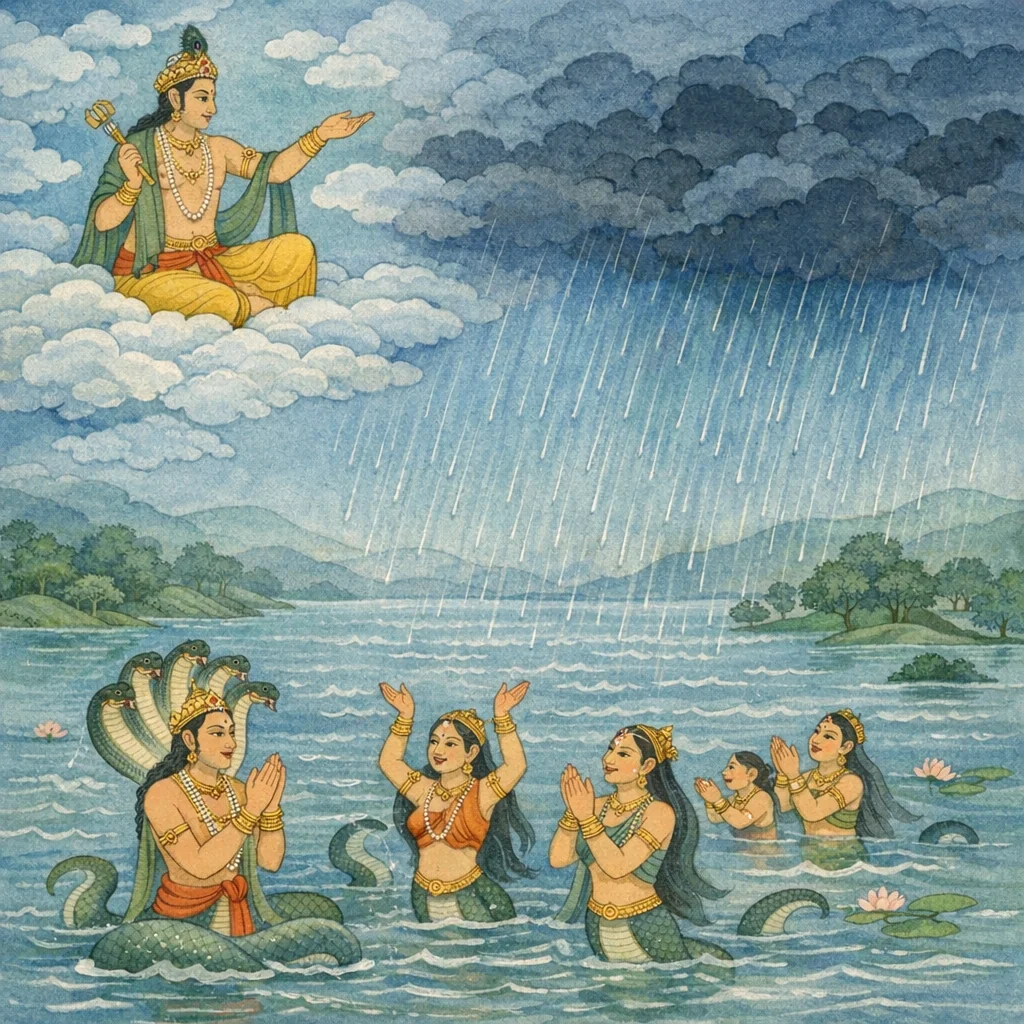
Chapter Arc: सौति जनमेजय के सर्पसत्र-प्रसंग में उस अद्भुत दृश्य का वर्णन उठाते हैं जब इन्द्र, कद्रू के स्तुत होने पर, नागों को प्रसन्न करने हेतु आकाश के मेघों को अमृत-तुल्य शीतल वर्षा का आदेश देते हैं। → मेघ घनघोर गर्जना करते, विद्युत् और पवन से कम्पित होकर निरन्तर धाराएँ बरसाते हैं; चन्द्र-किरण तक लुप्त हो जाते हैं और पृथ्वी चारों ओर जल से भरने लगती है—वर्षा की प्रचण्डता स्वयं एक भय-रूप ले लेती है। → अतुल जलराशि की अविराम वर्षा से आकाश ‘संवर्त’ के समान प्रतीत होता है; शीतल, निर्मल जल रसातल तक पहुँच जाता है और नागों में परम हर्ष उमड़ पड़ता है—इन्द्र की कृपा का चरम प्रकाशन। → वर्षा से तृप्त होकर नाग-समुदाय प्रसन्न होता है; कद्रू की स्तुति का फल प्रकट होता है और इन्द्र की देव-शक्ति लोक-व्यवस्था को शान्ति की ओर मोड़ देती है। → नागों की यह तृप्ति और इन्द्र-कृपा आगे गरुड-नाग वैर तथा अमृत-प्रसंग की दिशा में कथा को कैसे मोड़ेगी—यह संकेत देकर अध्याय समाप्त होता है।
Shlokas
Verse 1
अ्---#क्रत षड्विशो<5ध्याय: इन्द्रद्वारा की हुई वषसि सर्पोकी प्रसन्नता सौतिर्वाच एवं स्तुतस्तदा कद्र्वा भगवान् हरिवाहन: । नीलजीमूतसंघातै: सर्वमम्बरमावृणोत्
சௌதி கூறினார்—கத்ரூ இவ்வாறு ஸ்துதி செய்தபோது, அந்நேரம் ஹரிவாஹனன் (இந்திரன்) நீல-கருநிற மேகக் கூட்டங்களால் முழு வானத்தையும் மூடினான்।
Verse 2
मेघानाज्ञापयामास वर्षध्वममृतं शुभम् । ते मेघा मुमुचुस्तोयं प्रभूतं विद्युदुज्ज्वला:
அவர் மேகங்களுக்கு ஆணையிட்டார்—“அமிர்தம் போன்ற மங்களமான மழையைப் பொழியுங்கள்.” ஆணை பெற்ற மின்னலால் ஒளிர்ந்த அந்த மேகங்கள் பெருமளவு நீரைப் பொழிந்தன।
Verse 3
परस्परमिवात्यर्थ गर्जन्त: सततं दिवि । संवर्तितमिवाकाशं जलदैः सुमहाद्भुतै:
மேகங்கள் ஒன்றையொன்று சவால் செய்வதுபோல் வானில் இடையறாது பேரொலியுடன் கர்ஜித்தன। அந்த அதிசயமான மழைமேகங்கள் நின்றிடாது நீரைப் பொழிந்து, முழு வானத்தையும் சூழ்ந்து கலக்கமுறச் செய்ததுபோல் தோன்றின।
Verse 4
सृजद्धिरतुलं तोयमजसं सुमहारवै: । सम्प्रनृत्तमिवाकाशं धारोमिभिरनेकश:
அச்சமூட்டும் இடியோசையுடன் அந்த மேகக்கூட்டங்கள் இடைவிடாது அளவிலா நீரைப் பொழிந்தன. அதிசயமான மழைமேகங்கள் எல்லாத் திசைகளிலும் வானத்தை நிரப்ப, எண்ணற்ற நீர்த் தாரைகளெனும் அலைகளுடன் அந்த வானமே ஒரு பெருங்கடல்போல் தோன்றி, நடனமாடுவது போலப் புலப்பட்டது.
Verse 5
मेघस्तनितनिर्धोषैर्विद्युत्पवनकम्पितै: । तैमेंघै: सततासारं वर्षद्धिरनिशं तदा
அப்போது மின்னலும் காற்றும் அதிரச் செய்து, இடியின் பேரொலியால் அச்சமூட்டிய அந்த மேகங்கள் இடைவிடாது மழைத் தாரையைப் பொழிந்தன. அவை வானத்தை முற்றிலும் மூடியதால் நிலவும் சூரியனும் தங்கள் கதிர்களை வெளிப்படுத்த இயலவில்லை. வாசவன் (இந்திரன்) இவ்வாறு மழை பொழியச் செய்தபோது நாகர்கள் பெரும் மகிழ்ச்சியடைந்தனர்.
Verse 6
नष्टचन्द्राककिरणमम्बरं समपद्यत | नागानामुत्तमो हर्षस्तथा वर्षति वासवे
வானம் நிலா-சூரியக் கதிர்கள் மறைந்து போகுமளவிற்கு மாறியது. வாசவன் (இந்திரன்) இவ்வாறு மழை பொழியச் செய்தபோது நாகர்கள் மிகுந்த பேரானந்தம் அடைந்தனர்.
Verse 7
आपूर्यत मही चापि सलिलेन समन्ततः । रसातलमनुप्राप्त शीतलं विमलं जलम्,पृथ्वीपर सब ओर पानी-ही-पानी भर गया। वह शीतल और निर्मल जल रसातलतक पहुँच गया
பூமியும் எல்லாத் திசைகளிலும் நீரால் நிரம்பியது. அந்த குளிர்ந்த, தூய நீர் ரசாதலம்வரை சென்று சேர்ந்தது.
Verse 8
तदा भूरभवच्छन्ना जलोरमिभिरनेकश: । रामणीयकमागच्छन् मात्रा सह भुजड़मा:
அப்போது பூமியின் மேற்பரப்பு முழுவதும் எண்ணற்ற நீரலைகளால் மூடப்பட்டது. இந்த மழையால் திருப்தியடைந்த நாகர்கள் தங்கள் தாயுடன் சேர்ந்து ‘ரமணீயக’ தீவிற்கு வந்து சேர்ந்தனர்.
Verse 25
इस प्रकार श्रीमह्या भारत आदिपव॑के अन्तर्गत आस्तीकपवरर्में गरुडचरित्रविषयक पचीसवाँ अध्याय पूरा हुआ
இவ்வாறு புனித மகாபாரதத்தின் ஆதிபர்வத்தில் உள்ள ஆஸ்தீகப் பர்வத்தில் கருடச் சரிதம் பற்றிய இருபத்தைந்தாம் அத்தியாயம் நிறைவுற்றது।
Verse 26
इति श्रीमहाभारते आदिपर्वणि आस्तीकपर्वणि सौपर्णे षड्विंशो5ध्याय:
இதி ஸ்ரீமஹாபாரதத்தின் ஆதிபர்வத்தில் ஆஸ்தீகப் பர்வத்தின் சௌபர்ணப் பகுதியில் இருபத்தாறாம் அத்தியாயம்.
Frequently Asked Questions
The central dilemma is how an overwhelmingly powerful actor should act when ordinary movement risks unintended harm: Garuḍa must balance urgency of purpose with the obligation to protect ascetics, choosing restraint and consultation over expedience.
Power is ethically legitimate only when governed by discernment and deference to tapas-based authority; counsel (especially paternal/teacher guidance) converts force into dharmically regulated action.
No explicit phalaśruti appears in this passage; the meta-level significance lies instead in the causal framing—portents and Bṛhaspati’s diagnosis—showing how actions ripple into cosmic and institutional responses within the epic’s moral historiography.
Read Mahabharata in the Vedapath app
Scan the QR code to open this directly in the app, with audio, word-by-word meanings, and more.