
Bhagavad Gita — Raja Vidya Raja Guhya Yoga, Shloka 11
Raja Vidya Raja Guhya Yoga
अवजानन्ति मां मूढा मानुषीं तनुमाश्रितम् । परं भावमजानन्तो मम भूतमहेश्वरम् ॥ ९.११ ॥
avajānanti māṁ mūḍhā mānuṣīṁ tanum āśritam | paraṁ bhāvam ajānanto mama bhūta-maheśvaram || 9.11 ||

மூடர்கள் என்னை மனித உடலை ஏற்றவனென்று எண்ணி இகழ்கிறார்கள்; எல்லாப் பிராணிகளுக்கும் மகா ஈசுவரனான என் பரம ஸ்வரூபத்தை அவர்கள் அறியார்.
मूढ़ लोग मुझे मनुष्य शरीर धारण करने वाला समझकर मेरा तिरस्कार करते हैं; वे मेरे परम स्वरूप को नहीं जानते, जो समस्त भूतों का महान् ईश्वर है।
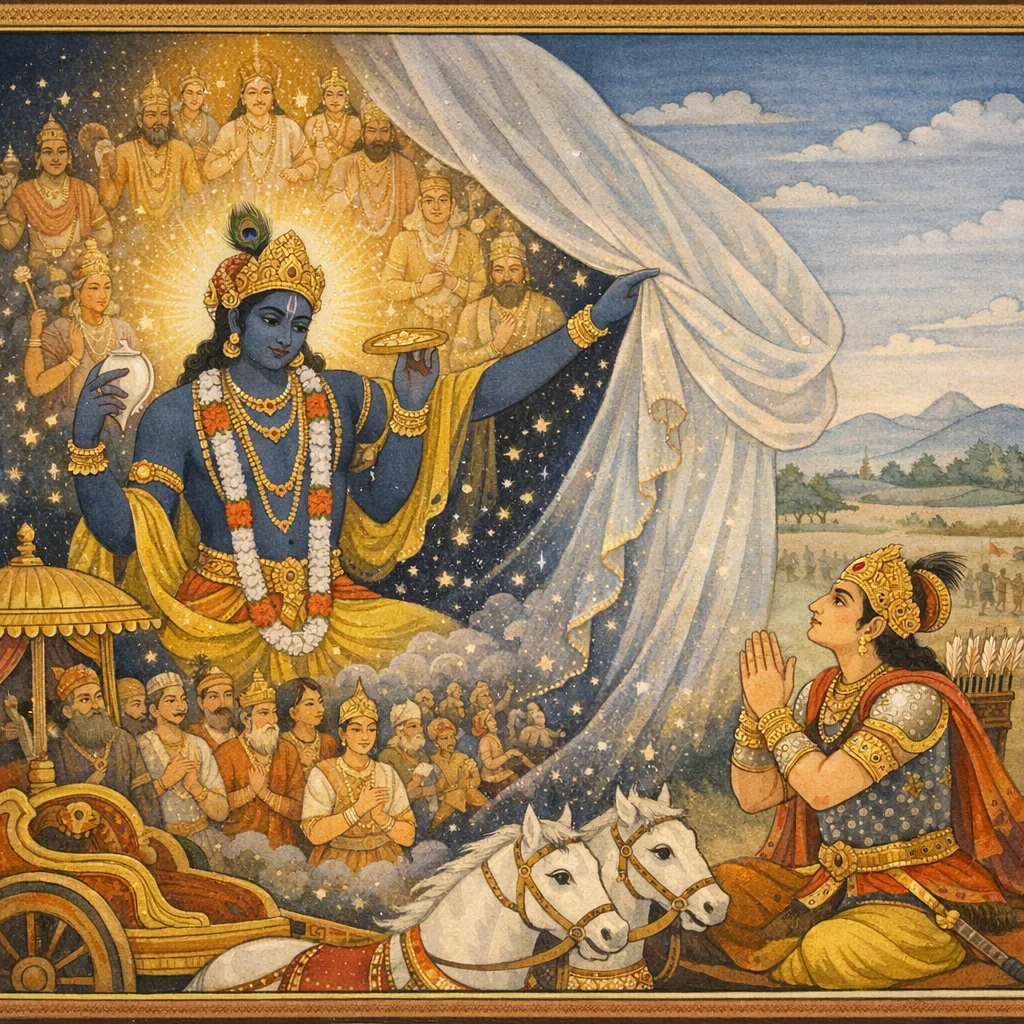
The deluded disregard Me as one who has assumed a human body, not knowing My higher mode of being, the great lord of beings.
Devotional traditions often connect this to avatāra doctrine (divine embodiment). In a historical-philosophical reading, it addresses misrecognition of charismatic authority: judging by outward form while missing the claimed transcendent status.
FAQs
It describes a common cognitive error: reducing a person or teaching to surface traits and social categories, thereby missing deeper intent, insight, or value.
Krishna claims a ‘higher nature’ beyond the human embodiment. The verse supports a framework in which the divine can be present in embodied form without being limited to it.
After asserting divine governance of nature, Krishna anticipates skepticism: some dismiss the speaker due to his human appearance, which the text treats as a misunderstanding.
It cautions against superficial dismissal—encouraging careful evaluation of teachings and persons beyond external markers, while still allowing critical scrutiny of claims.
Read Bhagavad Gita in the Vedapath app
Scan the QR code to open this directly in the app, with audio, word-by-word meanings, and more.