
Shloka 36
Karma Yoga — Karma Yoga
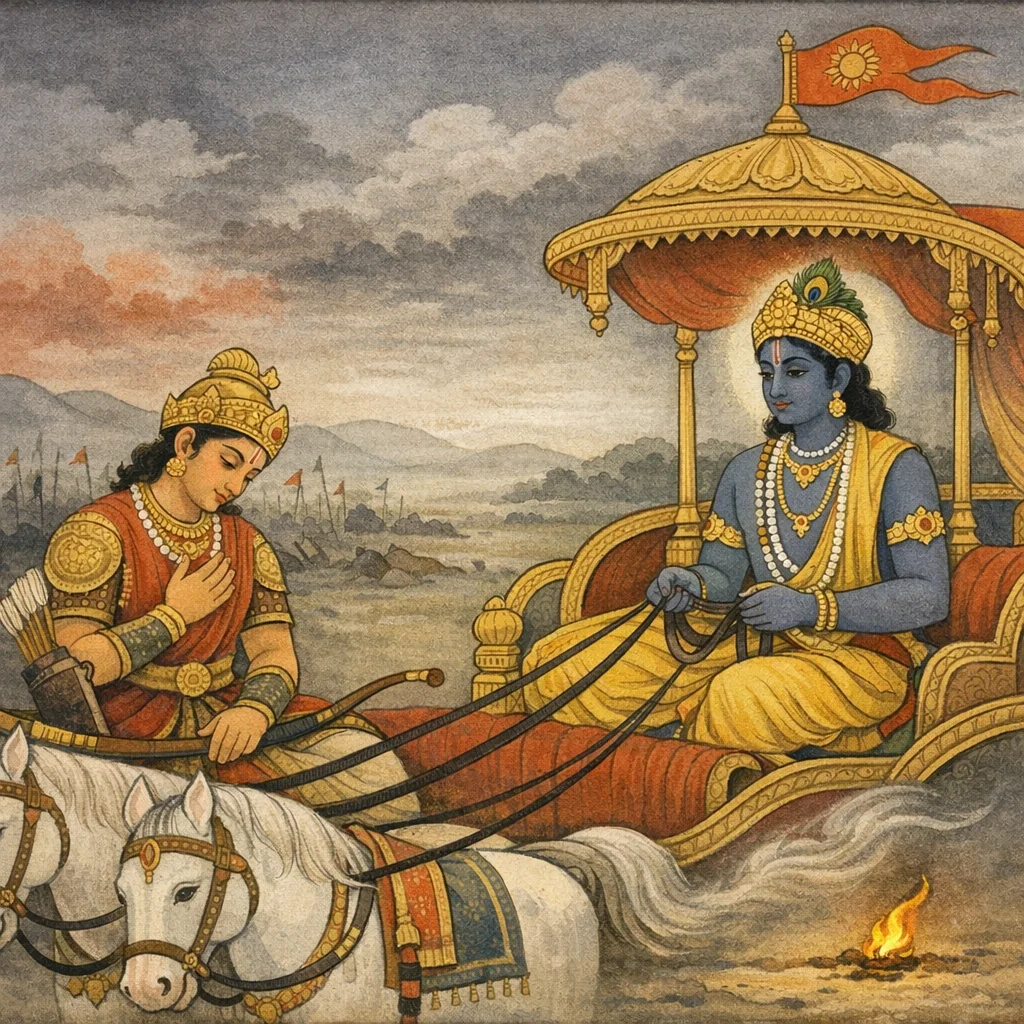
अर्जुन उवाच । अथ केन प्रयुक्तोऽयं पापं चरति पूरुषः अनिच्छन्नपि वार्ष्णेय बलादिव नियोजितः ॥ ३.३६ ॥
arjuna uvāca | atha kena prayukto 'yaṁ pāpaṁ carati pūruṣaḥ anicchann api vārṣṇeya balād iva niyojitaḥ || 3.36 ||

அர்ஜுனன் கூறினான்: ஹே வார்ஷ்ணேயா! அப்படியெனில் மனிதன் விரும்பாமல்கூட பாவத்தை எதனால் தூண்டப்பட்டு செய்கிறான்? பலத்தால் தள்ளப்பட்டதுபோல்.
Arjuna said: Then by what is a person impelled to commit wrongdoing, even unwilling, as if driven by force, O descendant of Vṛṣṇi?
Arjuna said: By what, indeed, is this person prompted to do harmful action, even against one’s will, as though compelled, O Vārṣṇeya?
Some translations moralize ‘pāpa’ as ‘sin’; academic renderings often choose ‘harmful/wrong action’ to reflect a broader ethical-psychological sense without importing later theological connotations.
FAQs
It articulates the experience of acting against better judgment (akrasia), highlighting internal pressures such as craving and habit.
The question opens inquiry into causal forces within prakṛti (guṇas, impressions) that can override reflective intention.
After guidance on sense-control and svadharma, Arjuna asks for the root cause of ethical failure to understand how discipline can succeed.
Useful for discussing addiction, impulsivity, and habit loops: identifying the driver of behavior is presented as a prerequisite for change.