Dashati 16
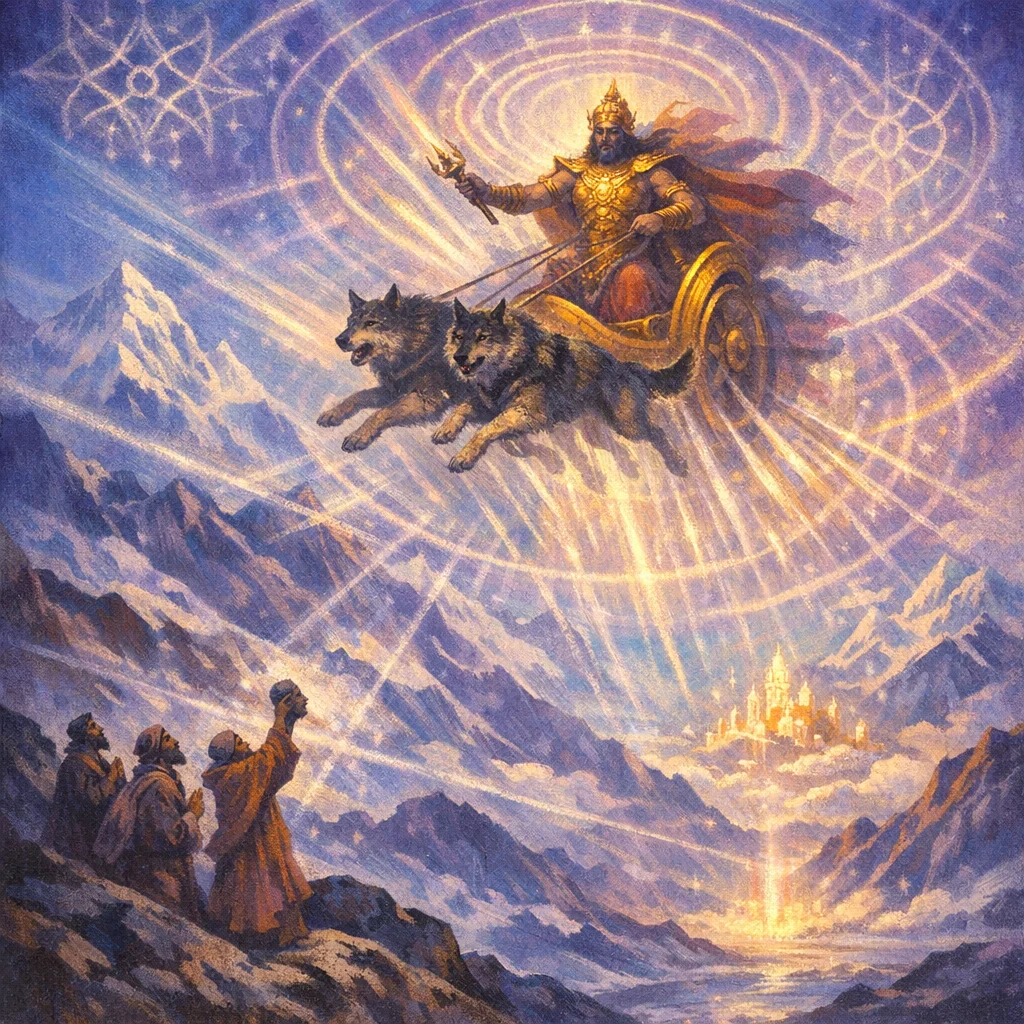
Āvāhana and rapid approach of Indra to the Kaṇva-stotra, culminating in the boon of svarga (heaven) for the duly directing worshipper
Indra
Summoning and energizing (āhvāna) with martial swiftness and forward drive
Kaṇva
इन्द्रस्य शीघ्रावाहनं कण्वस्तुतौ सोमाभिषवे च—हरिभ्यां रथेन च स त्वरा समायातु; ग्राव्णो घोषः स्तोत्रशब्दश्च निमन्त्रणं कुर्यात्। शासत एव विधिवत् यजमानस्य यज्ञं बलयित्वा हविर्गृह्णीयात्, अन्ते च दिवं (स्वर्गं) दद्यात्।
Mantras
Mantra 1
एन्द्र याहि हरिभिरुप कण्वस्य सुष्टुतिम् दिवो अमुष्य शासतो दिवं यय दिवावसो
एन्द्र, याहि हरिभिरुप कण्वस्य सु-स्तुतिम्। दिवोऽमुṣ्य शासतो यजमानस्य कृते, हे दिवावसो, दिवं ययाः।
Mantra 2
अत्रा वि नेमिरेषामुरां न धूनुते वृकः दिवो अमुष्य शासतो दिवं यय दिवावसो
अत्र ते रथस्य नेमिः प्रादुर्भवति; वृक इव स विस्तीर्णां दिशं धूनुते। यः शासतॊ विधिवत् यजते, तस्मै हे दिवावसो (दिव्यवसु-प्रद), त्वं दिवं याहि—दिवं प्रयच्छ।
Mantra 3
आ त्वा ग्रावा वदनीह सोमी घोषेण वक्षतु दिवो अमुष्य शासतो दिवं यय दिवावसो
इह घोषेण वदन् सोम्यः ग्रावा त्वाम् आ वहतु। यः शासतॊ विधिवत् यजते, तस्मै हे दिवावसो (दिव्यवसु-प्रद), त्वं दिवं याहि—दिवं प्रयच्छ।
Frequently Asked Questions
It repeatedly summons Indra to the Kaṇva praise and Soma-pressing, asking him to validate the rite by granting ‘divam’ (heaven) to the properly conducting worshipper.
Its sounding during Soma-pressing is treated as a ritual summons: the audible act of pressing, together with chant, ‘brings’ Indra to the sacrifice.
It links correct, rule-directed performance (śāsataḥ) with the sacrificial fruit: Indra, ‘giver of celestial good’ (divāvasu), is asked to lead/grant the performer to heaven (divam).