Dashati 14
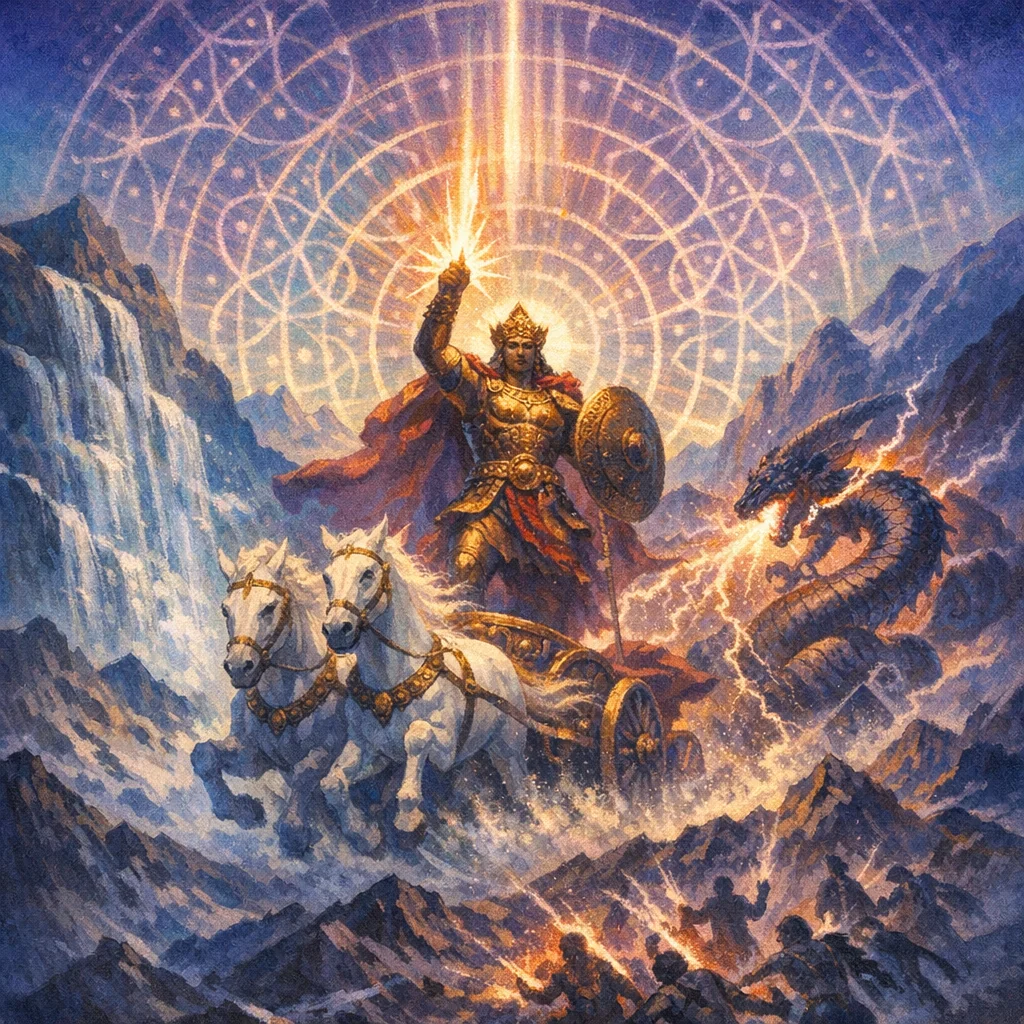
Indra as liberator and battle-protector who secures wealth and disables hostile forces
Indra
Martial triumphant and apotropaic (protective/warding)
Kāṇva (probable/traditional for Aindra material here)
इन्द्रः मोचयिता रणरक्षकश्च—वृत्राहन्/अहिहन्, आपः प्रवर्तयन्, ऋतं यज्ञं च पुनः स्थापयति। स धियः स्तोमान् यज्ञकर्म च विघ्नेभ्यः पातु, यजमानं रक्षतु, रातिं वाऱ्यं च ददातु। शत्रून् प्रतिहन्यात्, विरोधिनां धनुषां ज्याः स्रंसन्ताम्, सर्वान् बाधकान् निवारयतु।
Mantras
Mantra 1
प्रो ष्वस्मै पुरोरथमिन्द्राय शूषमर्चत अभीके चिदु लोककृत्सङ्गे समत्सु वृत्रह अस्माकं बोधि चोदिता नभन्तामन्यकेषां ज्याका अधि धन्वसु
प्रो ष्वस्मै पुरोरथम् इन्द्राय शूषम् अर्चत। अभीके चिदु लोककृत्-सङ्गे समत्सु वृत्रह। अस्माकं बोधि चोदिता; नभन्ताम् अन्यकेषां ज्याका अधि धन्सु॥
Mantra 2
त्वं सिन्धूंरवासृजो ऽधराचो अहन्नहिम् अशत्रुरिन्द्र जज्ञिषे विश्वं पुष्यसि वार्यम् तं त्वा परि ष्वजामहे नभन्तामन्यकेषां ज्याका अधि धन्वसु
त्वम् इन्द्र गर्जद्भिः सिन्धुभिः सह स्रवांसि मोचयः; अधरात् अहिं हतवान्। अजातशत्रुरिन्द्रः सञ्जज्ञिषे; विश्वं वाञ्छितं वरीयं धनं पुष्यसि। तस्मात् त्वां वयं परि ष्वजामहे; अन्येषां धनुषु अधि ज्याकाः न भन्ताम्।
Mantra 3
वि षु विश्वा अरातयो ऽर्यो नशन्त नो धियः अस्तासि शत्रवे वधं यो न इन्द्र जिघांसति या ते रातिर्ददिवसु नभन्तामन्यकेषां ज्याका अधि धन्वसु
वि षु विश्वा अरातयः नश्यन्तु; नो धियः आर्यः न अश्नुवन्तु। इन्द्र, यः नः जिघांसति शत्रुः, तस्मै त्वम् अस्तासि वधम्। ददिवसु, या ते रातिः सा नः स्यात्; अन्येषां धनुषु अधि ज्याकाः न भन्ताम्।
Frequently Asked Questions
It presents Indra as the unconquered protector: he frees the blocked waters (by slaying Ahi/Vṛtra), safeguards the sacrificer’s prayers, grants desirable wealth, and defeats hostile forces.
It is a protective imprecation: the singers ask Indra to neutralize opponents so their weapons—and by extension their harmful intent—lose power against the sacrificer and the rite.
The myth functions as a model of restoration: just as Indra releases the waters for the world’s sustenance, he is invoked to remove obstacles, let the sacrifice proceed unhindered, and deliver prosperity to the patron.