Dashati 20
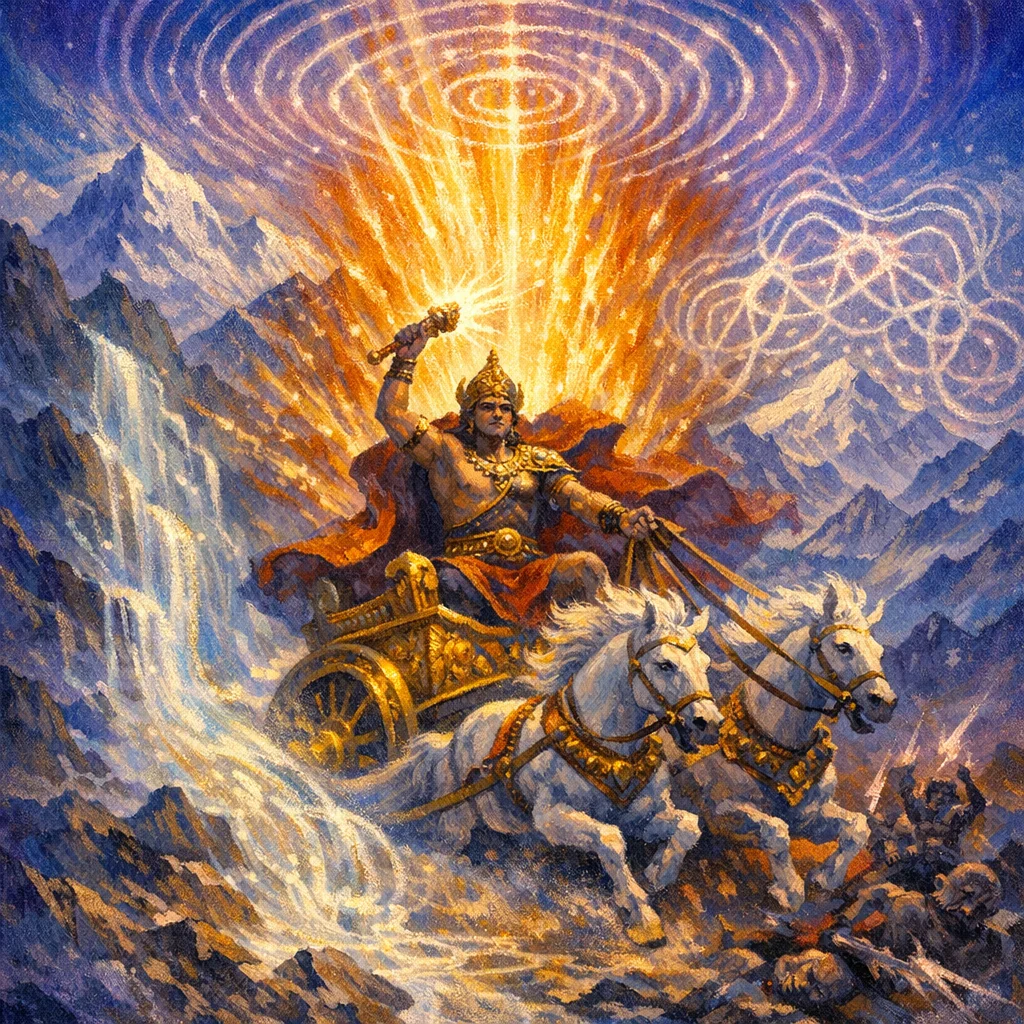
Indra empowered by Soma-exhilaration (mada/matsara) to grant victory and wealth
Indra
Exultant martial and triumphant—built on the imagery of surging Soma-power and battle-victory
Ṛṣi attribution and chandas are not supplied here; they require Rigvedic concordance for the underlying RV originals used by this Sāmavedic selection.
सोममदेन बलीकृत इन्द्रः यज्ञं प्रति सोमेनाकृष्टो यजमानस्य समीपम् आगत्य बलं ददाति, शत्रून् दस्यून् चाव्रतान् च निहन्ति, पृतनासु जयम् आवहति, रथं प्रेरयन् वीर्यं प्रकाशयति, सहस्रसातिं महद् धनं च प्रयच्छति।
Mantras
Mantra 1
मत्स्यपायि ते महः पात्रस्येव हरिवो मत्सरो मदः वृषा ते वृष्ण इन्दुर्वाजी सहस्रसातमः
हरिवो! ते महः मत्सरः पात्रस्येवोद्गतः, तीव्रो मदोऽभवत्। वृषा ते वृष्ण इन्द्राय इन्दुः वाजी बलदः, सहस्रसातमः।
Mantra 2
आ नस्ते गन्तु मत्सरो वृषा मदो वरेण्यः सहावां इन्द्र सानसिः पृतनषाडमर्त्यः
आ नस्ते गन्तु मत्सरो वृषा मदो वरेण्यः। सहावानिन्द्र सानसिः पृतनाषाडमर्त्यः॥
Mantra 3
त्वं हि शूरः सनिता चोदयो मनुषो रथम् सहावान्दस्युमव्रतमोषः पात्रं न शोचिषा
त्वं हि शूरः सनिता चोदयः मनुषो रथम्। सहावान् दस्युमव्रतमोषः, पात्रं न शोचिषा॥
Frequently Asked Questions
It celebrates Soma’s ritual exhilaration (mada/matsara) as the power that makes Indra victorious—bringing battle-success, protection, and abundant gains to the sacrificer.
The ‘pātra’ points to the Soma-cup used in the rite; the imagery stresses that Indra’s strength and the sacrificer’s benefits arise from a concrete sacrificial act, not from emotion alone.
They represent opponents of Vedic order—those without observance (a-vrata) and hostile forces (Dasyu). The hymn frames Indra’s victory as both martial and moral-ritual protection for the yajamāna.