Dashati 9
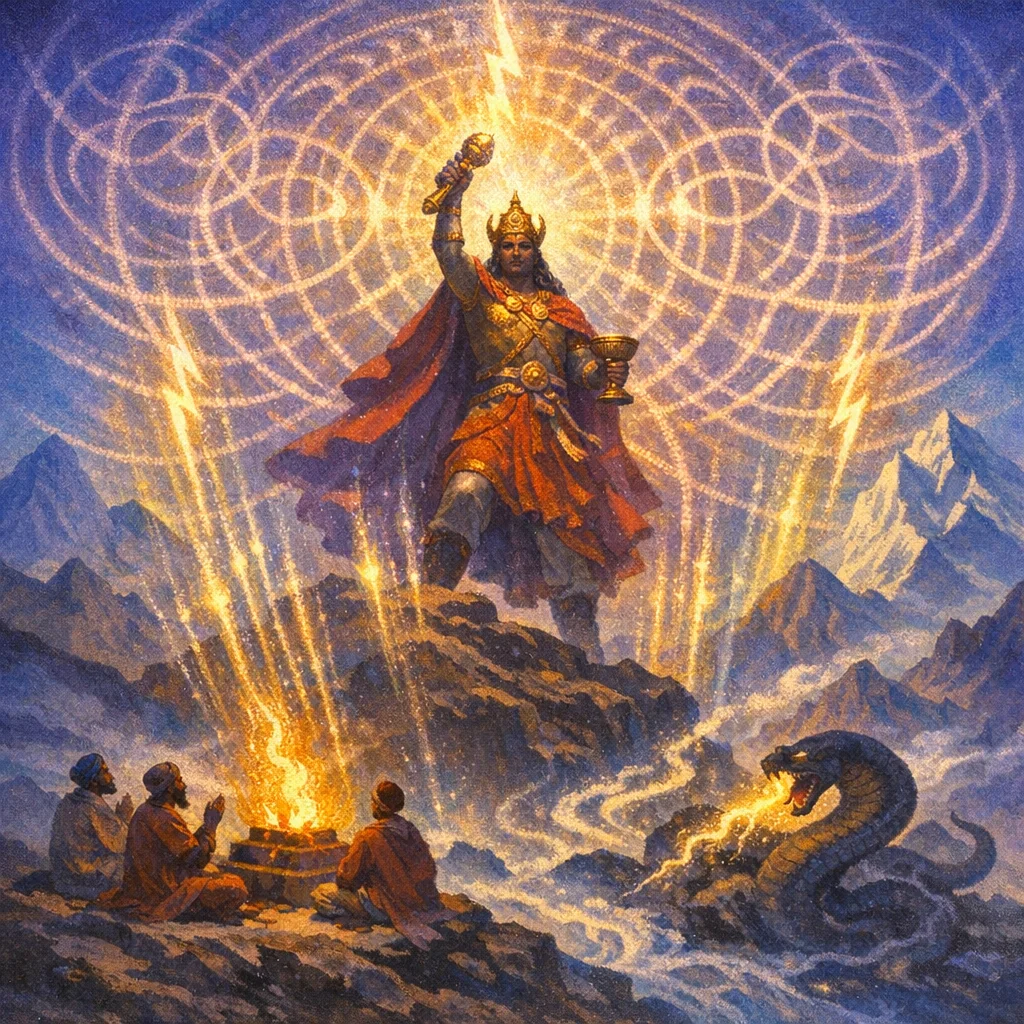
Aindra invocation: Indra’s manifest presence at the rite and his vṛtra-slaying power securing success for the sacrificers
Indra
Invitational and energizing with a heroic (vīrya) tone suited to Indra
R̥ṣi attribution is not provided here; identification normally requires Rigveda concordance for the source hymns used in this Aindra daśati.
अैन्द्रं आह्वानम्—श्रुतिप्रतिपन्नं यज्ञकर्म सम्यक् चरन्तो वयं सदसि इन्द्रं प्रकटयामः। वृष्ट्रहन् इन्द्रं ‘आ गहि’ इति समाह्वयामः, स नः महतीभिर् ऊतिभिः हविः स्तोतॄंश्च बलयतु। सुवीर्यं जयश्च नः प्रयच्छतु, विघ्नान् अपहन्तु, देवपूजायां चास्मान् मा प्रमादयतु; विश्वे देवाश्चेन्द्रकेन्द्रिते विधौ सम्यग् अर्च्यन्ताम्।
Mantras
Mantra 1
ईङ्खयन्तीरपस्युव इन्द्रं जातमुपासते वन्वानासः सुवीर्यम्
ईङ्खयन्तीरपस्यव इन्द्रं जातमुपासते । वन्वानासः सुवीर्यम् ॥
Mantra 2
न कि देवा इनीमसि न क्या योपयामसि मन्त्रश्रुत्यं चरामसि
न किद् देवाः इनीमसि, न क्याः योपयामसि; मन्त्रश्रुत्यं चरामसि—यथाश्रुतं विधिं सम्यक्।
Mantra 3
दोषो आगाद्बृहद्गाय द्युमद्गामन्नाथर्वण स्तुहि देवं सवितारम्
दोषो आगात्; बृहद्गाय द्युमद्गामन् सवितारम्। अथर्वण, देवं सवितारं स्तुहि।
Mantra 4
एषो उषा अपूर्व्या व्युच्छति प्रिया दिवः स्तुषे वामश्विना बृहत्
एषा उषा अपूर्व्या व्युच्छति दिवः प्रिया; हे अश्विनौ, बृहता स्तोत्रेण युवां स्तुषे।
Mantra 5
इन्द्रो दधीचो अस्थभिर्वृत्राण्यप्रतिष्कुतः जघान नवतीर्नव
इन्द्रो दधीचोऽस्थिभिरप्रतिṣ्कुतो वृत्राणि जघान नवतीर्नव।
Mantra 6
इन्द्रेहि मत्स्यन्धसो विश्वेभिः सोमपर्वभिः महां अभिष्टिरोजसा
इन्द्रेहि; विश्वेभिः सोमपर्वभिः सोमरसेन मत्स्यन्धसः; महाँस्तवाभिष्टिरोजसा।
Mantra 7
आ तू न इन्द्र वृत्रहन्नस्माकमर्धमा गहि महान्महीभिरूतिभिः
आ त्वा न इन्द्र वृत्रहन् अस्माकम् अर्धम् आ गहि; महान् महीभिर् ऊतिभिः।
Mantra 8
ओजस्तदस्य तित्विष उभे यत्समवर्तयत् इन्द्रश्चर्मेव रोदसी
ओजस् तद् अस्य तित्विषः, उभे यत् समवर्तयत्; इन्द्रश् चर्मेव रोदसी।
Mantra 9
अयमु ते समतसि कपोत इव गर्भधिम् वचस्तच्चिन्न ओहसे
अयम् उ ते समतसि, कपोत इव गर्भधिम्; वचस् तच् चिन्न ओहसे।
Mantra 10
वात आ वातु बेषजं शम्भु मयोभु नो हृदे प्र न अयूंषि तारिषत्
वात आ वातु भेषजं शम्भु मयोभु नः हृदि; प्र न आयूंषि तारिषत्।
Frequently Asked Questions
It centers on calling Indra to the ritual assembly and relying on his Vṛtra-slaying power to remove obstacles and grant strength (suvīrya) to the worshippers.
It teaches that correct, tradition-grounded performance is essential: the deity is approached through the properly heard and transmitted formula, and the sacrifice gains authority through that fidelity.
In this context it is understood as the sacrificer’s ‘party/assembly’ (the ritual session in the sadas) or the ‘share’ of worship—asking Indra to come to the worshippers’ appointed place and portion.