
Shloka 55
Sankhya Yoga — Sankhya Yoga
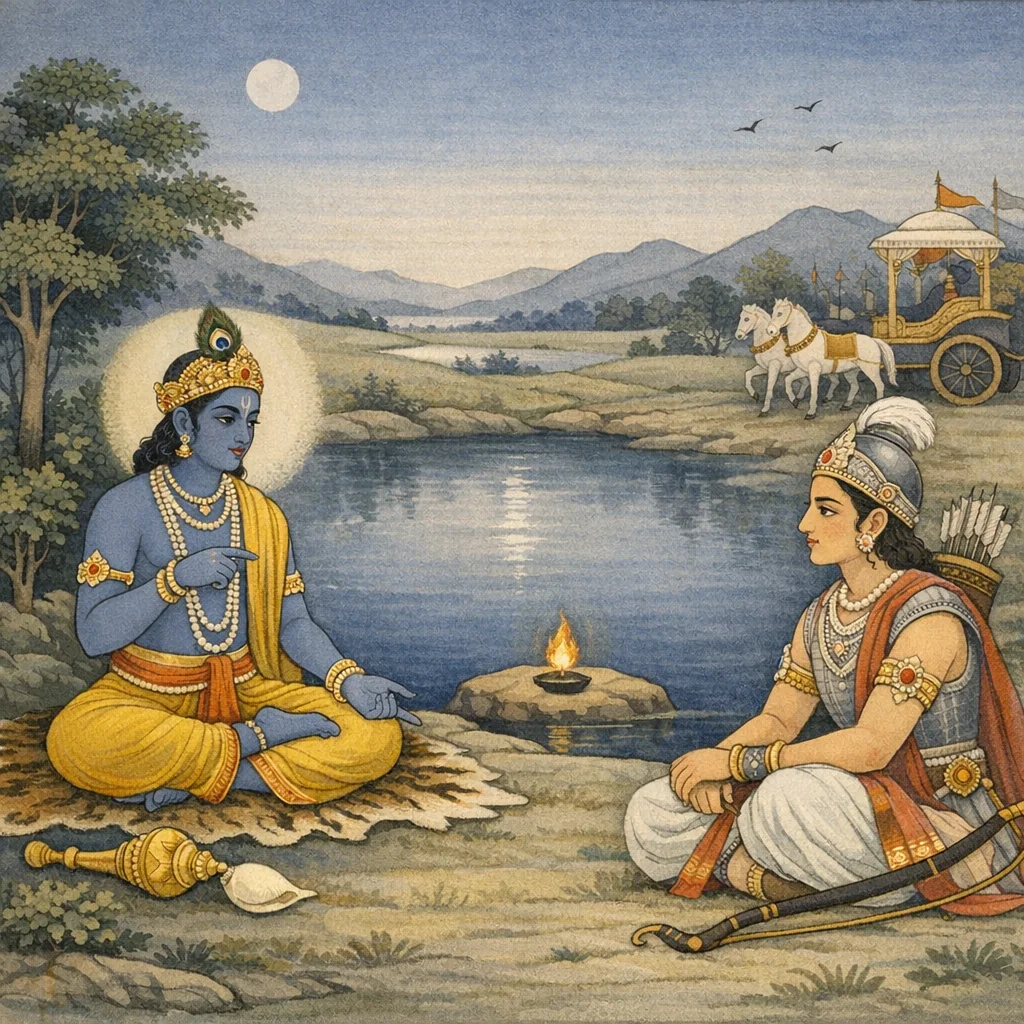
श्रीभगवानुवाच । प्रजहाति यदा कामान्सर्वान्पार्थ मनोगतान् । आत्मन्येवात्मना तुष्टः स्थितप्रज्ञस्तदोच्यते ॥ २.५५ ॥
śrībhagavān uvāca | prajahāti yadā kāmān sarvān pārtha manogatān | ātmany evātmanā tuṣṭaḥ sthitaprajñas tadocyate || 2.55 ||

श्रीभगवानुवाच—हे पार्थ! यदा मनोगतान् सर्वान् कामान् प्रजहाति, आत्मन्येव आत्मना तुष्टः भवति, तदा सः स्थितप्रज्ञ इति उच्यते।
श्रीभगवान् बोले—हे पार्थ! जब मनुष्य मन में स्थित सम्पूर्ण कामनाओं को त्याग देता है और आत्मा में ही आत्मा द्वारा संतुष्ट रहता है, तब वह स्थितप्रज्ञ कहा जाता है।
The Blessed Lord said: When one abandons all desires that arise in the mind, O Pārtha, and is content in the Self by the Self alone, then one is called ‘steady in wisdom’ (sthitaprajña).
Both traditional and academic renderings agree on the core criterion: relinquishing mental desires and establishing contentment in ātman. ‘Ātmany eva ātmanā tuṣṭaḥ’ is often read in Advaita as self-sufficiency of consciousness; in theistic readings it may be taken as inward satisfaction grounded in the spiritual self in relation to the divine, without changing the practical sense of desire-transcendence.
FAQs
The verse frames well-being as reduced dependence on fluctuating wants: mental desires are recognized and released, allowing a stable, self-grounded satisfaction.
It presupposes a distinction between the changing mind (manas) and the Self (ātman); steadiness arises when identity and fulfillment are rooted in the Self rather than in objects of desire.
This begins Krishna’s profile of the ‘sthitaprajña’ in Chapter 2, clarifying what mature discernment looks like amid the pressures of action and emotion.
Practices such as mindful noticing of cravings, values-based decision-making, and cultivating non-reactive contentment align with the verse’s ideal.