
Bhagavad Gita — Gunatraya Vibhaga Yoga, Shloka 17
Gunatraya Vibhaga Yoga
सत्त्वात्संजायते ज्ञानं रजसो लोभ एव च । प्रमादमोहौ तमसो भवतोऽज्ञानमेव च ॥ १४.१७ ॥
sattvāt sañjāyate jñānaṃ rajaso lobha eva ca | pramāda-mohau tamaso bhavato ’jñānam eva ca || 14.17 ||

सत्त्वात् संजायते ज्ञानं, रजसो लोभ एव च; प्रमादमोहौ तमसो भवतः, अज्ञानमेव च।
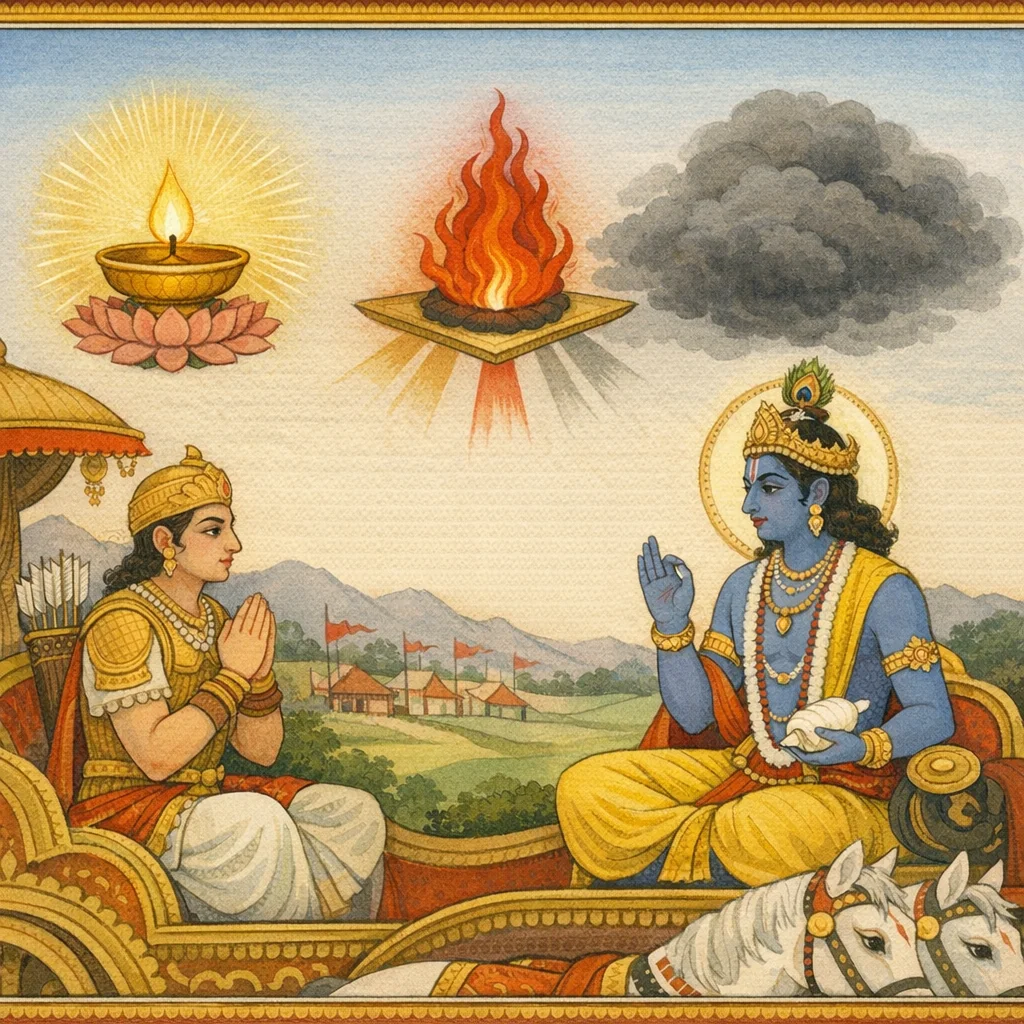
From sattva arises knowledge; from rajas, greed; from tamas arise negligence and delusion, and also ignorance.
From the quality of sattva, knowledge is produced; from rajas, greed indeed; from tamas arise heedlessness and confusion, and (there arises) ignorance alone.
Most traditional renderings treat the verse as a psychological taxonomy of the guṇas. Academic-literal translations emphasize causal language (“arises/produced”) rather than moral judgment; no major variant affecting sense is typically noted here.
FAQs
The verse frames mental tendencies as emerging from dominant dispositions: clarity and discernment from sattva, acquisitive craving from rajas, and inertia-driven confusion from tamas. It functions as an early model of personality and motivation.
It presupposes Sāṃkhya-like metaphysics: the guṇas of prakṛti generate cognitive and affective states. Knowledge and ignorance are treated as effects within nature, not ultimate properties of the self.
Within Chapter 14’s analysis of the three guṇas, this verse specifies characteristic “products” (phala/pariṇāma) of each quality, preparing for later discussion of transcending the guṇas.
As a reflective tool: notice which tendencies dominate in a situation (clarity, craving, or confusion) and adjust habits—sleep, diet, attention, and ethical discipline—to cultivate clarity and reduce compulsive or dull states.