Adhyaya 10
Ādi Parva, Adhyāya 10: Ruru’s Vow and Ḍuṇḍubha’s Appeal (रुरोः प्रतिज्ञा—डुण्डुभोपदेशः)
Upa-parva: Pauloma Parva (Ruru–Pramadvarā Episode)
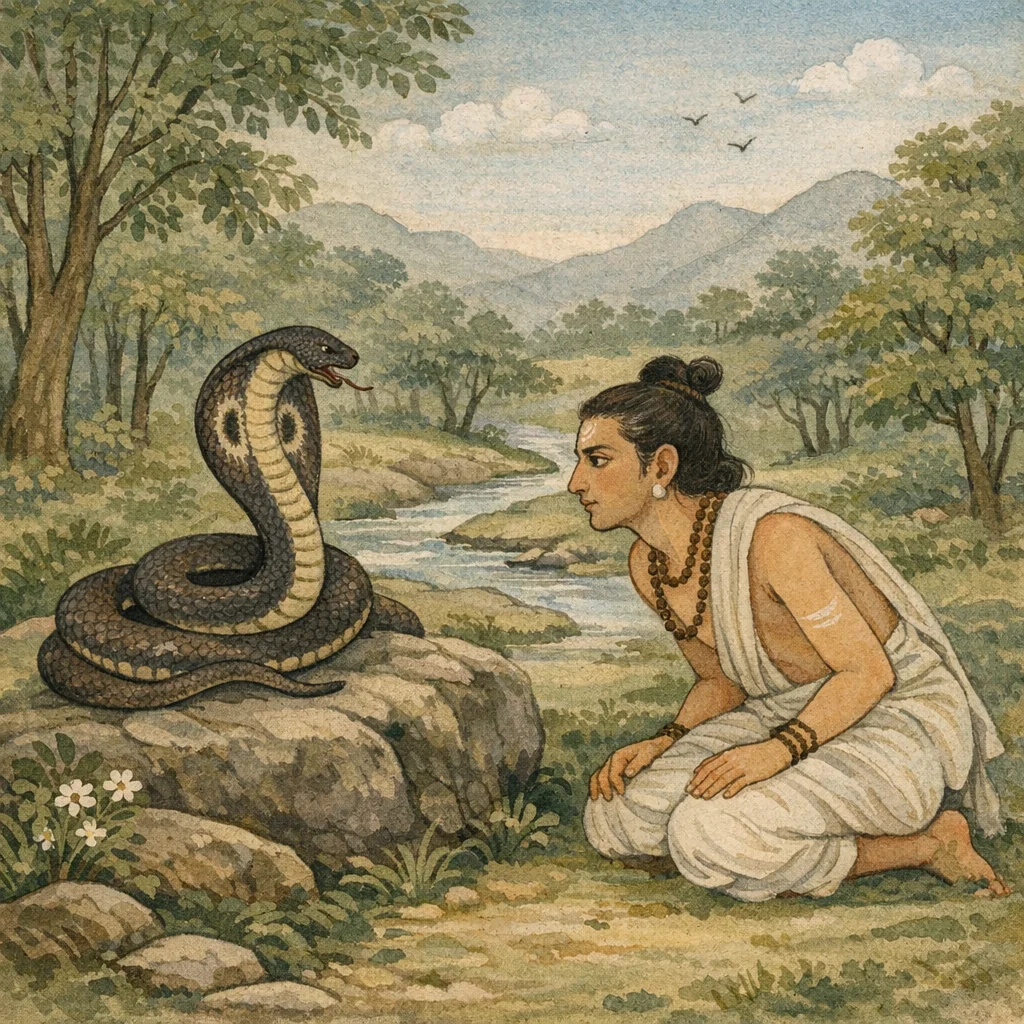
This chapter presents a dialogue structured around grief, retributive intention, and ethical correction. Ruru states that his wife—described as dear as his own life—was bitten by a serpent, leading him to adopt a severe resolution: he will kill any serpent he sees. He then attempts to kill the serpent before him, declaring that the serpent may escape only by surrendering its life. The serpent, identifying itself as Ḍuṇḍubha, responds with a dharma-based argument: other serpents may be responsible for biting humans, but Ḍuṇḍubha is not to be harmed merely due to ‘snake-odor’ or appearance; harms and benefits are not uniform across individuals. The narrator (Sūta) notes that Ruru, alarmed, refrains—mistaking Ḍuṇḍubha for a ṛṣi. Ruru then questions the serpent’s unusual condition, and Ḍuṇḍubha reveals a prior identity as a ṛṣi named Ruru, transformed into a serpent through a brāhmaṇa’s curse. The chapter closes with Ruru asking the cause and duration of the curse, setting up further ethical and causal exposition.
Chapter Arc: Promadvara’s near-loss has turned Ruru into a vow-bound avenger: wherever he sees a serpent, he strikes—his grief sharpened into a single, dangerous purpose. → Ruru encounters a serpent named Dundubha and, true to his vow, rushes to kill it. The serpent speaks—calm, reasoned, and unsettling—warning him that not every snake is guilty, and that blind retaliation itself becomes adharma. → Dundubha reveals a startling truth: he is no ordinary serpent but the cursed rishi Sahasrapad, fallen into snake-form by a brahmin’s imprecation. The intended victim becomes a mirror, forcing Ruru to confront the moral weight of his rage. → Hearing Dundubha’s words and sensing him to be an ascetic rather than a mere beast, Ruru restrains his hand and does not kill him. He questions Dundubha about the cause and term of the curse, shifting from violence to inquiry. → Ruru’s question hangs: why was Sahasrapad cursed, and how long must he endure this serpent-body before release?
Shlokas
Verse 1
(दाक्षिणात्य अधिक पाठका १ श्लोक मिलाकर कुल २४ श्लोक हैं) ऑपन---+र< बक। है २ दशमो<ध्याय: रुरु मुनि और डुण्डुभका संवाद रुस्स्वाच मम प्राणसमा भार्या दष्टासीद् भुजगेन ह | तत्र मे समयो घोर आत्मनोरग वै कृत:
Руру сказал: «О змей! Мою жену, столь дорогую мне, как сама жизнь, ужалила змея. В тот миг я дал страшный обет: всякую змею, какую увижу, непременно убью. Связанный этим обетом, я намерен убить тебя; сегодня ты лишишься жизни».
Verse 2
भुजड़ूं वै सदा हन्यां यं यं पश्येयमित्युत । ततोऊहं त्वां जिघांसामि जीवितेनाद्य मोक्ष्यसे
«Воистину, я дал обет: всякую змею, какую увижу, буду неизменно убивать. Потому ныне я намерен сразить тебя; сегодня ты расстанешься с жизнью».
Verse 3
डुण्ड्रुभ उवाच अन््ये ते भुजगा ब्रह्मन् ये दशन्तीह मानवान् | डुण्डुभानहिगन्धेन न त्वं हिंसितुमहसि
Ḍuṇḍrubha сказал: «О брахман, людей в этом мире кусают другие змеи. Не следует тебе вредить нам, ḍuṇḍubha, лишь потому, что мы носим запах (или сходство) змей».
Verse 4
रुरुके दर्शनसे सहस्रपाद ऋषिकी सर्पयोनिसे मुक्ति एकानर्थान् पृथगर्थनिकदुःखान् पृथक्सुखान् । डुण्डुभान् धर्मविद् भूत्वा न त्वं हिंसितुमहसि
Ḍuṇḍrubha сказал: «О Руру, хотя мы разделяем одно и то же змеиное рождение и связаны общими страданиями и несчастьями, природа каждого существа различна, и всякая радость, что приходит, переживается порознь. Ты знаешь дхарму — не совершай насилия над ḍuṇḍubha. Как странно: в беде мы едины, но не в счастье».
Verse 5
सौतिर्वाच इति श्रुत्वा वचस्तस्य भुजगस्य रुरुस्तदा । नावधीद् भयसंविग्नमृषिं मत्वाथ डुण्डुभम्,उग्रश्रवाजी कहते हैं--डुण्डुभ सर्पका यह वचन सुनकर रुऱुने उसे कोई भयभीत ऋषि समझा, अतः उसका वध नहीं किया
Саути сказал: «Услышав слова той змеи, Руру в тот миг не поразил её. Приняв Ḍuṇḍubha за испуганного риши, он воздержался от убийства».
Verse 6
उवाच चैनं भगवान् रुरु: संशमयन्निव । काम॑ मां भुजग ब्रूहि को$सीमां विक्रियां गत:
И тогда Руру, досточтимый, сказал ему, словно успокаивая: «О змей, скажи мне без утайки: кто ты, впавший в это искажённое состояние — в змеиное рождение?»
Verse 7
डुण्ड्रुभ उवाच अहं पुरा रुरो नाम्ना ऋषिरासं सहस्रपात् । सो<हं शापेन विप्रस्य भुजगत्वमुपागत:
Дундрубха сказал: «Прежде я был риши по имени Руру, известный как “тысяченогий”. Но из‑за проклятия брахмана я пал в состояние змея».
Verse 8
रुरुस्वाच किमर्थ शप्तवान् क्रुद्धो द्विजस्त्वां भुजगोत्तम । कियन्तं चैव काल॑ ते वपुरेतद् भविष्यति
Руру спросил: «По какой причине тот брахман, разгневавшись, проклял тебя, о лучший из змей? И как долго ещё будет существовать этот твой облик?»
Verse 9
इस प्रकार श्रीमहाभारत आदिपव॑ीके अन्तर्गत पौलोगपर्वमें प्रमद्वराके जीवित होनेये सम्बन्ध रखनेवाला नवाँ अध्याय पूरा हुआ
Так завершается девятая глава раздела Паулога в Ади-парве «Шри Махабхараты», повествующая о том, как Прамадвара была возвращена к жизни.
Verse 10
इति श्रीमहाभारते आदिपर्वणि पौलोमपर्वणि रुरुडडुण्डुभसंवादे दशमो<5ध्याय: ॥। १० इस प्रकार श्रीमह्याभारत आदिपर्वके अन्तर्गत पौलोगपर्वमें रुु-डुण्ड्रुभसंवादाविषयक दसवाँ अध्याय पूरा हुआ
Так, в «Шри Махабхарате», в Ади-парве, в разделе Паулома, завершается десятая глава, посвящённая беседе Руру и Дундубхи.
Frequently Asked Questions
Ruru’s dilemma is whether personal grief justifies indiscriminate retaliation against an entire class (all serpents) when culpability is unverified, and whether appearance alone is sufficient grounds for harm.
The chapter teaches that dharma requires discernment: ethical action should be proportionate, evidence-sensitive, and attentive to individual difference rather than driven by generalized anger or categorical blame.
No explicit phalaśruti is stated in these verses; the meta-function is implicit—positioning the episode as an ethical exemplum within Ādi Parva’s broader instruction on restraint, causality, and the limits of retribution.
Read Mahabharata in the Vedapath app
Scan the QR code to open this directly in the app, with audio, word-by-word meanings, and more.