
Bhagavad Gita — Raja Vidya Raja Guhya Yoga, Shloka 30
Raja Vidya Raja Guhya Yoga
अपि चेत्सुदुराचारो भजते मामनन्यभाक् । साधुरेव स मन्तव्यः सम्यग्व्यवसितो हि सः ॥ ९.३० ॥
api cet su-durācāro bhajate mām ananya-bhāk | sādhur eva sa mantavyaḥ samyag-vyavasito hi saḥ || 9.30 ||

Даже если человек крайне дурного поведения поклоняется Мне, не имея иного прибежища, его следует считать праведным: ибо он принял верное решение.
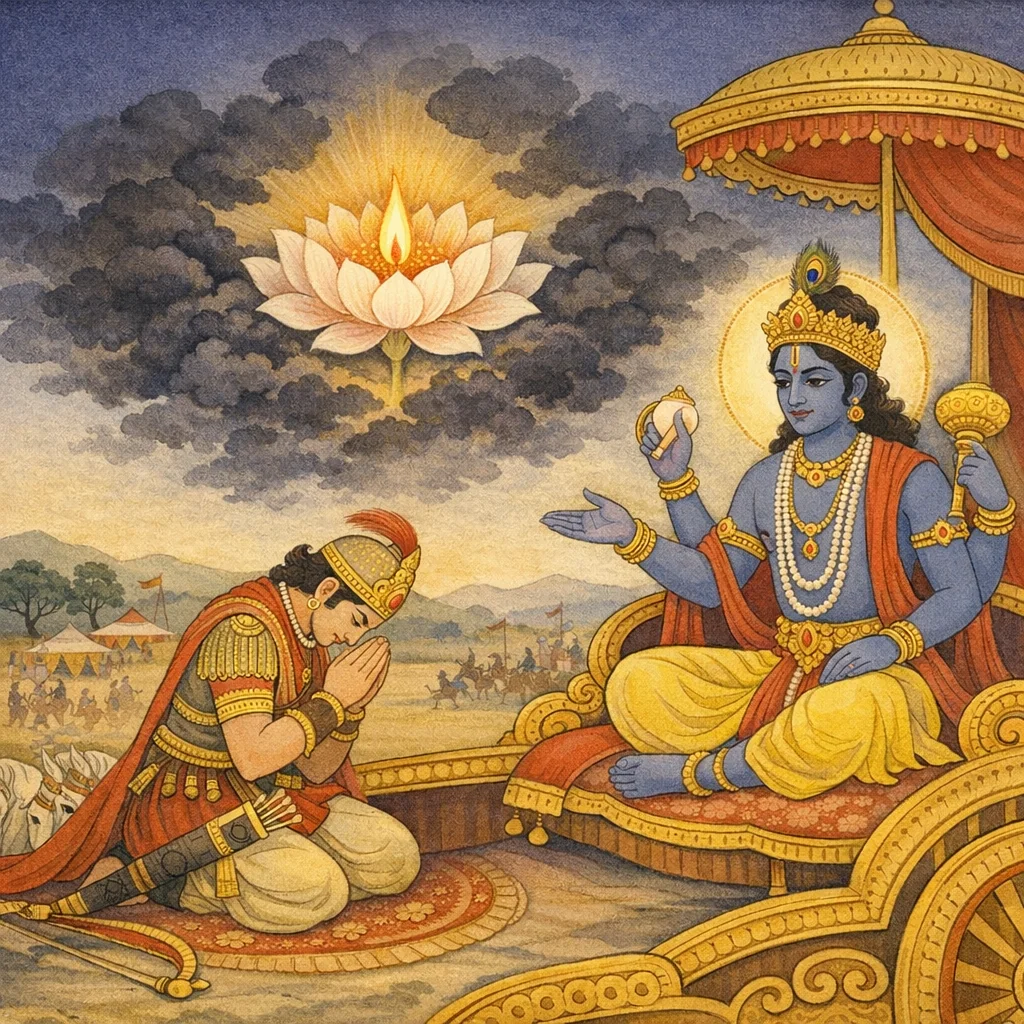
Even if a person of very bad conduct worships Me with exclusive devotion, he should be regarded as righteous, for he has rightly resolved.
Even if one of very improper conduct worships Me, devoted to no other—he is indeed to be considered good, for he has correctly determined (his course).
The verse is often debated ethically: it does not necessarily excuse wrongdoing; rather, it emphasizes the decisive moral-spiritual reorientation (‘samyag-vyavasāya’) that can mark the beginning of reform.
FAQs
It recognizes that identity can change through a deep shift in commitment, supporting rehabilitation rather than fixed labeling by past behavior.
Within the Gita’s framework, exclusive devotion aligns the person with the supreme, making spiritual progress possible even from a compromised starting point.
It intensifies the chapter’s emphasis on bhakti by asserting its transformative power and setting up the assurance of rapid ethical stabilization in 9.31.
It can be used to support compassionate, accountable paths of personal change: affirming sincere commitment while still encouraging ethical correction.