
Bhagavad Gita — Raja Vidya Raja Guhya Yoga, Shloka 11
Raja Vidya Raja Guhya Yoga
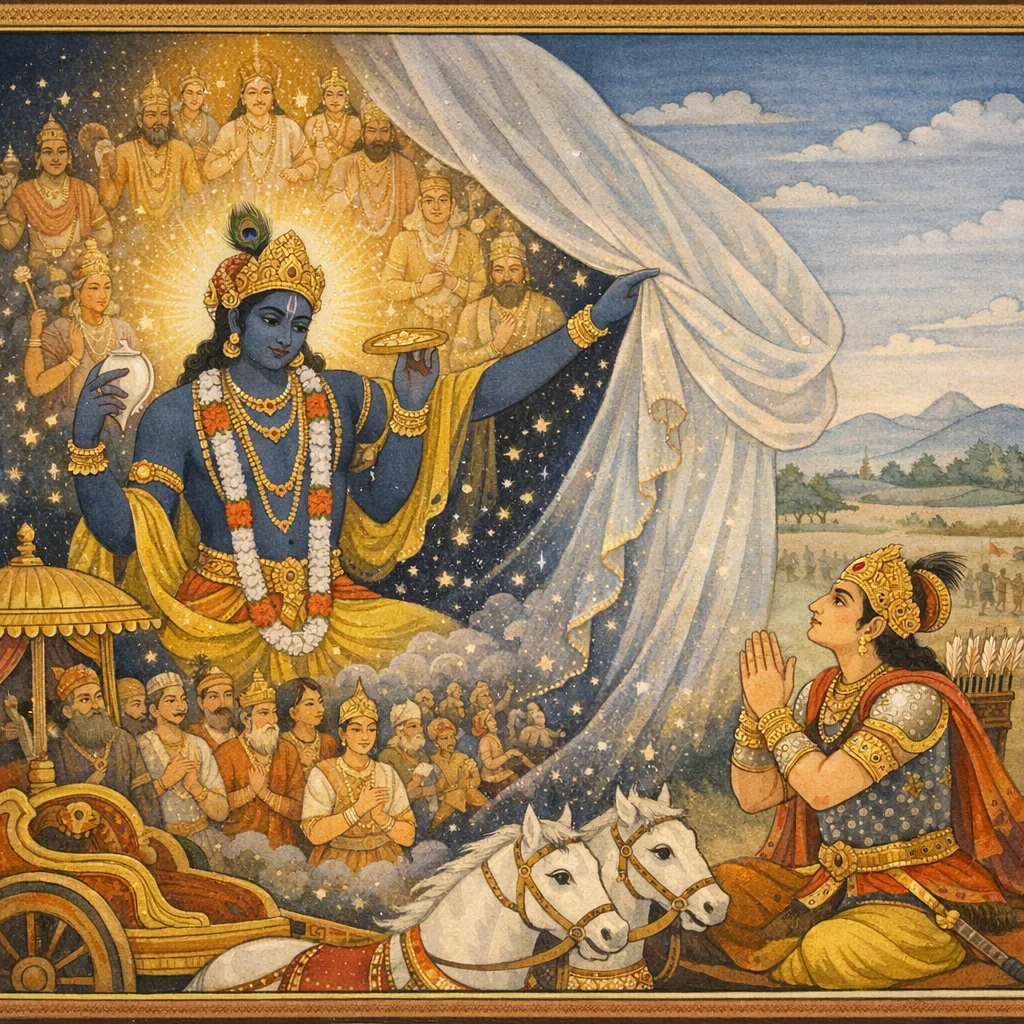
अवजानन्ति मां मूढा मानुषीं तनुमाश्रितम् । परं भावमजानन्तो मम भूतमहेश्वरम् ॥ ९.११ ॥
avajānanti māṁ mūḍhā mānuṣīṁ tanum āśritam | paraṁ bhāvam ajānanto mama bhūta-maheśvaram || 9.11 ||

Невежды презирают Меня, когда Я принимаю человеческий облик; они не знают Моей высшей сущности — Меня, Великого Владыку всех существ.
मूढ़ लोग मुझे मनुष्य शरीर धारण करने वाला समझकर मेरा तिरस्कार करते हैं; वे मेरे परम स्वरूप को नहीं जानते, जो समस्त भूतों का महान् ईश्वर है।
The deluded disregard Me as one who has assumed a human body, not knowing My higher mode of being, the great lord of beings.
Devotional traditions often connect this to avatāra doctrine (divine embodiment). In a historical-philosophical reading, it addresses misrecognition of charismatic authority: judging by outward form while missing the claimed transcendent status.
FAQs
It describes a common cognitive error: reducing a person or teaching to surface traits and social categories, thereby missing deeper intent, insight, or value.
Krishna claims a ‘higher nature’ beyond the human embodiment. The verse supports a framework in which the divine can be present in embodied form without being limited to it.
After asserting divine governance of nature, Krishna anticipates skepticism: some dismiss the speaker due to his human appearance, which the text treats as a misunderstanding.
It cautions against superficial dismissal—encouraging careful evaluation of teachings and persons beyond external markers, while still allowing critical scrutiny of claims.