
Shloka 20
Karma Yoga — Karma Yoga
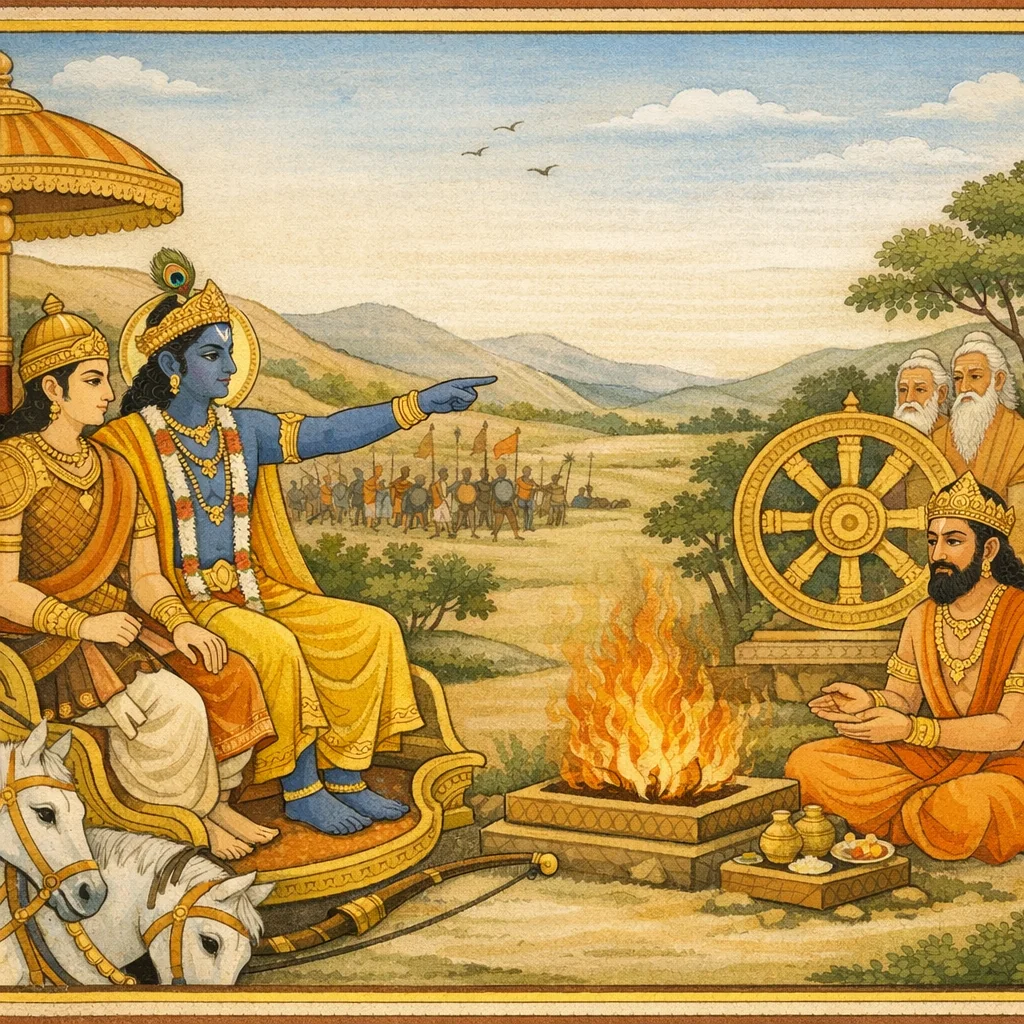
कर्मणैव हि संसिद्धिमास्थिता जनकादयः । लोकसंग्रहमेवापि संपश्यन्कर्तुमर्हसि ॥ ३.२० ॥
karmaṇaiva hi saṁsiddhim āsthitā janakādayaḥ | loka-saṅgraham evāpi sampaśyan kartum arhasi || 3.20 ||

Ибо именно действием Джанака и другие достигли совершенства; и даже ради поддержания мира (сохранения порядка в мире) тебе надлежит действовать.
For by action alone Janaka and others attained perfection; even with a view to the maintenance of the world, you ought to act.
Indeed, by action alone Janaka and others reached fulfillment; and even considering the holding-together of the world (loka-saṅgraha), you should act.
Janaka functions as an exemplar of a ruler-sage active in the world. Traditional readings emphasize ‘perfection’ as spiritual attainment; academic readings highlight loka-saṅgraha as social cohesion—responsible action by leaders stabilizes norms and institutions.
FAQs
It highlights motivation beyond self-interest: acting for collective well-being can stabilize identity and reduce inner conflict about personal sacrifice.
It implies that spiritual maturity can coexist with worldly roles, since action done without attachment need not obstruct liberation.
Krishna answers the temptation to withdraw by pointing to precedents (Janaka) and by introducing the principle of sustaining social order.
A leadership ethic: those with influence should act responsibly because their choices shape norms, trust, and institutional stability.