
Shloka 21
Akshara Brahma Yoga — Akshara Brahma Yoga
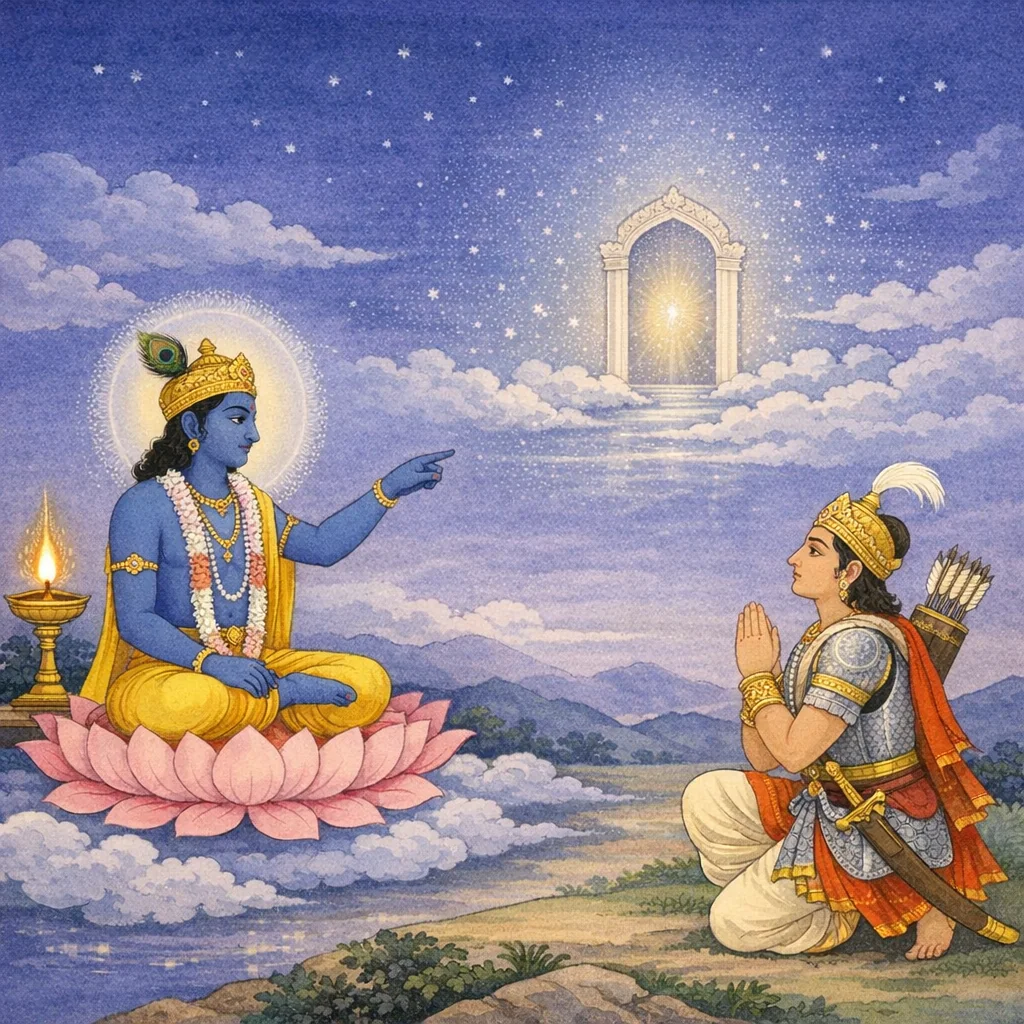
अव्यक्तोऽक्षर इत्युक्तस्तमाहुः परमां गतिम् । यं प्राप्य न निवर्तन्ते तद्धाम परमं मम ॥ ८.२१ ॥
avyakto 'kṣara ity uktas tam āhuḥ paramāṃ gatim | yaṃ prāpya na nivartante tad dhāma paramaṃ mama || 8.21 ||

Его называют Непроявленным и Непреходящим (акшара); его именуют высшей целью. Достигнув его, не возвращаются вновь. Это — Моя высшая обитель.
That (supreme abode) is called the Unmanifest and the Imperishable; they call it the highest goal. Having reached it, they do not return. That is My supreme abode.
That is spoken of as ‘the unmanifest’ and ‘the imperishable’; they call it the highest destination. Having reached which, they do not return—this is my supreme abode.
Most recensions are stable here; interpretation varies mainly in whether ‘My abode’ is read theistically (a personal divine realm) or metaphysically (the imperishable Brahman as ultimate state).
FAQs
The verse frames liberation as a stable, irreversible freedom from cyclical fluctuation—psychologically, a metaphor for a mind no longer compelled by habitual returns to craving, fear, and reactive patterns.
It identifies the ultimate as ‘unmanifest’ (beyond sensory/objectified experience) and ‘imperishable’ (not subject to change), presenting it as the final telos where rebirth/return is no longer operative.
Continuing the chapter’s discussion of death, remembrance, and ultimate attainment, it clarifies what the ‘highest goal’ is—setting up the subsequent discussion of paths and times of departure.
As a contemplative ideal, it encourages orienting life toward what is stable and non-decaying—values, insight, and disciplined attention—rather than exclusively toward transient outcomes.